The Campbell Kids Shopping Game
One of the things I enjoy most about visiting local history museums is discovering artifacts that tell the story of everyday life. Community museums often preserve the objects that filled ordinary homes. This 1955 Campbell Kids Shopping Game is one of those treasures.
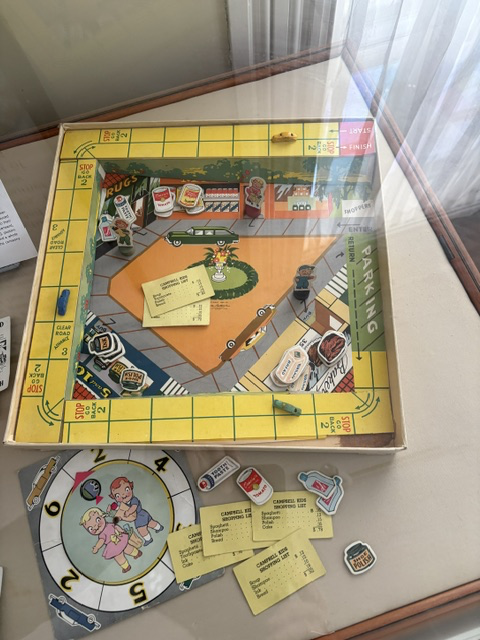
Produced by Parker Brothers in partnership with the Campbell Soup Company, the game introduced children to a familiar part of American life: the weekly trip to the supermarket. Players moved around the board purchasing groceries, collecting shopping lists, and filling their baskets with products commonly found in American kitchens. To children, it was simply a fun game. To us, it has become a window into the culture of the 1950s.
The game appeared during one of the most prosperous periods in American history. Following World War II, families moved into new suburban neighborhoods, supermarkets replaced many small corner grocery stores, and consumer goods became increasingly available. Shopping was no longer simply about buying necessities; it had become part of the American way of life. Brightly packaged national brands lined grocery store shelves, and companies competed for customer loyalty through advertising aimed at both parents and children.
Campbell Soup was one of the pioneers of this approach. The company’s Campbell Kids characters had already become familiar through magazine advertisements and product packaging. By creating games, toys, recipe books, and promotional giveaways, Campbell built one of the earliest examples of brand loyalty, introducing children to products they would continue purchasing as adults.
The object teaches children how to shop, compare products, and participate in the routines of family life. It reflects an era when prosperity, convenience, and abundance became defining characteristics of postwar America. The neighborhood supermarket had become a symbol of progress, and this game quietly reinforced that message.
That is one of the gifts of local history museums. They preserve the ordinary objects that rarely survive, allowing us to reconnect with the experiences of previous generations. Sometimes a simple board game can tell us as much about American life as any textbook.
Read More From Nancy
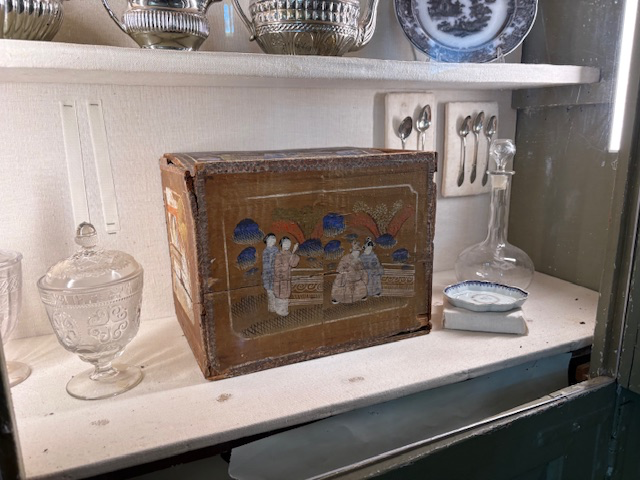
A Chinese Tea Box
Among the many furnishings displayed in the historic Golden Ball Tavern in Weston, Massachusetts, this small Chinese tea box caught my attention. It tells a remarkable story about international trade, the value of tea, and the surprising connections between colonial New England and Asia. The box was crafted in China during a time when Chinese […]
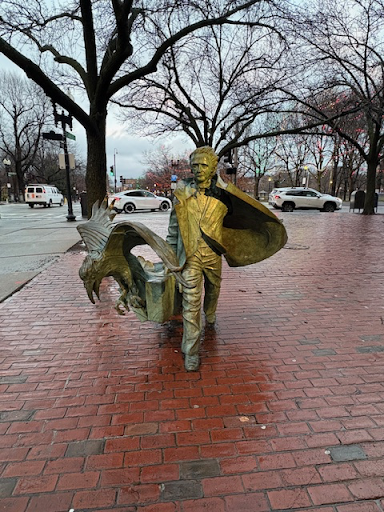
Edgar Allen Poe Statue
This is a statue of Edgar Allan Poe on the sidewalk along Boylston Street in Boston. He is caught in mid-stride, coat swirling with a raven perched atop a stack of books at his feet. The placement of this statue is intentional and rooted in Poe’s relationship with the city where his life began. Poe […]
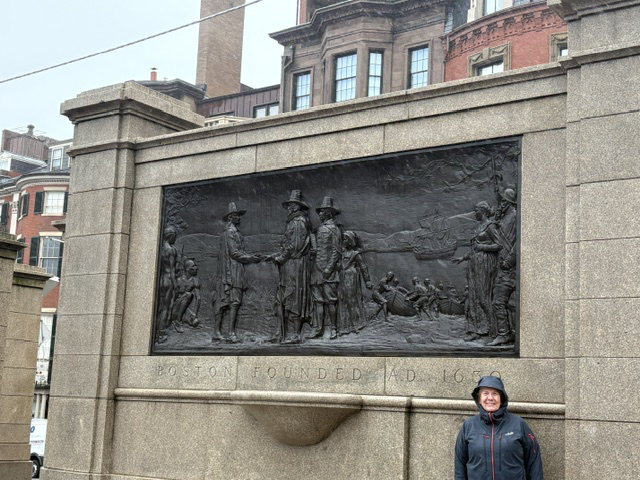
The Founders Memorial
Standing on Boston Common, the Founders Memorial commemorates the beginning of Boston’s story. Dedicated in 1930 during the city’s 300th anniversary celebration, the monument marks the founding of Boston in 1630 and honors the people whose decisions transformed a small peninsula known as Shawmut into one of America’s most influential cities. The centerpiece of the […]

