Edgar Allen Poe Statue
This is a statue of Edgar Allan Poe on the sidewalk along Boylston Street in Boston. He is caught in mid-stride, coat swirling with a raven perched atop a stack of books at his feet. The placement of this statue is intentional and rooted in Poe’s relationship with the city where his life began.
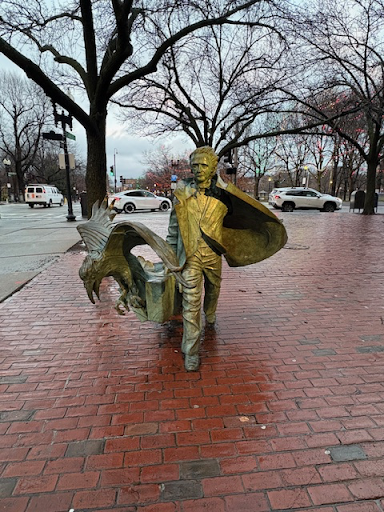
Poe was born in Boston on January 19, 1809, near what is now Downtown Crossing. This area was packed with theatres, boarding houses and narrow streets. His parents were both actors and part of the theatrical world.
Although Poe often criticized Boston’s literary elite, calling them “Frogpondians”, he was nevertheless shaped by the city’s intellectual tradition. He was educated in both England and the United States and briefly at the Military Academy at West Point. Despite these varied experiences, Boston remained the city most closely tied to his origins and literary beginnings.
This statue marks a moment in Poe’s life. In 1849. Poe departed Boston for what would be the final journey of his life. He left the city from this very area, traveling to New York and then Baltimore, where he was found delirious and died under mysterious circumstances. This sculpture captures that moment of departure.
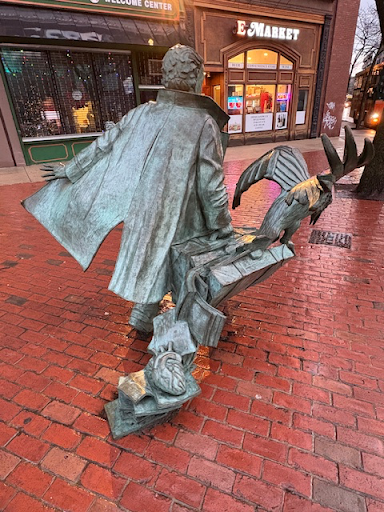
Placing the statue at street level rather than in a park was deliberate. He stands among passersby, just another figure moving through the city as he did in life. Installed in 2014 and often referred to as “Poe Returning to Boston”, the sculpture reflects Poe’s connection to the city.
Read More From Nancy
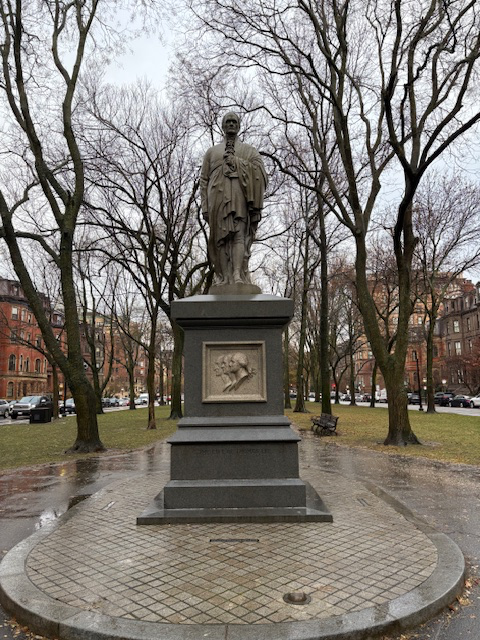
Alexander Hamilton Statue in Boston
I love walking the Commonwealth Avenue Mall and pausing to take in the sculptures that line the path. Each one is placed not just to decorate the boulevard but also to invite reflection. One of the most prominent is the statute of Alexander Hamilton. I found myself wondering why Hamilton, who never lived in Boston. […]
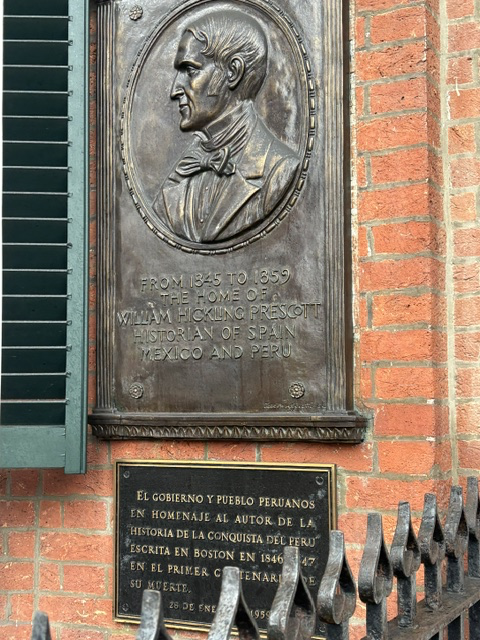
William Hickling Prescott
Walking through Boston’s Beacon Hill, it is easy to admire the elegant brick homes and historic streets without realizing how many remarkable people once lived behind these doors. One of those homes belonged to William Hickling Prescott, one of the nineteenth century’s most celebrated American historians. From 1845 until his death in 1859, Prescott lived […]
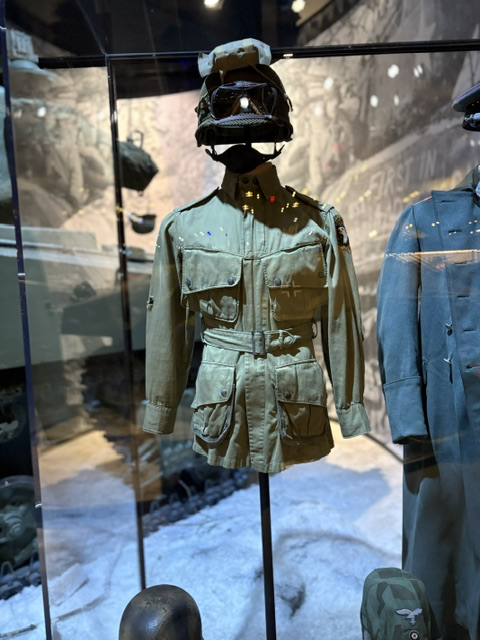
M42 Jump Jacket
While visiting the American Heritage Museum in Hudson, one exhibit drew my attention because it represented more than a uniform. It represented the courage of the young men who volunteered for one of the most dangerous assignments of World War II. Displayed behind glass is an M42 jump jacket worn by Private Duane Tedrick of […]

