The South Natick Dam
Historic places do not always disappear because they are forgotten. Sometimes they disappear because communities decide how to balance preserving the past with meeting the needs of the future. The South Natick Dam, which has stood on the Charles River for well over a century, is one of those places.
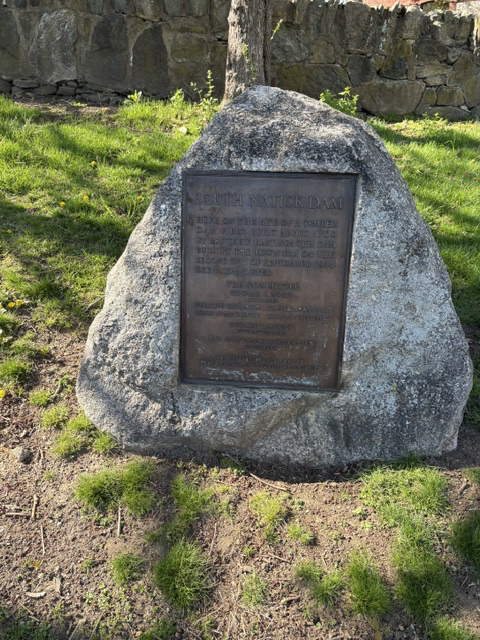
Constructed during the nineteenth century, the dam once powered local industry and helped shape the village that grew around it. As mills disappeared, the dam took on a different role. It became part of the character of South Natick. Generations of residents grew up with the waterfall, the mill pond, and the familiar view from the bridge. For many, it was not simply a piece of engineering but one of the defining landmarks of the village.
This bronze plaque commemorates the history of the dam and its role in the development of South Natick. Ironically, as I photographed it, the community was witnessing another chapter in its history. During the summer of 2026, crews began removing the dam.
The decision has not been without controversy. Many residents opposed the removal, believing the dam is an important part of South Natick’s identity and that the loss of the waterfall and mill pond will permanently change the appearance and character of the village. Others have supported the project, pointing to the environmental benefits of restoring the Charles River to a more natural condition The dam is undeniably part of South Natick’s history. It has framed the village landscape for generations and has become intertwined with people’s memories of the community.
What struck me most was that this plaque has taken on new meaning. It was originally installed to commemorate the dam’s contribution to the village. Now it also serves as a reminder of a landmark that future generations will know only through photographs, memories, and historical records. It has become a marker not only of what once was, but of a community’s difficult decision about what should come next.
History is often thought of as something safely settled in the past. The story of the South Natick Dam reminds us that history is continually being written. Sometimes we have the opportunity to witness those moments firsthand, when preservation, progress, memory, and environmental stewardship all meet at the same place. Whether one agrees with the decision or not, the removal of the South Natick Dam marks the end of one chapter in the history of the Charles River and the beginning of another.
Read More From Nancy
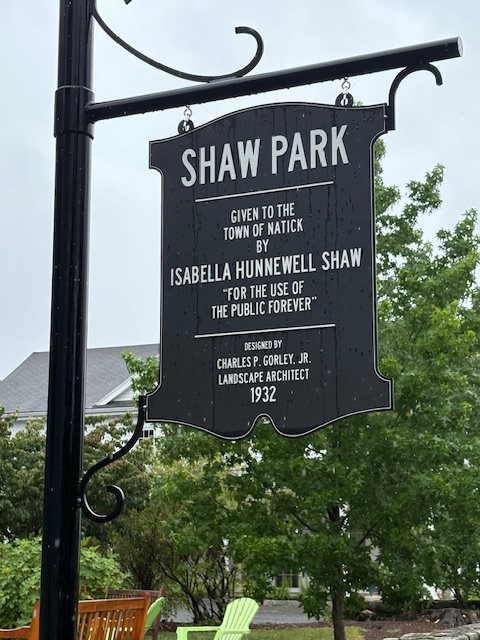
Shaw Park
Shaw Park, located in South Natick, is not a grand park in the monumental sense. Yet, it is a space with a profound sense of intention as captured in the words that accompanied its gift to the town of Natick: “For the use of the Public Forever” These words were written by Isabella Hunnewell Shaw. […]
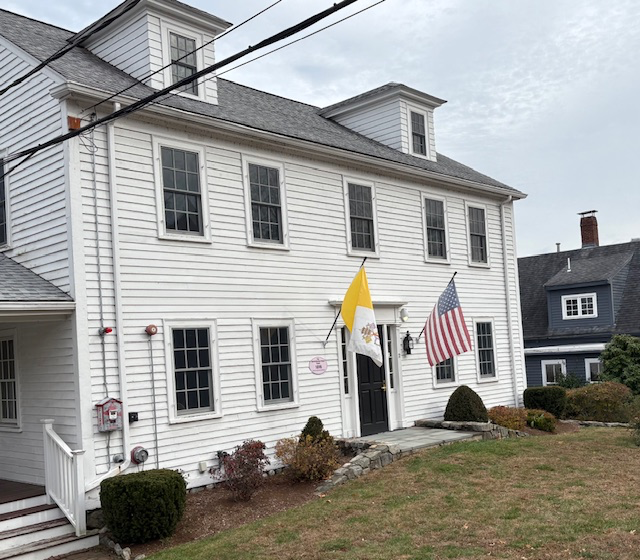
Home of Calvin Ellis Stowe
This 1816 Federal-style home in South Natick was the childhood home of Calvin Ellis Stowe a biblical scholar and later the husband of Harriet Beecher Stowe, author of Uncle Tom’s Cabin. Calvin Stowe became a scholar of Hebrew and biblical literature and met Harriet Beecher at the Lane Seminary in Cincinnati. They married in 1836, and […]
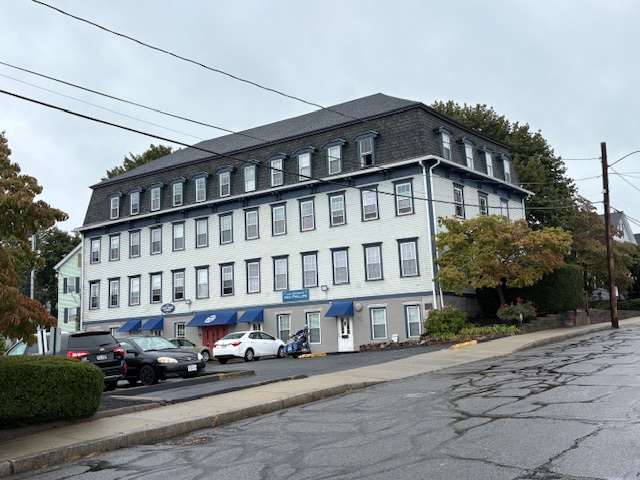
The Harwood Baseball Factory
In 1858, Harrison Harwood, a Natick resident and local businessman, built what would become one of the most historically significant small factories in American sports: The Harwood Baseball Factory. This factory was more than a local industry, but the birthplace of professional baseball. Harwood’s factory was the first in the US devoted entirely to the manufacture of […]

