Electric Permanent Wave Machine
One of the things I enjoy most about local history museums is discovering objects that tell the story of everyday life. This unusual machine immediately caught my attention. At first glance, it looked more like an industrial invention than something you would expect to find in a beauty salon.
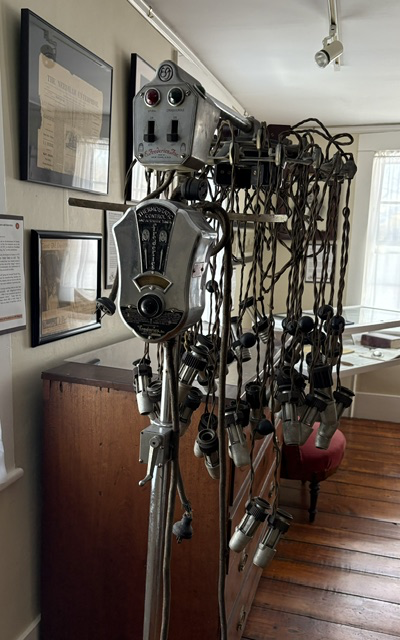
This is an Electric Permanent Wave Machine, commonly known as a perm machine. Developed in Europe around 1917, these machines became popular in the United States during the 1920s and 1930s as women embraced the fashion of long-lasting curled hairstyles. Hair was wrapped around metal curlers, which were connected to one of the machine’s many heated electrical units. Heat and chemicals worked together to permanently reshape the hair. While considered innovative for its time, the process was often uncomfortable, and the combination of heat and electricity occasionally resulted in burns.
This machine represents the arrival of a growing profession and the willingness of local entrepreneurs to adopt the latest technology.
During the Second World War, production of these machines largely ceased as manufacturing shifted to support the war effort. After the war, safer and more efficient methods of creating permanent waves replaced these elaborate devices, and machines like this quickly disappeared from salons.
What once represented the cutting edge of beauty technology now appears almost intimidating. Yet it serves as a wonderful reminder that history is found not only in famous people and important events, but also in the ordinary experiences of everyday life. Looking at this machine, I was reminded that every generation has embraced new technologies in the hope of making life a little better.
Read More From Nancy
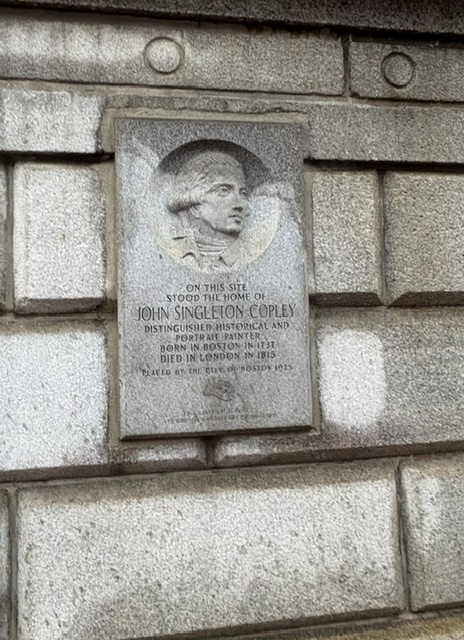
John Singleton Copley
Walking through Boston, I came across this plaque marking the site where the home of John Singleton Copley once stood. The house itself is gone, but the plaque preserves the connection between this location and one of the most important artists of colonial America. Copley was born in Boston in 1738, although the plaque gives […]
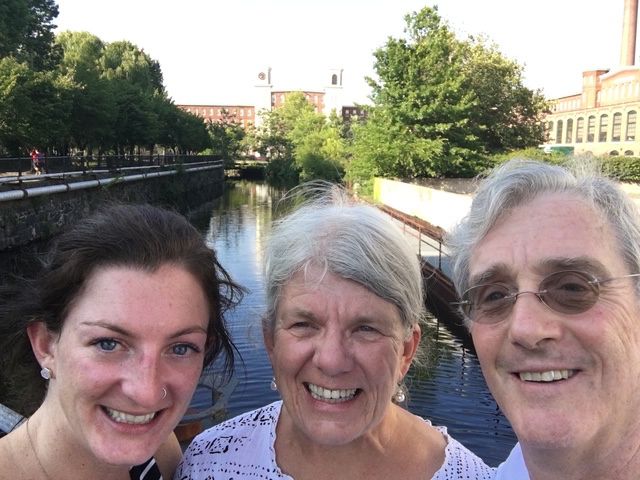
The Canals of Lowell
Walking through downtown Lowell, it is almost impossible not to encounter the canals. They pass beneath streets, alongside sidewalks and between the enormous brick mill buildings that still dominate parts of the city. On this day, we were simply walking through Lowell when we stopped along one of them for this photograph. The canals are […]

Make Way for the Ducklings
Walking through the Boston Public Gardens, there is a familiar and beloved sight: a line of small bronze ducks following closely behind their mother. Most locals recognize them as characters from the classic children’s book “Make Way for Ducklings” by Robert McCloskey. These statues were created by sculptor Nancy Schon and installed in 1987 as a […]

