William Billings Plaque
Walking along the Boston Common, there are a number of plaques that quietly mark the lives of people who helped shape the early character of the city. One of them is for Willian Billings, listed as one of America’s earliest native-borncomposers.
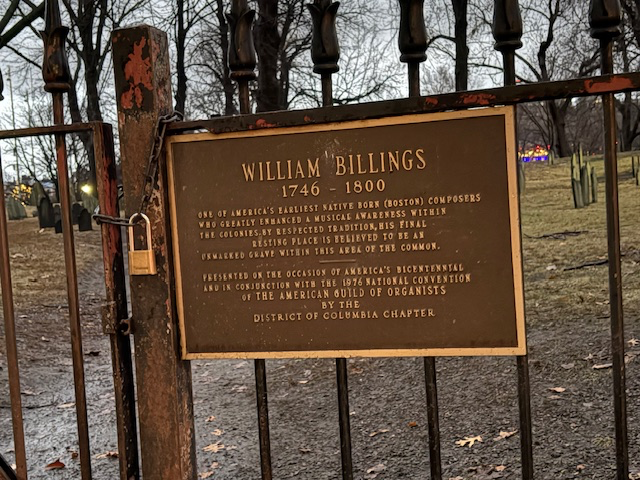
Billings was born and lived in Boston at a time when the country was just beginning to define its identity. Unlike many musicians of his era, he was not formally trained. Instead, he was largely self-taught who developed a distinctly American style of music rooted in psalm singing.
His compositions were bold and different from the most refined European traditions that dominated at the time. He wrote for ordinary people to sing, often in churches and community gatherings, helping to create a uniquely American musical voice.
Billings is best known for his hymn “Chester”, which became something of an anthem during the American Revolution. It’s simple melody and patriotic message made it widely popular among the colonists, reflecting both their spirit and their growing independence.
His work also helped establish traditions that made music more accessible to everyday people, encouraging participation rather than performance alone. In this way, Billing was helping to build a culture of shared experience.
The plaque on Boston Common is part of a series known as the Boston Common Composers Memorial, installed in 1996. These plaques were created by the Boston Landmarks Commission in collaboration with local arts and historical groups to recognize early American composers with ties to Boston.
Boston was not only a center of political activity during the Revolution, but also a place where a uniquely American cultural voice was beginning to emerge.
Like many of the markers on the Common, it is easy to pass by it. But once I stop and read it, I am introduced to someone whose influence was a voice for early America, still echoing in the history of this city.
Read More From Nancy
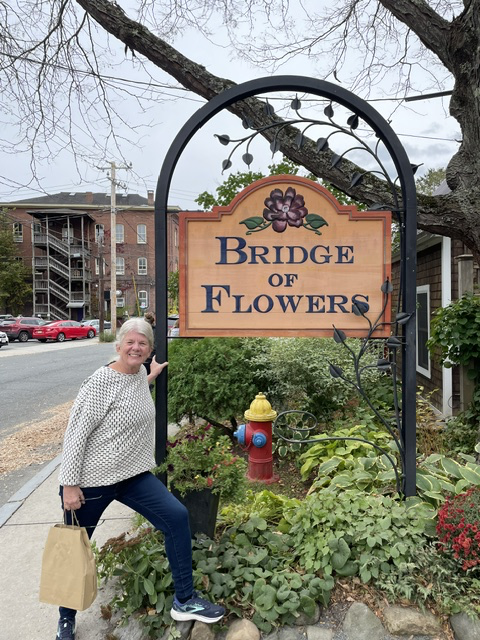
Bridge of Flowers
Some places are created to solve practical problems. Others become places that simply make people smile. The Bridge of Flowers in Shelburne Falls manages to do both. The bridge was originally built in 1908 as the Deerfield River trolley bridge, carrying electric streetcars between Shelburne and Buckland. For years it served as an important transportation link, […]
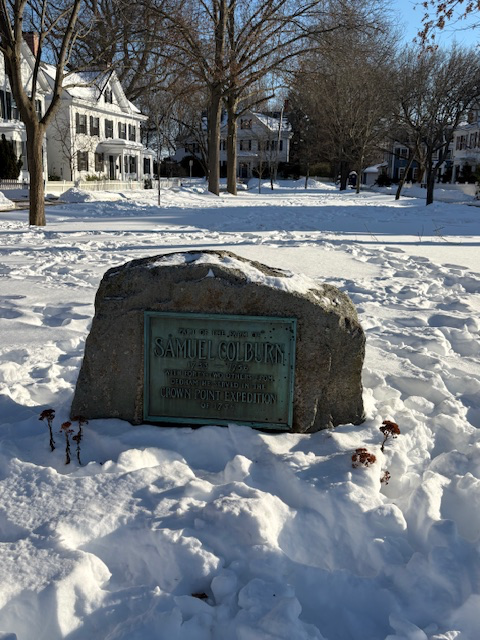
Samuel Colburn
As I was walking through downtown Dedham, I came across a simple rock monument honoring Samuel Colburn. I must admit I was not aware of the Crown Point Expedition. That unfamiliar name immediately caught my attention. I was excited to take a photo and look up more information later. There is something satisfying about discovering a small marker and realizing it opens […]
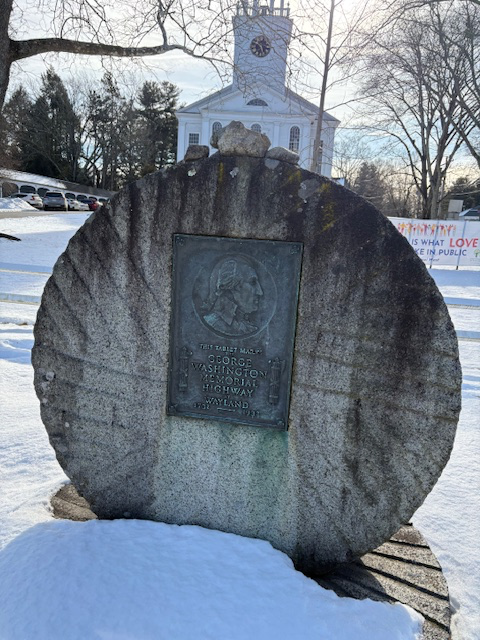
George Washington Marker
Driving through the town of Wayland, there is the round stone monument that sits along the roadside. Unlike grand statues that make historic events, this one is modest, a cylindrical stone pillar with a bronze marker identifying it as part of the George Washington Memorial Highway. The roadside marker reflects an interesting moment in American history when […]

