The British Soldiers’ Grave
Beside the path near Concord’s North Bridge, a low stone wall holds a memorial to two British soldiers killed on April 19, 1775. Small British flags mark their resting place, surrounded by hostas and shaded by trees. In a landscape so closely associated with American independence, this grave preserves the memory of men who fought for the Crown and never returned home.
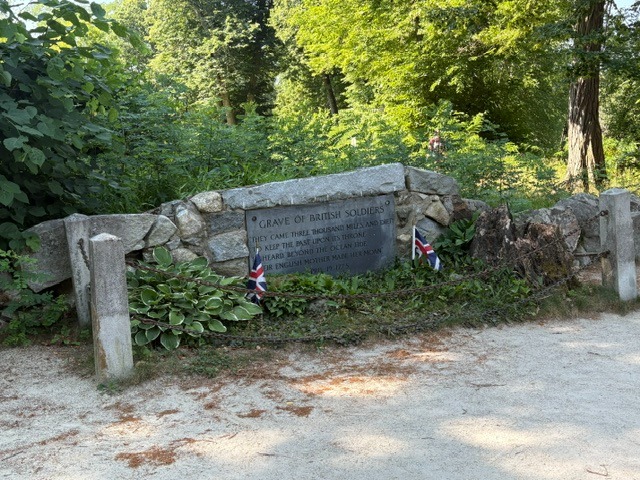
The soldiers fell during the exchange of fire at the bridge. As British troops retreated toward Concord, they left their dead behind. Two local men, Zechariah Brown and Thomas Davis, subsequently buried the bodies. The soldiers’ identities remain uncertain; surviving military records suggest possible names without establishing them conclusively.
For years, small stones at the head and foot marked the burial. Nathaniel Hawthorne, who lived nearby at the Old Manse, found this modest grave more compelling than the battlefield’s granite obelisk. He visited it with fellow writer James Russell Lowell in 1849, inspiring Lowell to write a poem about the soldiers buried there.
Concord added an inscribed slab in 1870 because visitors could easily overlook or misunderstand the original stones. Granite posts and chains followed in 1877. In 1910, a further marker incorporated Lowell’s verse, including these words:
“They came three thousand miles, and died,
To keep the Past upon its throne.”
The poem also imagines an English mother mourning across the ocean. That thought brings the history down to the scale of a family. The men buried here were soldiers in an army, but somewhere beyond this battlefield they had homes, relationships, and lives that their military records can only partly reveal.
In our photograph, the memorial is unassuming. Its weathered inscription rests among rough stones, with flowers and flags providing small gestures of remembrance. It invites a pause—a chance to consider how differently the same day would have been remembered in the households of those who died.
The grave remains a place of commemoration. British reenactors decorate it during the annual remembrance of the battle. That continuing attention gives these men a place within the history of Concord. Remembering them allows the battlefield to tell a fuller story, holding both the beginnings of American independence and the human losses that accompanied it.
Read More From Nancy
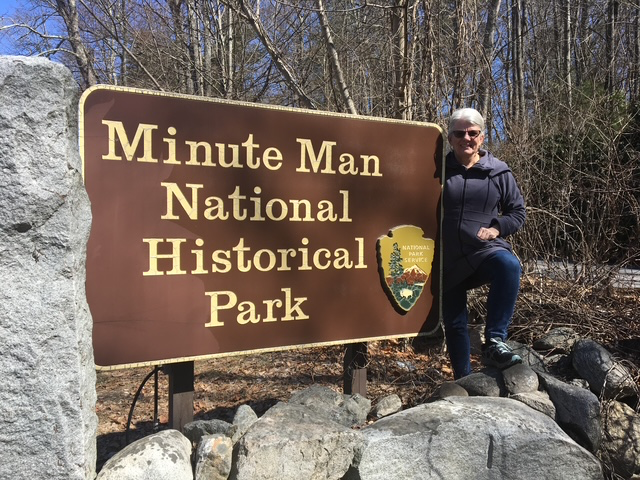
Minute Man National Park
On numerous acres stretches Minute Man National Historical Park. As a Massachusetts resident, we have visited this park several times. The park encompasses approximately 1,000 acres across the towns of Lexington, Lincoln, and Concord, preserving the landscape of April 19, 1775. This date was the opening day of the American Revolution. It was established as a National […]
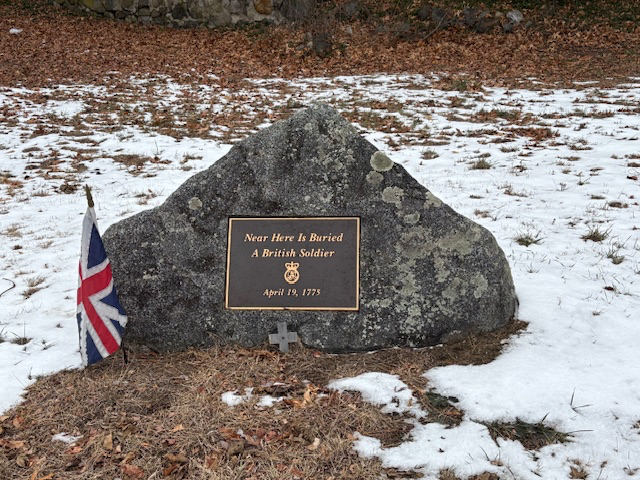
British Soldier Memorial
Among the historic roads of Concord, where so much of the opening day of the American Revolution unfolded, there is this small, easily overlooked stone. It reads: “Near Here is Buried A British Soldier – April 19, 1775” This marker points to one of the most human and often forgotten aspects of the Battles of Lexington […]
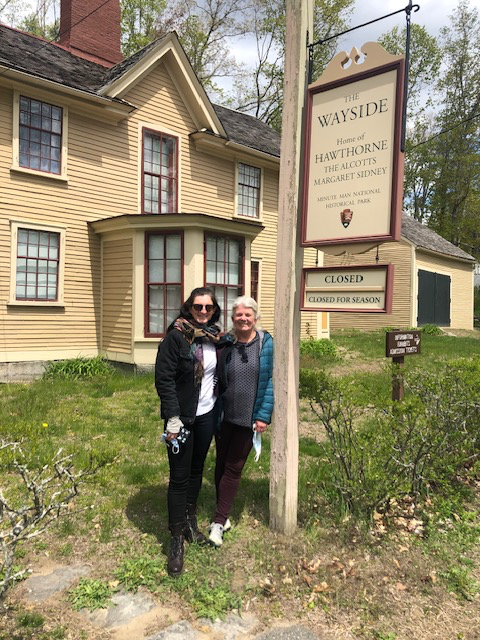
The Wayside
There are houses that preserve history, and then there are houses that helped shape it. The Wayside in Concord, Massachusetts, is one of those extraordinary places. This house has always held a special place in our family’s story. Both of our daughters gave tours here, sharing the remarkable history of the people who lived within […]

