The Wayside
There are houses that preserve history, and then there are houses that helped shape it. The Wayside in Concord, Massachusetts, is one of those extraordinary places.
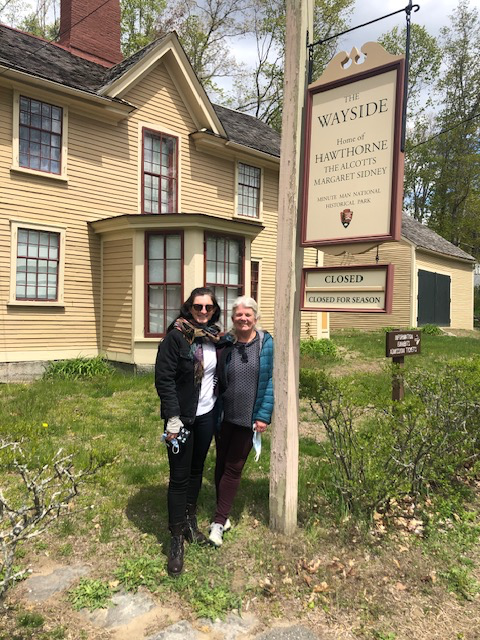
This house has always held a special place in our family’s story. Both of our daughters gave tours here, sharing the remarkable history of the people who lived within these walls. One of their tours explored the Underground Railroad and the role The Wayside played in helping those seeking freedom. Through them, I came to appreciate this house not simply as the home of famous authors, but as a place where ideas, courage, and compassion came together.
The story begins with Amos Bronson Alcott, the visionary educator and philosopher whose progressive ideas challenged conventional education. He believed children should be encouraged to think rather than simply memorize concepts that were considered radical in his day. Living here with his wife, Abigail Alcott, the family welcomed many of Concord’s great thinkers, including Ralph Waldo Emerson and Henry David Thoreau.
It was also here that Louisa May Alcott spent part of her young adulthood. Although she is most closely associated with nearby Orchard House, where she wrote Little Women, her years at The Wayside were formative. Louisa absorbed the conversations, ideals, and reform movements that surrounded her family. Those experiences would later find their way into her writing, where themes of family, independence, sacrifice, and social justice became enduring hallmarks of her work.
The house entered its next great chapter when Nathaniel Hawthorne purchased it in 1852. Hawthorne renamed it The Wayside, making it the only home he ever owned. By then he had already achieved literary fame through works such as The Scarlet Letter and The House of the Seven Gables, but it was here that he found the stability he had long sought for his family. While living at The Wayside, Hawthorne wrote Our Old Home, The Marble Faun, and several essays inspired by his years abroad and his return to Concord.
One of Hawthorne’s most enduring contributions to the house is the distinctive three-story tower, often called the tower room. Wanting a quiet retreat away from the activity of family life, he designed this addition as a private study high above the rest of the house. Surrounded by windows overlooking the woods and fields of Concord, it became the place where he read, reflected, and wrote. It gave The Wayside its unmistakable profile and remains one of the home’s defining architectural features. Yet despite creating it as a place of solitude, Hawthorne’s children were known to climb the narrow stairs to visit their father, reminding us that even one of America’s greatest novelists could never completely escape family life.
The Wayside’s story extends well beyond literature. During the Alcott years, the house became part of the Underground Railroad. Bronson and Abigail Alcott welcomed at least one freedom seeker into their home while he made his journey toward Canada. Because secrecy was essential to protecting those escaping slavery, his name was never recorded. Bronson described him in his journal as a strong, capable man who remained with the family for about a week before continuing north. Louisa later recalled that more than one freedom seeker found refuge beneath their roof. Knowing that someone seeking liberty once found safety within these walls gives the house a significance that reaches far beyond its literary fame.
Concord itself was a center of abolitionist thought. Emerson, Thoreau, the Alcott’s, and many of their neighbors believed that freedom required action, not simply words. The Wayside stood at the heart of that community, where literature, philosophy, and social reform were woven together into everyday life.
Today, The Wayside remains closed as restoration work continues. I hope that one day its doors will reopen because this is far more than the home of three celebrated authors. It is a place where literature inspired generations, where ideas changed lives, and where one unnamed traveler found shelter on his journey to freedom.
Read More From Nancy
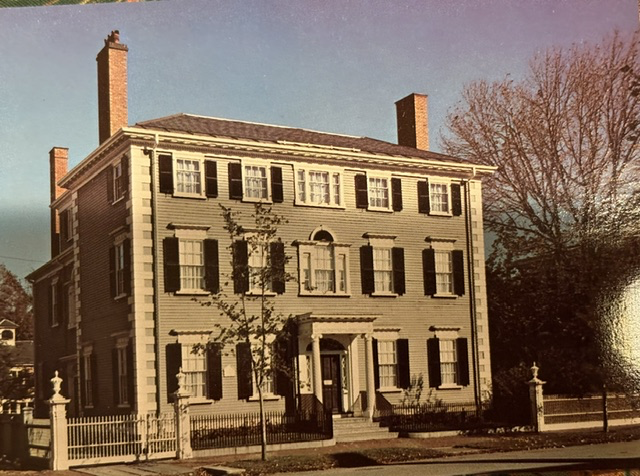
Stephen Phillips House
I drove to Salem to visit the Stephen Phillips Memorial Trust House, one of the city’s finest historic homes. Walking through its rooms felt like stepping back into the period when Salem was one of America’s most important seaports and a center of international trade. More than a museum, the house offers a glimpse into the […]
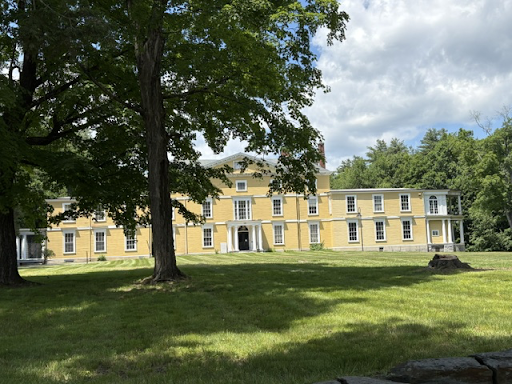
Nathaniel Thayer Estate
Driving through South Lancaster, I was surprised to come upon one of the grandest estates in central Massachusetts: the Nathaniel Thayer Estate, later known as Thayer Hall. Set amid expansive lawns and towering trees, the stately yellow mansion immediately conveyed the elegance and prosperity of nineteenth-century New England. Although many visitors associate South Lancaster with […]
Oliver Wendell Holmes
Oliver Wendell Holmes, Jr., remains one of the towering figures in American legal history, whose ideas continue to shape constitutional law and the way we think about freedom and the role of courts. His life spanned history from the Civil War through the Great Depression with nearly 30 years on the U.S. Supreme Court. Holmes […]

