British Soldier Memorial
Among the historic roads of Concord, where so much of the opening day of the American Revolution unfolded, there is this small, easily overlooked stone. It reads:
“Near Here is Buried A British Soldier – April 19, 1775”
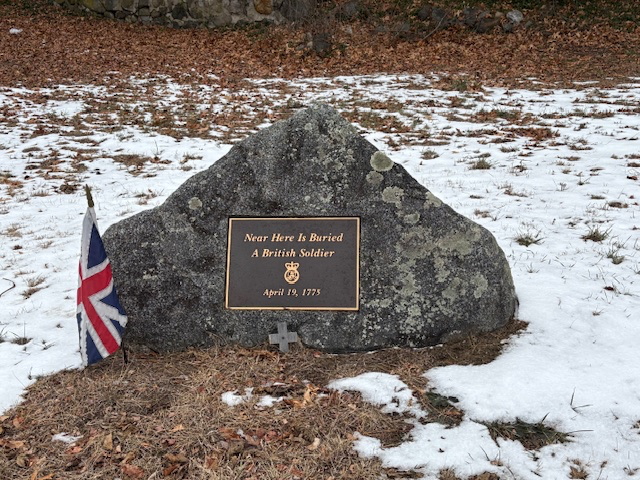
This marker points to one of the most human and often forgotten aspects of the Battles of Lexington and Concord. On that day, British troops marched from Boston to seize colonial military supplies. What began as a mission quickly turned into a running battle, first at Lexington Green, then at Concord’s North Bridge, and finally along the long, dangerous road back to Boston.
As the British retreated under constant fire from colonial militia, soldiers fell along the roadside. Some were carried off, but others, especially those who died during the chaotic withdrawal, were buried quickly and quietly, often near where they fell. This stone marks one such burial.
In the days immediately following April 19, 1775, any burials would have been marked, if at all, by simple fieldstones or left unmarked along the road. Nearly a century later, as Concord prepared to commemorate the 100th anniversary of the battle, the town made a conscious decision to recognize these sites. In 1870, the Town of Concord, placed formal commemorative stones to mark known burial locations of British soldiers who died that day.
Unlike the grand monuments that honor patriot leaders and victories, this marker stands simple. It acknowledged that the conflict was not just a moment of American triumph, but also one of loss on both sides. The identity of the soldier is unknown. This memorial is a recognition that a life ended here on that first day of war.
Read More From Nancy
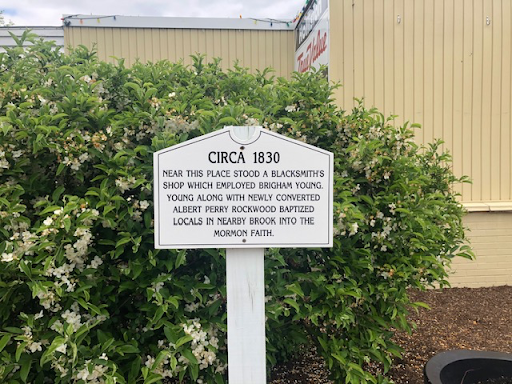
1830 Sign
Long before wagon trains crossed the plains and Salt Lake City rose, before Brigham Young became a national religious figure, there was a blacksmith’s shop in this Massachusetts town. The 1830s in New England were years of revival, reform and religious searching. This was the era of the Second Great Awakening, when revival meetings, itinerant […]
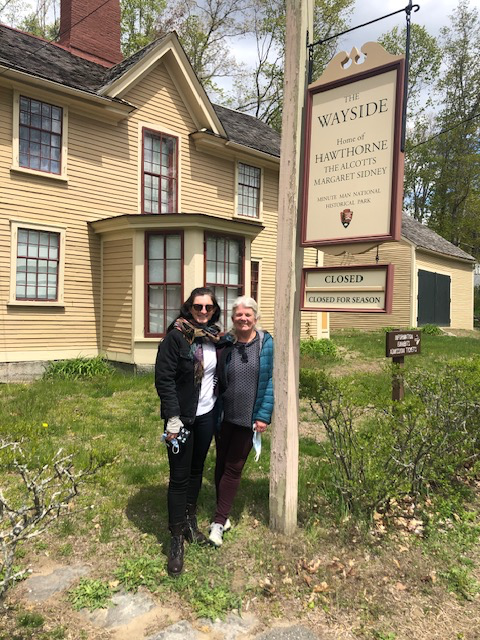
The Wayside
There are houses that preserve history, and then there are houses that helped shape it. The Wayside in Concord, Massachusetts, is one of those extraordinary places. This house has always held a special place in our family’s story. Both of our daughters gave tours here, sharing the remarkable history of the people who lived within […]
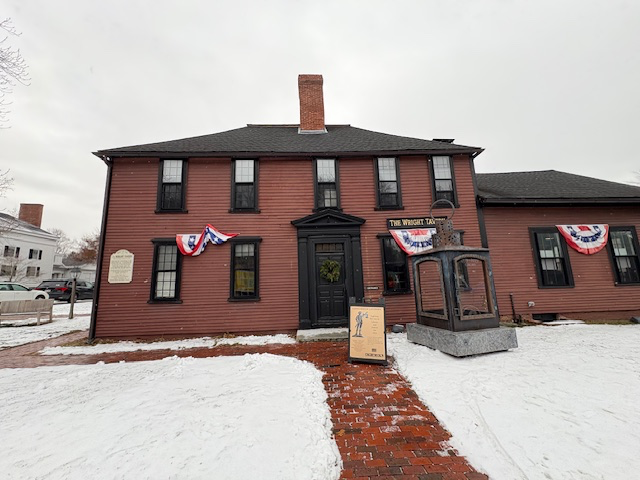
The Wright Tavern
Standing in the center of Concord, Massachusetts, the Wright Tavern has witnessed some of the most important moments in American history. Built in 1747 by Amos Wright, the tavern quickly became a gathering place where travelers, townspeople, and political leaders exchanged news and ideas. In colonial New England, taverns served not only as inns but […]

