Teatre Romea
On Carrer de l’Hospital in Barcelona’s Raval district, the Teatre Romea preserves a history closely connected with the development of Catalan theater. Behind its columned façade, generations of actors and playwrights helped establish Catalan as a language of popular entertainment and serious dramatic expression.
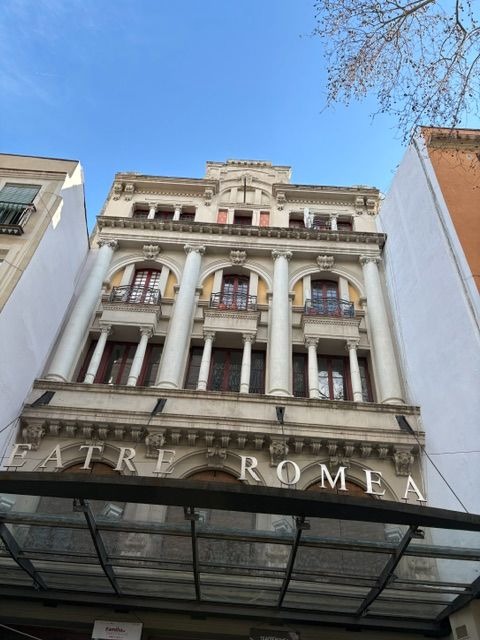
The theater opened on November 18, 1863, in premises previously occupied by the Casino d’Artesans and the Tertúlia Progressista society. Intended for the city’s middle and working classes, it offered a gathering place for audiences beyond Barcelona’s wealthiest circles. Its name honors Julián Romea, a celebrated nineteenth-century actor.
A defining chapter began in 1867 with the production of La rosa blanca by Frederic Soler, better known by his pen name, Serafí Pitarra. Soler became closely involved in the theater’s artistic direction, and the Romea developed into an important home for Catalan-language drama.
Its stage provided opportunities for writers including Àngel Guimerà, Josep Feliu i Codina, and Josep Maria Arnau. Their work helped broaden the possibilities of theater in Catalan, bringing local speech, social relationships, humor, and dramatic conflict before a public audience.
The Romea’s influence continued into the twentieth century. In 1981, it became the home of the Centre Dramàtic de la Generalitat, serving an important public role before the establishment of the Teatre Nacional de Catalunya.
Today, the Romea remains a working theater. Its significance extends beyond the survival of an old performance hall: it represents the sustained work of writers, performers, and audiences who helped give Catalan drama an enduring place in Barcelona’s cultural life.
Read More From Nancy
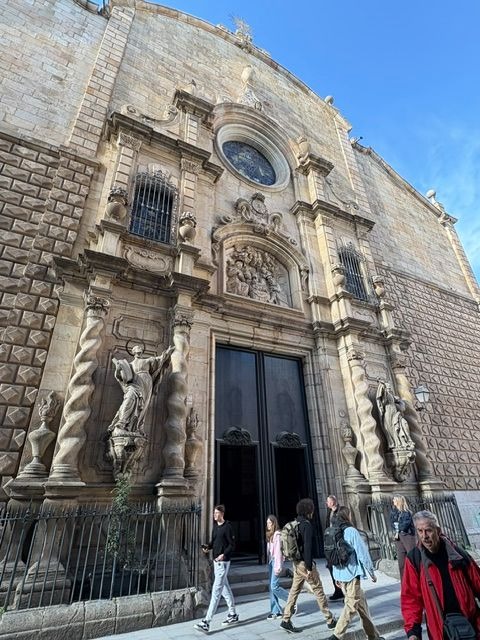
Church of Mare de Déu de Betlem
At the corner of La Rambla and Carrer del Carme, the Church of Mare de Déu de Betlem preserves an elaborate Baroque entrance amid one of Barcelona’s busiest areas. Twisting stone columns, sculpted saints, and a relief of the Nativity identify a church whose history includes two destructive fires and the expulsion of the religious […]
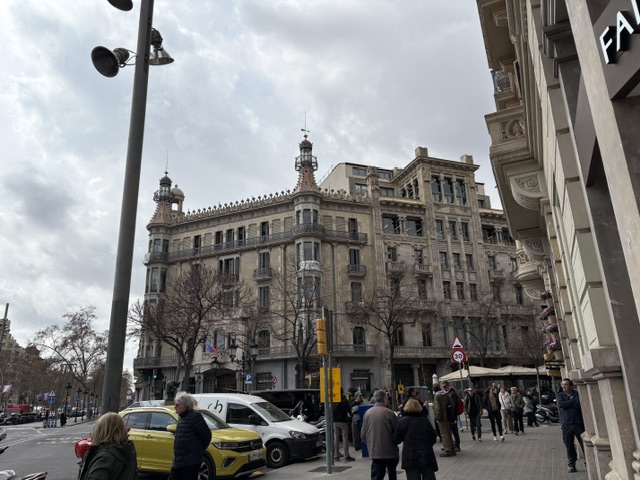
Cases Rocamora
Walking along Passeig de Gràcia, we noticed a building whose slender turrets and reddish roofs gave it an almost castle-like appearance. Rows of balconies stretched along the stone façade, while projecting windows and carved ornament added detail above the busy sidewalk. These were the Cases Rocamora, a group of residences that reflect the ambitions of […]
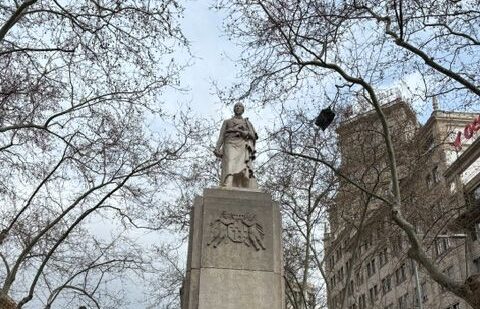
The Monument to Joan Güell i Ferrer
On a landscaped strip along Barcelona’s Gran Via, a stone figure stands above the surrounding traffic and pedestrians. Beneath him, carved figures and symbols decorate a tall pedestal. The monument honors Joan Güell i Ferrer, a nineteenth-century industrialist whose story connects Barcelona’s textile factories, political life, and one of its most familiar family names. Born […]

