The Original Ticket Windows
Built between 1905 and 1908, the Palau de la Música Catalana was designed by architect Lluís Domènech i Montaner as the home of the Orfeó Català choral society. Its original entrance was formed by two large arches opening directly from the narrow street into the vestibule. Between them stood a substantial brick column containing two small ticket windows.
Concertgoers arriving for a performance could purchase or collect their tickets at these windows before entering the building. Their placement was practical, allowing the business of admission to be handled without interrupting the movement of people through the entrance arches.
Domènech i Montaner did not allow that practical purpose to limit their appearance. Each opening was framed by concentric arches decorated with colorful floral mosaics. Flowers, leaves, and geometric patterns spread across the surrounding brickwork, transforming the ticket windows into architectural features worthy of attention.
The mosaic decoration was created by Lluís Bru, who worked on many of the Palau’s ceramic surfaces. Bru was one of numerous sculptors, mosaic artists, metalworkers, and stained-glass craftsmen who collaborated with Domènech i Montaner. Their combined work reflects the Catalan Modernista belief that architecture and the decorative arts should form a complete and unified composition.
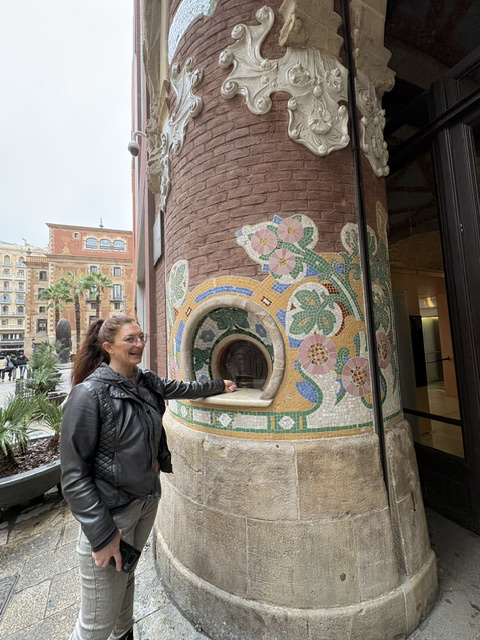
The windows also reveal how carefully Domènech i Montaner considered a visitor’s entire experience. The sense of occasion did not begin after an audience member reached a seat or heard the first notes of music. It began on the street, while approaching the entrance, purchasing a ticket, and passing through a setting filled with color and craftsmanship.
Changes to the Palau eventually created a new principal entrance, and the original windows no longer serve their former purpose. They remain embedded in the entrance column, preserving a small part of how audiences first experienced the concert hall when it opened in 1908.
These ticket windows are easy to overlook beside the Palau’s grand sculpture, elaborate balconies, and richly decorated concert hall. Yet they express one of the building’s defining ideas: nothing was considered merely functional. Even the simple act of purchasing a ticket became part of the artistic experience.
Read More From Nancy
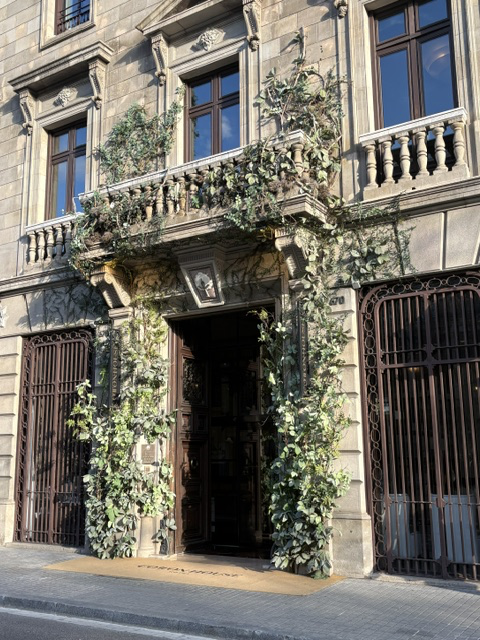
Cotton House Hotel
Whenever we travel, we enjoy staying in places that have a history of their own. A historic hotel often becomes more than a place to spend the night; it becomes another way of understanding the city we have come to explore. That was certainly true during our stay at the Cotton House Hotel in Barcelona. […]
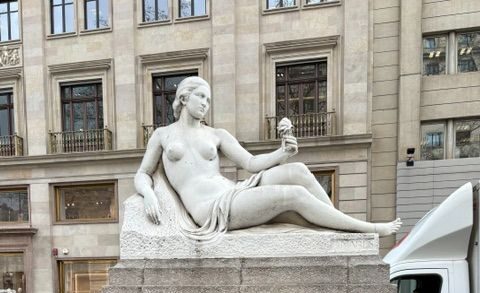
The Monument to Francesc Soler i Rovirosa
Along Barcelona’s Gran Via, we came across a reclining marble woman holding a rose. Her relaxed pose and quiet expression contrasted with the traffic moving past the surrounding gardens. On the pedestal beneath her was a portrait medallion and a name: Francesc Soler i Rovirosa. The monument honors an artist whose work helped audiences enter […]
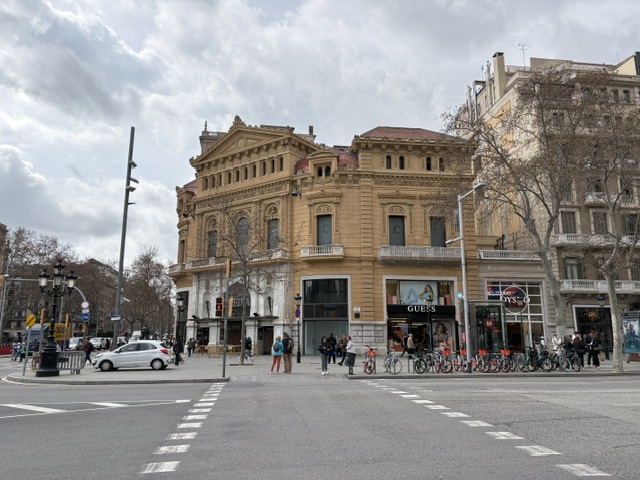
Palau Marcet: From Private Palace to Cinema
While walking through Barcelona, we came across a building whose ornate façade stood out against the activity of the surrounding streets. Tall arched windows, carved decoration, and a triangular pediment gave it the appearance of a grand residence. The Comèdia name above the entrance suggested another purpose. This was Palau Marcet, a private palace that […]

