The Monument to Joan Güell i Ferrer
On a landscaped strip along Barcelona’s Gran Via, a stone figure stands above the surrounding traffic and pedestrians. Beneath him, carved figures and symbols decorate a tall pedestal. The monument honors Joan Güell i Ferrer, a nineteenth-century industrialist whose story connects Barcelona’s textile factories, political life, and one of its most familiar family names.
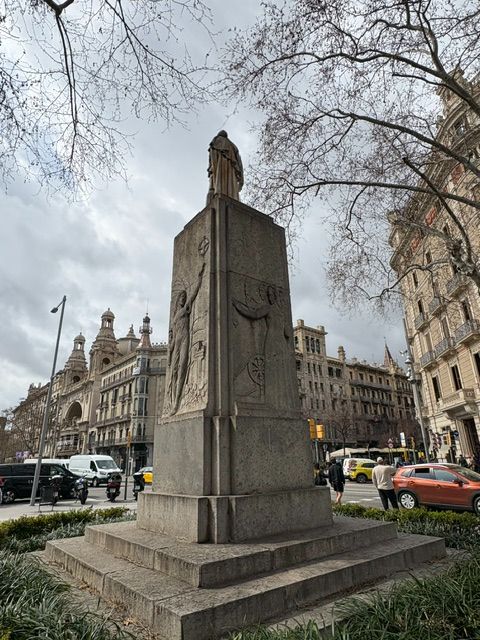
Born in 1800 in Torredembarra, Güell became an important textile manufacturer and founded the Vapor Vell factory in Barcelona’s Sants district. He also entered public life, serving as a city councilor, deputy, and senator. A strong advocate of protectionism, he supported policies intended to defend domestic manufacturing from foreign competition. These activities made him an influential figure during Catalonia’s industrial expansion.
The Güell name also connects this monument to Antoni Gaudí. Joan’s son, Eusebi Güell, became the architect’s influential patron, supporting projects that would become central to Barcelona’s architectural identity. The man commemorated here was the father of that better-known patron, placing the monument within a family history that links industry with art and architecture.
Barcelona inaugurated the original monument in 1888, the year of its Universal Exposition. Architect Joan Martorell designed the pedestal, and sculptor Rossend Nobas created the statue of Güell. Other artists contributed figures representing agriculture, art, maritime activity, and industry. Together, they presented the industrialist within a broader celebration of the work and enterprise associated with the city’s prosperity.
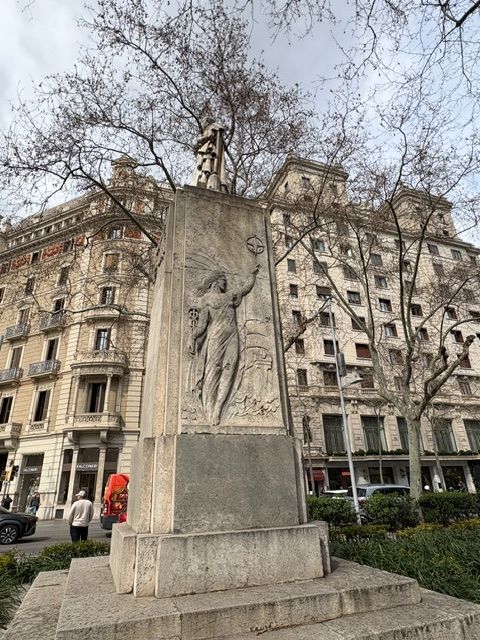
But the monument we encountered was not the complete nineteenth-century original. In 1936, during the Spanish Civil War, the statue was pulled down and the monument destroyed. Reconstruction took place in the 1940s. Sculptor Frederic Marès recreated Güell’s figure, closely following the appearance of the earlier statue, while the pedestal received an entirely new design. Its history therefore includes both the confidence of industrial Barcelona and the upheaval that later swept through the city.
From a distance, attention goes to the man standing at the top. Closer inspection reveals the activities the city chose to place beneath him: manufacturing, trade, and connections across the sea. The pedestal helps explain why he was honored and how Barcelona represented its economic identity.
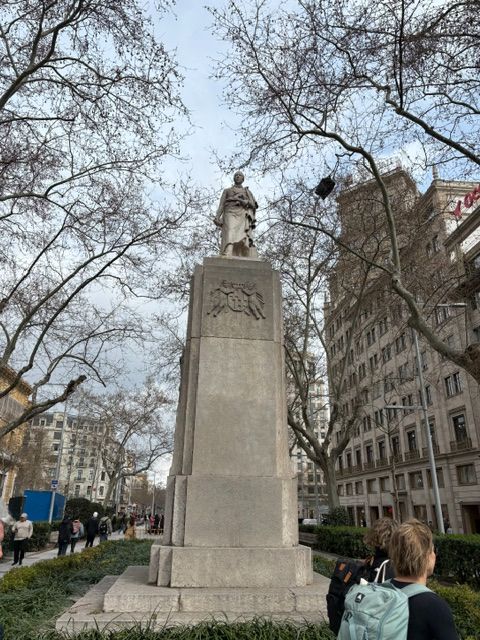
Our stop became another reminder of how much a public monument can hold. Here was a textile manufacturer, the father of Gaudí’s patron, and a memorial that had been destroyed and rebuilt. Amid the movement of an ordinary Barcelona street, those different chapters remained available to anyone curious enough to pause to.
Read More From Nancy
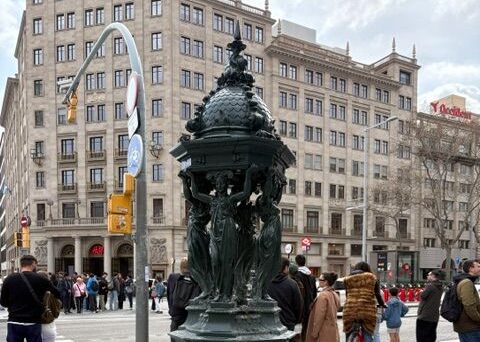
The Wallace Fountain
Among Barcelona’s grand buildings and busy streets, a small drinking fountain carries a story of public service expressed through art. At the intersection of Passeig de Gràcia and Gran Via, four sculpted women support an ornamental dome above a cast-iron pedestal. Its dark green surface and elaborate decoration make an everyday necessity into something worth […]
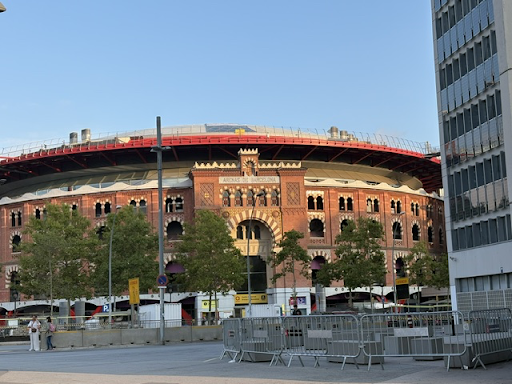
Le Monumental Bullring
As we made our way to the airport, our driver pointed out this impressive circular building and explained that it was once Barcelona’s famous bullfighting arena. Although I had not planned to visit it, learning its story offered another glimpse into the changing culture and traditions of Spain. Known as La Monumental, the arena opened […]
Cotton House Hotel
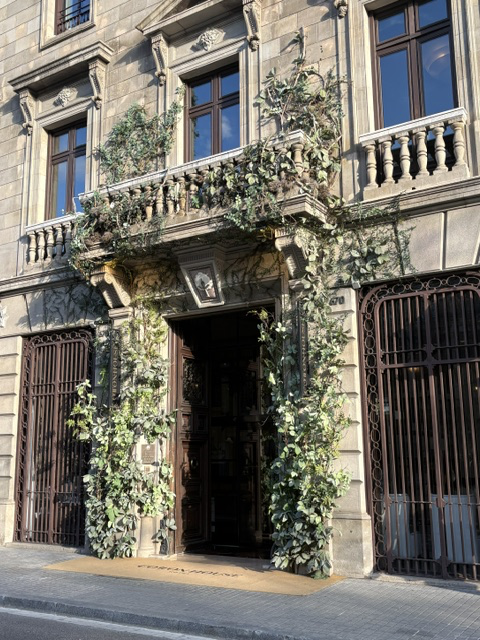
Whenever we travel, we enjoy staying in places that have a history of their own. A historic hotel often becomes more than a place to spend the night; it becomes another way of understanding the city we have come to explore. That was certainly true during our stay at the Cotton House Hotel in Barcelona. […]

