Hospital de la Santa Creu
Within Barcelona’s Raval district, the courtyard of the old Hospital de la Santa Creu preserves the setting of an institution that cared for the city for more than five centuries. Stone buildings surround a garden where a carved cross recalls the religious and charitable foundations of the hospital’s work.
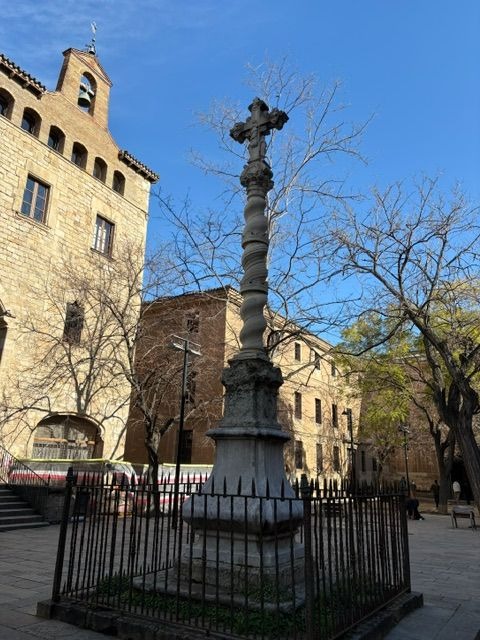
The hospital was founded in 1401 by combining six existing hospitals. Financial difficulties had made it increasingly difficult for these smaller institutions to operate independently. Barcelona’s municipal council and cathedral chapter agreed to bring their resources together, creating a single hospital intended to serve the city and its surrounding communities.
Construction began that year in the presence of King Martin the Humane. The complex developed into an important example of Catalan civil Gothic architecture, with large wards arranged around a central courtyard. Later generations expanded and altered the buildings as the institution’s responsibilities grew.
The hospital’s history reflects the changing relationship between charity and medicine. Established through civic and ecclesiastical cooperation, it provided assistance to people who often lacked the means to obtain care elsewhere. By the nineteenth century, it had also become an important center for medical teaching and scientific activity.
Eventually, the old buildings could no longer meet the demands of a growing city and modern hospital practice. In 1929–1930, patients and services moved to the new Hospital de la Santa Creu i Sant Pau, designed as a spacious complex of separate pavilions.
The medieval hospital then entered a different period of public service. Since 1939, the Biblioteca de Catalunya has occupied its former wards. Rooms once devoted to caring for patients now preserve books, manuscripts, and other records of Catalonia’s cultural history.
Read More From Nancy
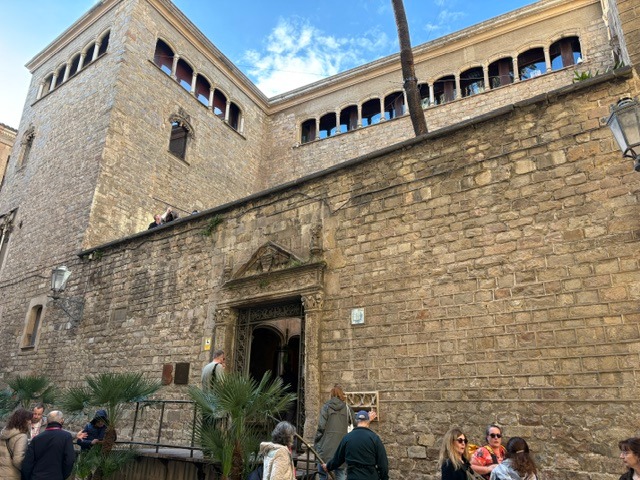
Casa de l’Ardiaca
Beside Barcelona’s cathedral, Casa de l’Ardiaca preserves centuries of changes within a single building. Its name means “Archdeacon’s House,” recalling its long association with a senior member of the cathedral’s clergy. Roman masonry, Gothic architecture, and Renaissance details reflect the successive generations that adapted the property. The residence has origins in the twelfth century and […]
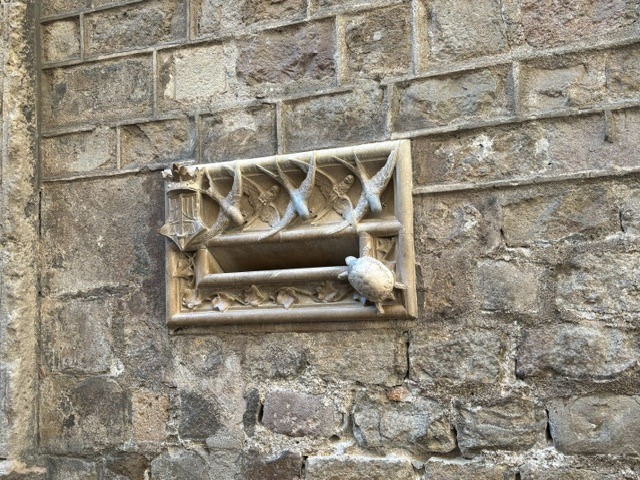
The Mailbox at Casa de l’Ardiaca
Beside the entrance to Casa de l’Ardiaca, a marble mailbox brings an unexpected detail to the streets of Barcelona’s Gothic Quarter. Birds spread their wings above curling ivy, while a tortoise rests below. Created for a lawyers’ association, its decoration has long been interpreted as a commentary on the workings of justice. The Barcelona Bar […]
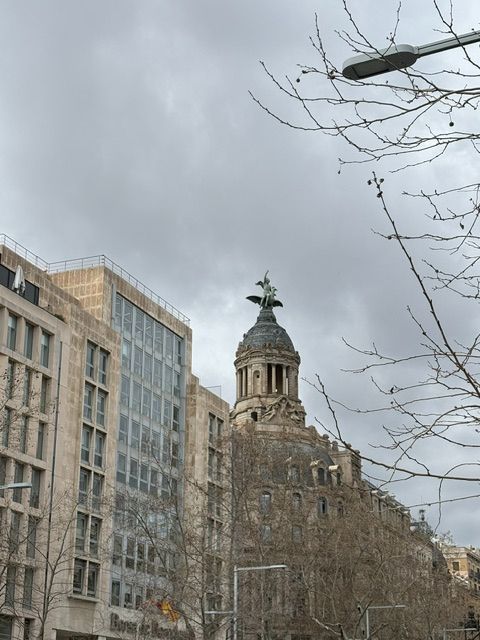
A Symbol Above the City
Walking along Passeig de Gràcia, I noticed a domed tower rising above the trees. At its summit, a winged figure stood against the sky. It was a detail that invited a closer look, and learning its purpose revealed a connection between architecture, mythology, and the business that commissioned the building. This was the Barcelona headquarters […]

