The Flax Hackle
A wooden board fitted with sharp iron teeth preserves one step in the long process of making linen. Known as a hackle, or hetchel, this tool combed flax fibers before they were spun into thread. Its simple construction conceals the skill and repeated effort required to turn a harvested plant into useful cloth.
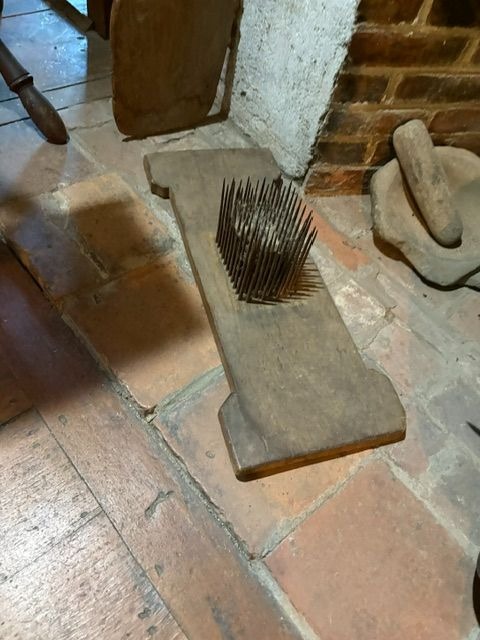
Linen comes from fibers within the flax stalk. Before those fibers reached the hackle, the plants underwent several stages of preparation. Retting loosened the fibers from surrounding plant material. Breaking and scutching then removed much of the woody stalk.
The worker drew bundles of prepared flax through the hackle’s upright teeth. This removed remaining fragments, separated shorter fibers, and aligned the longer strands for spinning. Successively finer combs could refine the material further.
The long fibers produced finer linen thread, while the shorter fibers, called tow, could be used for coarser textiles. Preparing the fibers was only part of the work: spinning and weaving still lay ahead before cloth could become clothing, towels, sheets, or other household necessities.
Tools such as this connect the finished textiles of early homes with the labor behind them. A piece of linen represented far more than time at a loom. It depended on growing, harvesting, processing, spinning, and weaving—tasks requiring different tools and practiced hands.
Displayed in Plymouth, the hackle offers a way to understand domestic history through an ordinary working object. Its iron teeth recall the effort involved in producing materials that people used, washed, repaired, and depended upon every day.
Read More From Nancy
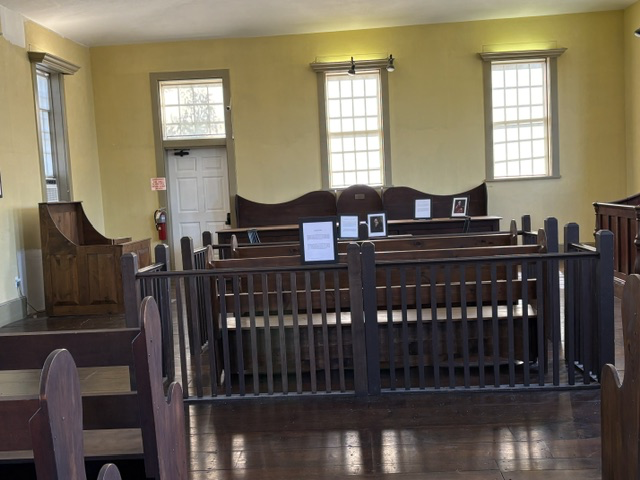
The Jury Box
The jury box in Plymouth’s 1749 Court House gives us another glimpse into how justice was administered in colonial Massachusetts. Enclosed by a wooden railing and positioned directly before the justices, this was where local citizens sat to listen to testimony, consider the evidence, and reach a verdict. Serving on a jury was considered an […]
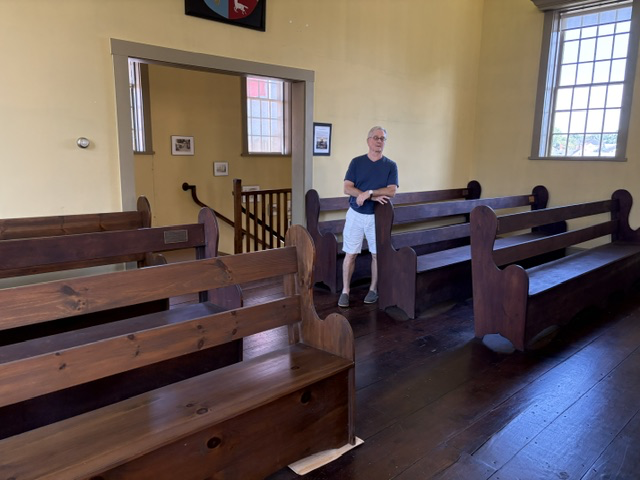
Spectator Seating
Along the sides and rear of the courtroom in Plymouth’s 1749 Court House are rows of simple wooden benches where members of the public could sit and watch the proceedings. Marty standing among them gives a good sense of just how intimate this courtroom would have been. There was very little distance between the spectators […]
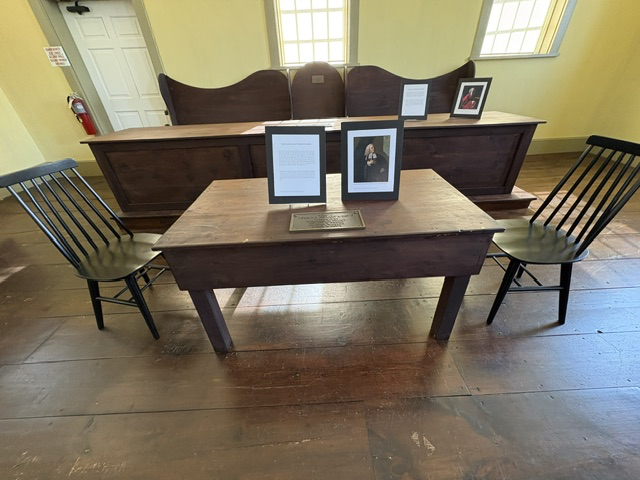
Clerk and Attorney’s Table
Directly in front of the justices’ bench in Plymouth’s 1749 Court House sits the clerk and attorneys’ table. Its position at the center of the courtroom reflects the important work that took place here as each case moved through the colonial court. The court clerk was responsible for creating the official written record of the […]

