A Beaver Pelt
A beaver pelt stretched within a wooden frame commemorates a connection between Plymouth, Massachusetts, and Augusta, Maine. Its handwritten inscription records a voyage from Plymouth to Augusta in 2003, marking the 375th anniversary of the opening of the Cushnoc trading post.
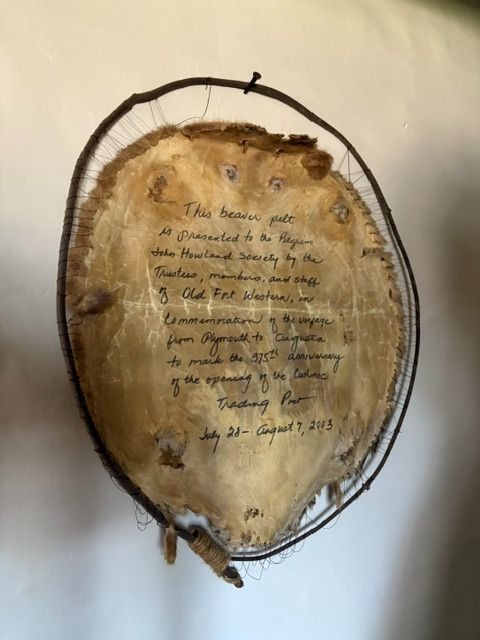
Presented to the Pilgrim John Howland Society by the trustees, members, and staff of Old Fort Western, the pelt is a modern commemorative gift. The material chosen for that gift recalls a commodity that played an important role in Plymouth Colony’s finances.
In 1628, Plymouth colonists established a trading post at Cushnoc on the Kennebec River, in what is now Augusta. There they exchanged goods with Native traders for furs, connecting the colony to an inland trading network and the European market.
Beaver fur was particularly valuable because it could be processed into felt for fashionable hats. Profits from the trade helped the Plymouth colonists meet obligations to their English financial backers and obtain supplies.
The trading post also reveals how far Plymouth’s economic interests extended beyond its settlement. Its prospects depended partly on waterways, trading relationships, and markets reaching from the Kennebec Valley across the Atlantic.
The commemorative pelt brings that wider history into a single object. Its inscription records a twentieth-first-century act of remembrance, while the pelt itself recalls the trade that linked two communities centuries earlier.
Read More From Nancy
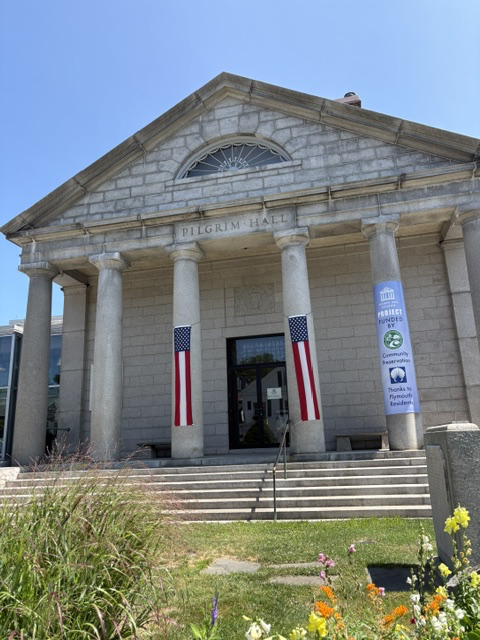
Pilgrim Hall Museum
Just a few blocks from the Plymouth waterfront stands Pilgrim Hall Museum, another place where the story of Plymouth becomes tangible. Founded by the Pilgrim Society in 1824 and opened the following year, it is the oldest continuously operating public museum in the United States. The imposing granite building was designed specifically to preserve the […]
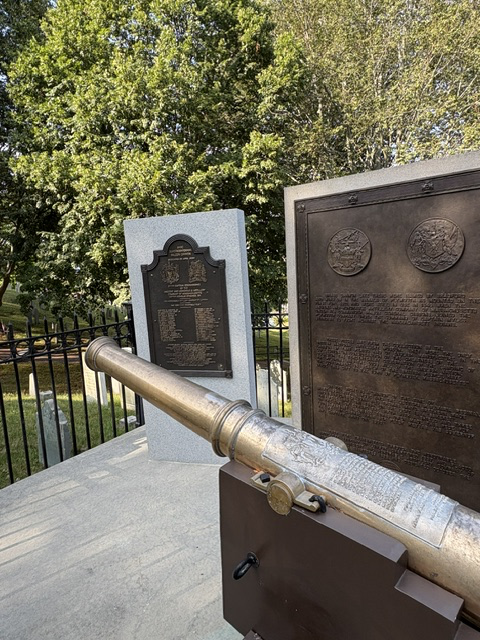
The Burial Hill Cannons
Near the summit of Burial Hill, a cannon and a series of bronze plaques mark the approximate location of Plymouth’s first fort. The settlers chose the hill because its height provided a broad view of the harbor and the settlement below. Their fort, completed in the early 1620s, had cannon mounted on its roof and […]
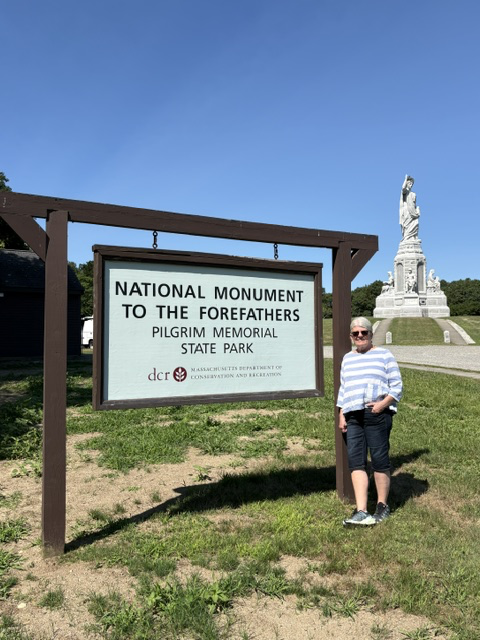
National Monument to the Forefathers
We have visited Plymouth many times over the years, so I am still amazed that it took us this long to discover the National Monument to the Forefathers. When we finally visited this year, I found it almost mind-blowing. Rising more than 80 feet above us, the monument is enormous, intricately sculpted, and filled with […]

