The Skinny House
Across from Copp’s Hill Burying Ground, a remarkably narrow wooden house stands among the larger brick buildings of Boston’s North End. At 44 Hull Street, the Skinny House rises four stories while measuring only about ten feet across its street-facing exterior. Its entrance is tucked into the alley beside it, allowing the slender front to accommodate windows on each floor.
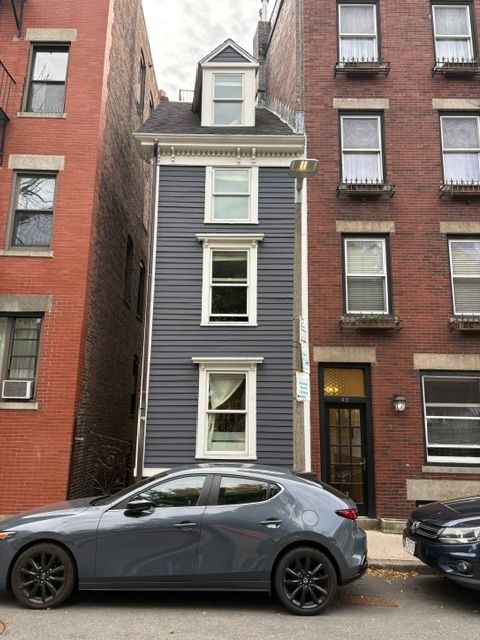
The house is often called the “Spite House,” a name associated with a tale of two brothers who inherited land. According to the familiar legend, one brother returned from the Civil War to find that the other had built a large home occupying most of their shared property. In retaliation, he supposedly constructed this narrow dwelling on the remaining strip to block his brother’s sunlight and view. Although frequently repeated, the story has not been established by historical evidence.
Historical records offer another explanation. The Skinny House is a surviving portion of a larger nineteenth-century wooden building that was divided into smaller residences. Remodeling around 1884 gave it much of its present appearance. The neighboring sections were later replaced with brick houses, leaving this slender wooden portion standing. The alley alongside it once provided access to additional homes behind Hull Street, helping explain why this particular section remained so narrow.
Its significance extends beyond its unusual dimensions. The house preserves a glimpse of the wooden buildings that once formed a larger part of the North End. As the neighborhood became more densely developed, buildings were divided, replaced, and adapted to fit limited space. Here, a small piece of that earlier streetscape survived.
The legend gives the house a memorable name, but its history offers something equally interesting: an opportunity to see how a neighborhood changed around a building that remained.
Read More From Nancy
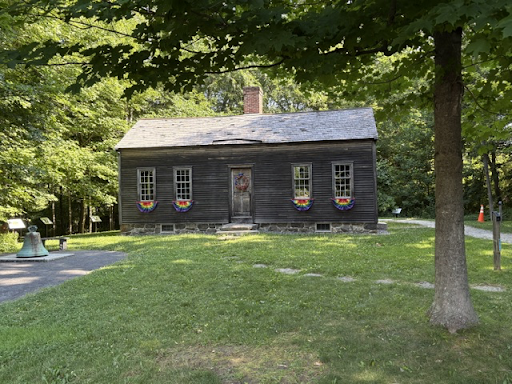
The Robbins House
When most people visit Concord, Massachusetts, they come to walk across the Old North Bridge, stand where the American Revolution began, and visit the homes of Emerson, Thoreau, Hawthorne, and Alcott. I have made that journey many times over the years and thought I knew Concord’s history well. On one of my more recent visits, […]
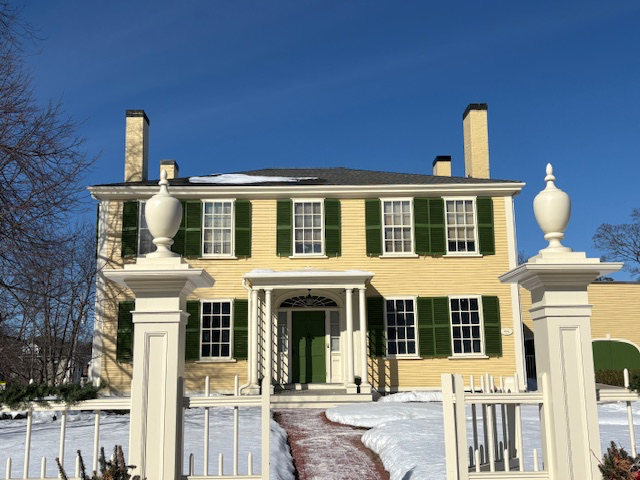
Jackson Homestead
We have visited the Jackson Homestead in Newton many times over the years. Along with its rich local history, the house holds an important place in the story of the Underground Railroad. When I first visited it with my children, I remember seeing the iron shackles that had once been used on enslaved people. Seeing […]
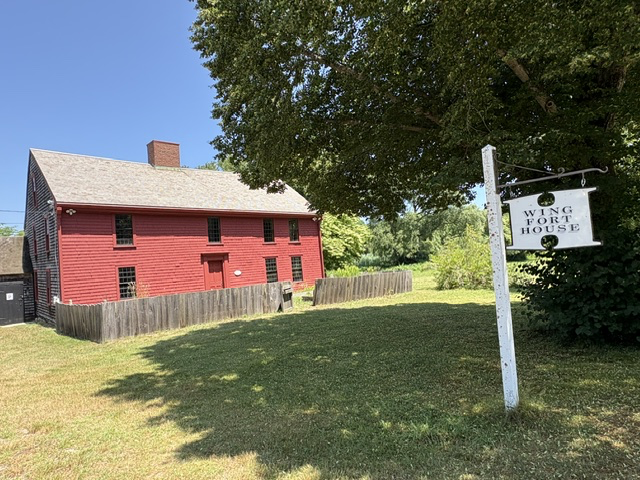
The Wing Fort House
Along Spring Hill Road in East Sandwich stands a house whose simple exterior hides an extraordinary history. The Wing Fort House dates to about 1641, placing its beginnings within the first years of Sandwich itself. What makes it especially unusual is the continuity of the family connected with it: generations of the Wing family occupied […]

