Saint Leonard’s Church
During our walk through Boston’s North End, we stopped at Saint Leonard’s Church. Its brick façade, arched entrances, and circular window draw attention from the street, but its history also reveals how Italian immigrants established a community in their new country.
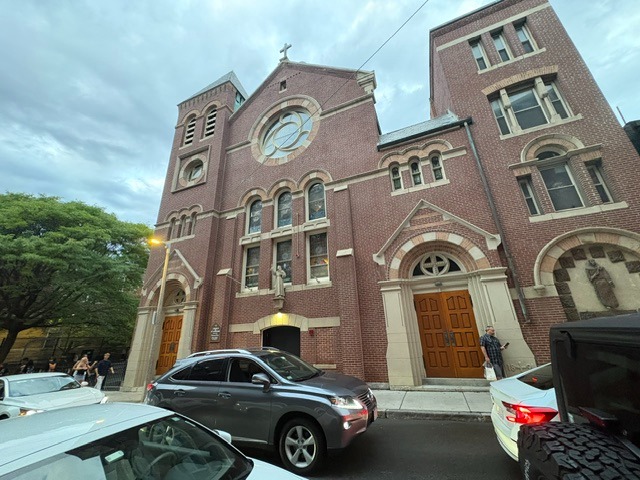
The parish began in 1873, when Archbishop John Williams called upon Franciscan friars to serve Boston’s growing Italian population. Many of the friars were immigrants themselves. They offered a place where newcomers could practice their faith within a familiar language and religious tradition.
As the congregation expanded, so did its buildings. By the mid-1890s, the parish counted nearly twenty thousand people. Under Father Ubaldus Pandolfi, parishioners raised $160,000 to build a larger worship space. The upper church was consecrated on November 6, 1899, and dedicated to Saint Leonard of Port Maurice, a Franciscan preacher.
The parish’s work extended into education and the care of children. Saint Anthony School opened on parish property in 1902 with two hundred pupils; enrollment doubled within two years. Following the devastating influenza epidemic, the friars and community members helped establish the Home for Italian Children in Jamaica Plain, which opened in 1921. These efforts made the church an institution that supported families through both ordinary needs and extraordinary hardship.
Preserving the church has required continued commitment. A major restoration completed in 2017 renewed its stained-glass windows, gilded ceiling, and frescoes. The work protected the craftsmanship of the interior while preparing the building for another generation of worshippers and visitors.
Saint Leonard’s gives us another way to understand the North End. Alongside its colonial landmarks are places built by later arrivals who shaped the neighborhood through their faith, work, and care for one another. This church remains a visible part of that history.
Read More From Nancy
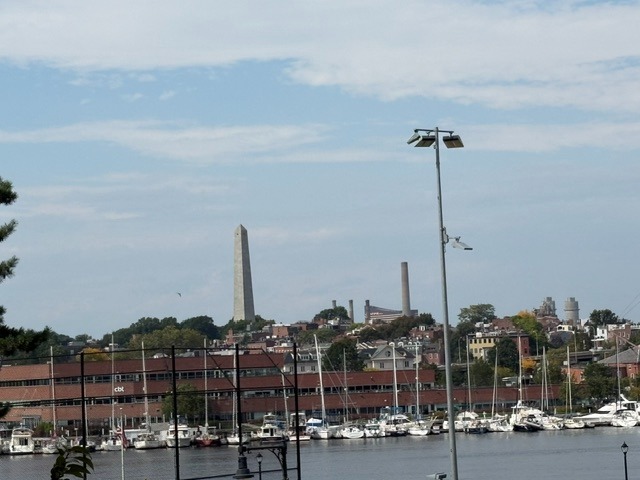
Bunker Hill Monument
Looking across the water from Boston’s North End, we could see the Bunker Hill Monument rising above Charlestown. Its granite obelisk marks a battlefield that helped demonstrate the determination of the colonial forces during the opening months of the American Revolution. Despite its name, the monument stands on Breed’s Hill, where much of the Battle […]
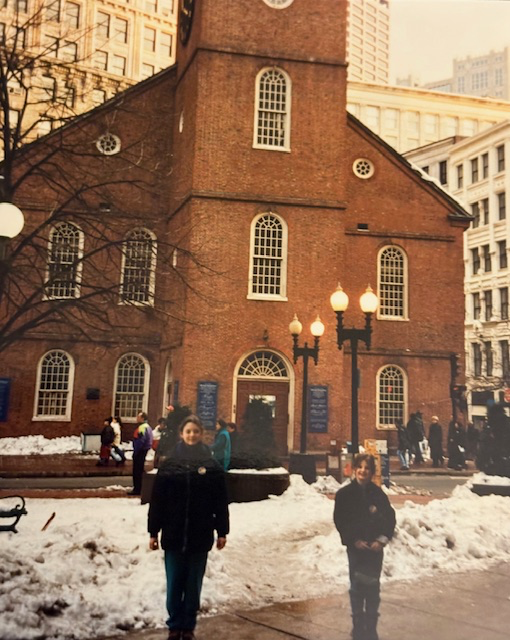
Old South Meeting House
Our daughters were standing in the snow outside the Old South Meeting House on a particularly meaningful day. We had come to Boston for the annual reenactment of the meeting that led to the Boston Tea Party. Rather than simply reading about what happened on December 16, 1773, we were able to experience the story […]
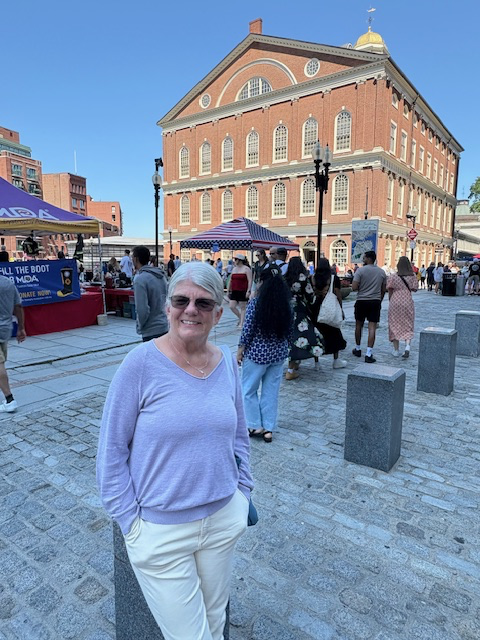
Boston National Historical Park
Standing here in front of Faneuil Hall, you feel both the energy of the present and the weight of the past at the same time. Built in 1742 as a marketplace and meeting hall, it quickly became something more. This is where the people of Boston gathered to speak openly about their future, and where […]

