St. Stephen’s Church
Across Hanover Street from Paul Revere Mall stands St. Stephen’s Church, a building whose history follows the changing religious and community life of Boston’s North End. Completed in 1804 as the New North Church, it is the only surviving church in Boston designed by Charles Bulfinch, the architect of the Massachusetts State House. Its balanced brick façade and white cupola preserve a distinctive example of the city’s early nineteenth-century architecture.
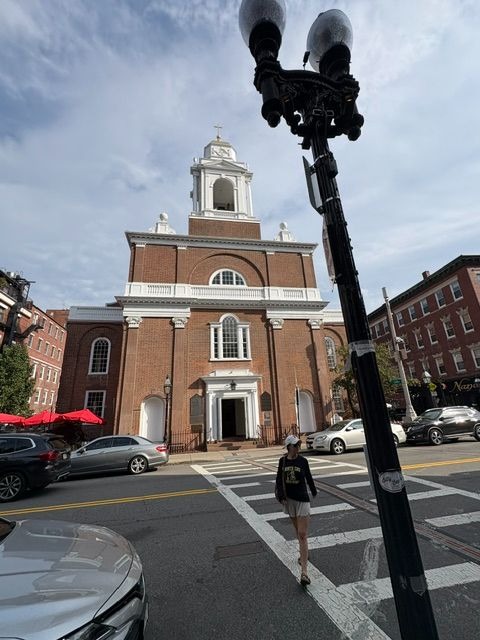
The site’s history reaches back further. The first New North Meeting House was erected here in 1714 and enlarged in 1730. Following the British evacuation of Boston in March 1776, its minister, Andrew Eliot, preached a thanksgiving sermon attended by General George Washington. That earlier meetinghouse connected this location with the Revolutionary events unfolding throughout the neighborhood.
Bulfinch’s replacement building belonged to a later chapter, when Boston was developing the architecture and institutions of the new republic. Its bell was cast by Paul Revere, providing a connection to his work as a craftsman and manufacturer after the Revolution. Here, his contribution was something the neighborhood could hear as well as see.
As immigration reshaped the North End, the building’s congregation changed. In 1862, it became a Roman Catholic church and took the name St. Stephen’s. That transition reflected the growing presence of Catholic families in a neighborhood previously dominated by Protestant congregations. The building continued to serve the community through these changes.
Among those baptized here were John Francis Fitzgerald, later Boston’s mayor, and his daughter Rose Fitzgerald Kennedy. Their connection places the church within the history of a family whose public life extended far beyond the North End. For them, it was also a neighborhood church associated with the beginnings of family life.
Preserving the building required another generation’s attention. A restoration completed in 1965 drew support from North End women and men whose names were recorded on its pews. Their contributions helped protect a church that had already witnessed more than a century and a half of neighborhood change.
St. Stephen’s brings several layers of Boston’s history together in one place: an early meetinghouse, Bulfinch’s architecture, Revere’s bell, immigrant religious life, and the efforts of residents to preserve a familiar landmark.
Read More From Nancy
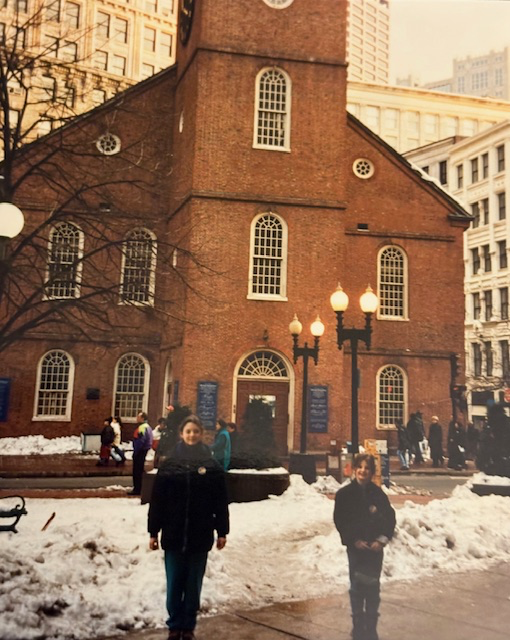
Old South Meeting House
Our daughters were standing in the snow outside the Old South Meeting House on a particularly meaningful day. We had come to Boston for the annual reenactment of the meeting that led to the Boston Tea Party. Rather than simply reading about what happened on December 16, 1773, we were able to experience the story […]
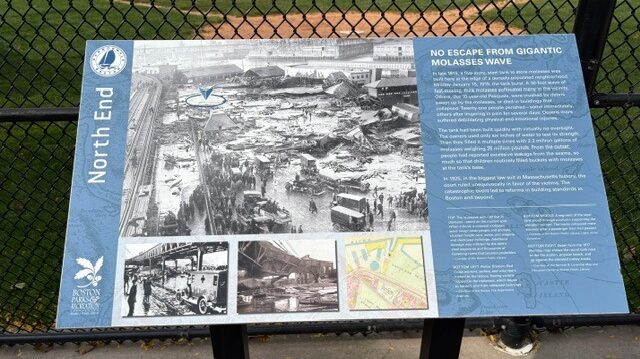
The Great Molasses Flood
Along Commercial Street in Boston’s North End, a waterfront marker recalls a disaster that can be difficult to imagine amid the neighborhood’s activity today. On January 15, 1919, a massive steel storage tank burst, releasing approximately 2.3 million gallons of molasses into the surrounding streets. Twenty-one people died, and roughly 150 were injured. The tank […]
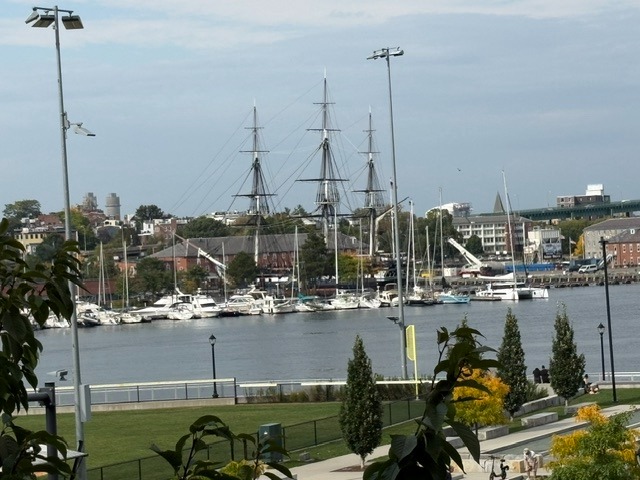
USS Constitution: Old Ironsides
Looking across the harbor during our walk through Boston’s North End, we could see the tall masts of USS Constitution at the Charlestown Navy Yard. From this distance, the ship connects the modern waterfront with the era when wooden sailing vessels carried the nation’s commerce and defended its interests at sea. Constitution was launched on […]

