Paul Revere Mall and Statue
Walking through Boston’s North End, I stopped at Paul Revere Mall to spend more time with a familiar landmark. The bronze figure of Revere on horseback stands above the brick walkway, surrounded by trees and the buildings of the neighborhood he once called home. His extended arm and the horse’s raised foreleg give the monument a sense of movement, even within this sheltered space.
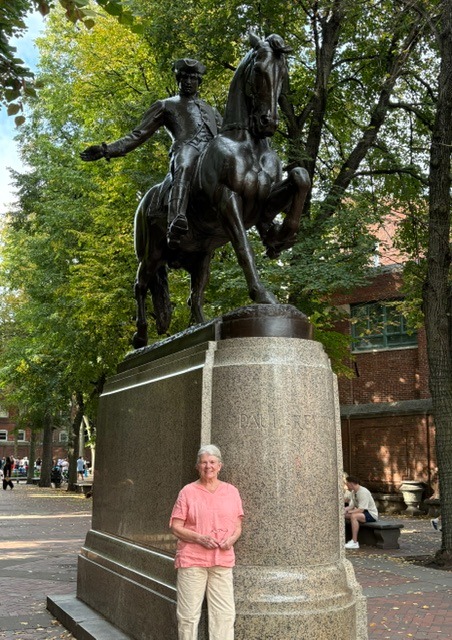
Also known as the Prado, the Mall connects Hanover Street with the area near Old North Church. Landscape architect Arthur Shurcliff, assisted by his son Sidney, designed the walkway in 1933, drawing inspiration from Havana’s Paseo del Prado. The project widened an existing passage called Webster Avenue, removing tenement buildings to create an open view between St. Stephen’s Church and Old North Church. Its creation brought public space to the densely built North End while changing an established residential streetscape.
Brick paving, shade trees, granite benches, and a fountain give the Mall the character of an outdoor gathering place. Bronze plaques set into its enclosing walls commemorate people, places, and events associated with the North End. Together, they invite visitors to consider the neighborhood’s history beyond its most famous landmarks.
The statue has its own remarkable history of persistence. In 1883, twenty-two-year-old sculptor Cyrus Dallin won Boston’s competition for a monument honoring Paul Revere. Originally intended for Copley Square, the project became entangled in decades of revisions and political obstacles. Dallin produced seven versions over fifty-seven years before the monument finally took its place in the North End in 1940.
Funding came through the George Robert White Fund, established by a Boston benefactor to create works of public usefulness and beauty. The completed bronze brought Dallin’s long effort into a setting closely associated with Revere’s life and the city’s Revolutionary history.
The monument presents the mounted messenger who became central to Revere’s public image. Its placement near Old North Church reinforces that association, while the surrounding plaques broaden the story to include other residents, craftspeople, religious leaders, and those who served in wartime.
Stopping here offers an opportunity to appreciate both the history being remembered and the work of remembrance itself: an artist’s decades of determination, a deliberately designed public landscape, and a neighborhood whose stories fill the walls around it.
Read More From Nancy
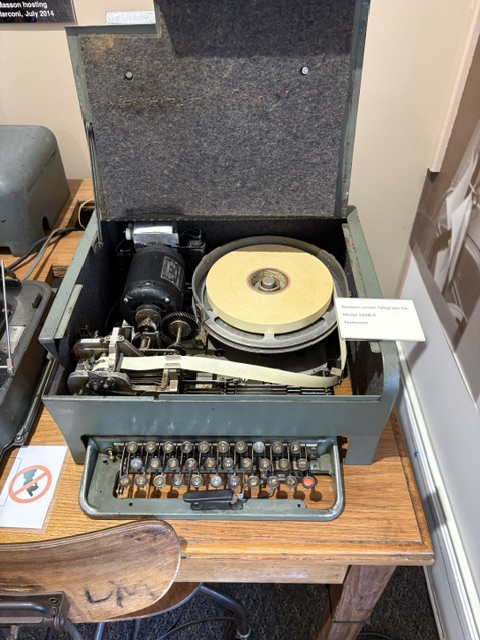
From Telegraph to Teletype
The development of telegraphy transformed long-distance communication. Instead of waiting days or weeks for a written message to travel by ship, train or horseback, information could be transmitted across wires almost instantly. In 1844, Samuel Morse publicly demonstrated an electric telegraph connection between Washington, D.C., and Baltimore. Messages were translated into patterns of dots and […]
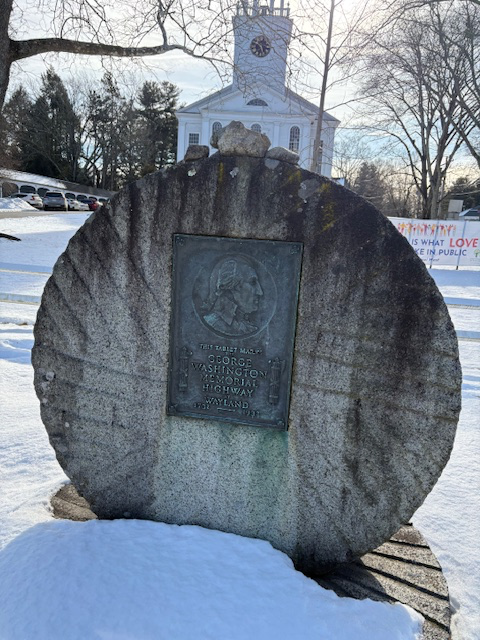
George Washington Marker
Driving through the town of Wayland, there is the round stone monument that sits along the roadside. Unlike grand statues that make historic events, this one is modest, a cylindrical stone pillar with a bronze marker identifying it as part of the George Washington Memorial Highway. The roadside marker reflects an interesting moment in American history when […]
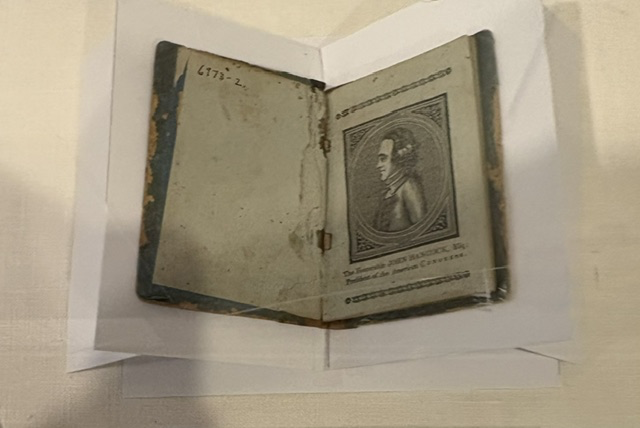
A 1777 Child’s Primer in Revolutionary
Inside Buckman Tavern in Lexington, I came across this remarkably small book. It is a children’s primer dating from 1777, only two years after the fighting at Lexington and Concord and just one year after the Declaration of Independence. On the first page, John Hancock is identified as a leader of the new nation. That […]

