Copp’s Hill Burying Ground
Following the Freedom Trail through Boston’s North End brought us to Copp’s Hill Burying Ground. Beyond the surrounding streets and brick residences, its trees and gravestones preserve a different view of the neighborhood, one shaped by the people who lived and worked here long before the city took its present form.
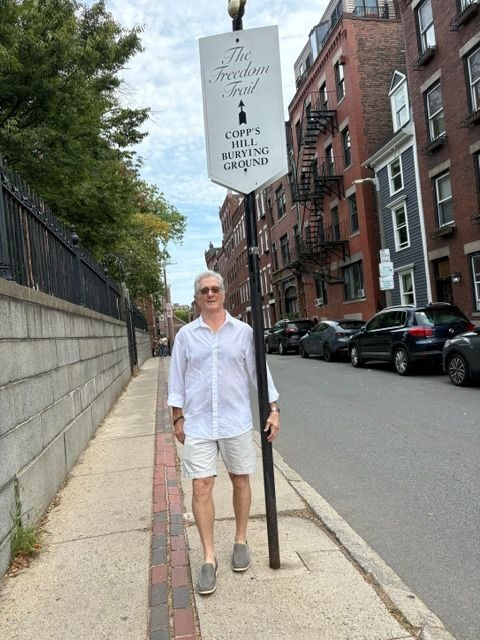
Established in 1659, Copp’s Hill is Boston’s second-oldest burying ground. It was originally known as the North Burying Ground or North Ground, distinguishing it from other burial places on the Boston peninsula. Its later name came from William Copp, an early settler and shoemaker who lived nearby. The grounds expanded through successive land purchases to encompass approximately two acres.
The hill once stood above a shoreline quite different from today’s. Its elevated position overlooked the Charles River and the approaches to the harbor, placing it within the landscape of a working seaport. The burying ground served generations of North End residents, including artisans, craftspeople, tradespeople, and their families. Used regularly through the 1850s, it holds the remains of more than 10,000 people, far more than the surviving markers alone would suggest.
Its history also includes Boston’s early Black community. Free and enslaved people of African descent were buried here, and many of their resting places are unmarked. Their presence is an essential part of understanding the neighborhood and the city: the people remembered at Copp’s Hill represented different occupations, circumstances, and degrees of freedom. The site preserves a connection to lives that are not always as visible in accounts of colonial Boston.
During the American Revolution, the hill’s position gave it military importance. British forces established artillery here, using the elevation to fire across the water toward the colonial fortifications on Breed’s Hill during the Battle of Bunker Hill on June 17, 1775. A place that had served as a burial ground for more than a century became part of the battlefield landscape. Its history connects the North End with the fighting in Charlestown and the larger struggle surrounding occupied Boston.
The grounds have changed since those early years. During the nineteenth century, Boston introduced paths, improved entrances, and planted shade trees. Gravestones were also rearranged into orderly rows, meaning their present positions do not necessarily identify the exact locations of the burials beneath them. What appears today as a settled historic landscape reflects both its original use and later decisions about how it should be maintained.
Walking here offers an opportunity to consider Boston through the lives of its residents. The larger events of history remain part of the setting, but so do work, family, community, and loss. On our passage through the North End, Copp’s Hill gave us another reason to pause along the Freedom Trail and consider the many generations whose lives became part of the city’s story.
Read More From Nancy
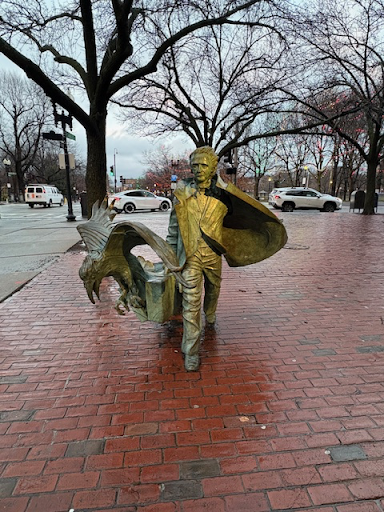
Edgar Allen Poe Statue
This is a statue of Edgar Allan Poe on the sidewalk along Boylston Street in Boston. He is caught in mid-stride, coat swirling with a raven perched atop a stack of books at his feet. The placement of this statue is intentional and rooted in Poe’s relationship with the city where his life began. Poe […]
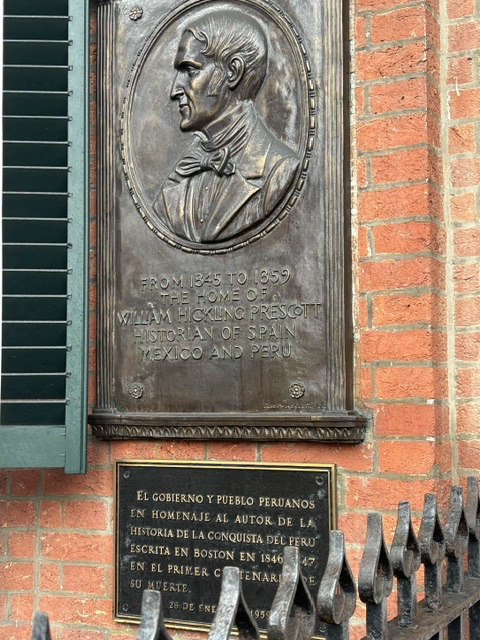
William Hickling Prescott
Walking through Boston’s Beacon Hill, it is easy to admire the elegant brick homes and historic streets without realizing how many remarkable people once lived behind these doors. One of those homes belonged to William Hickling Prescott, one of the nineteenth century’s most celebrated American historians. From 1845 until his death in 1859, Prescott lived […]
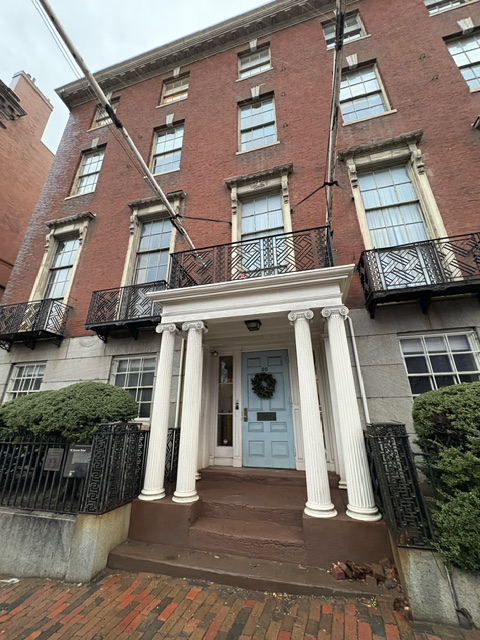
The Third Harrison Gray Otis House
When I came across this house at 45 Beacon Street, I recognized the Otis name because I had already visited the Harrison Gray Otis House near Massachusetts General Hospital. What I didn’t realize was that the Cambridge Street house was only the beginning of the family’s story. Harrison Gray Otis eventually built three Boston houses, […]

