Ramon Berenguer III
As I walked through Barcelona’s Gothic Quarter, I stopped beside the equestrian statue of Ramon Berenguer III to learn more about the man it commemorates. The bronze rider stands against a backdrop of old stone walls and medieval buildings. It is a place where several periods of the city’s history meet, giving one monument a much larger story.
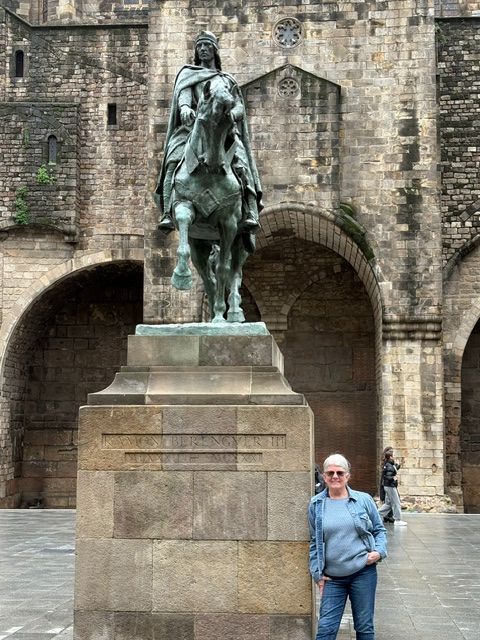
Ramon Berenguer III, known as “the Great,” was a medieval Count of Barcelona. During his rule, Barcelona’s influence expanded through inheritance, marriage, and military activity. The incorporation of Besalú and Cerdanya strengthened his territories, while his marriage to Dolça of Provence in 1112 connected his dynasty with lands across the Pyrenees. His importance rests in part on this consolidation of power during the development of medieval Catalonia.
The statue presents him as a mounted ruler, wearing a long cloak and a crown. The horse faces forward beneath him, while the rider maintains an upright, composed posture. This is a commemorative interpretation of a medieval leader, created centuries after his lifetime.
Catalan sculptor Josep Llimona developed the original work during the nineteenth century; a version was exhibited at Barcelona’s Universal Exhibition in 1888. The bronze monument was cast in 1950 under the supervision of sculptor Frederic Marès. Its history therefore belongs both to the medieval figure it honors and to later generations’ efforts to commemorate Catalonia’s past.
Behind the statue are surviving sections of the defenses of Barcino, the Roman city that preceded Barcelona. Above the ancient walls rises the medieval royal Chapel of Santa Àgata, associated with the Palau Reial, or Royal Palace. Roman fortifications became part of the foundations upon which later buildings and institutions developed.
That setting makes the square especially interesting. The Roman walls, medieval chapel, and more recent sculpture were created for different purposes in different centuries, yet they now form a single streetscape. Looking closely helps separate those layers and understand how the city continued to build upon what earlier generations left behind.
Stopping here gave me another way to understand the Gothic Quarter. The statue introduced me to a ruler whose influence extended well beyond Barcelona, while the surrounding walls revealed a history older than his own. A short pause during a walk became an opportunity to connect a name, a person, and a place.
Read More From Nancy
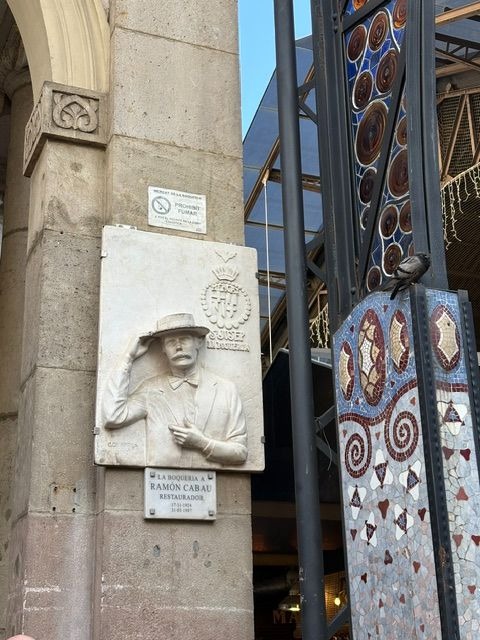
Ramon Cabau
At an entrance to Barcelona’s La Boqueria market, a sculpted relief depicts a man lifting his straw hat in greeting. The inscription identifies Ramon Cabau, a restaurateur whose close relationship with the market made him one of its memorable personalities. Born in 1924, Cabau became known through Agut d’Avinyó, a restaurant in Barcelona’s old city. […]
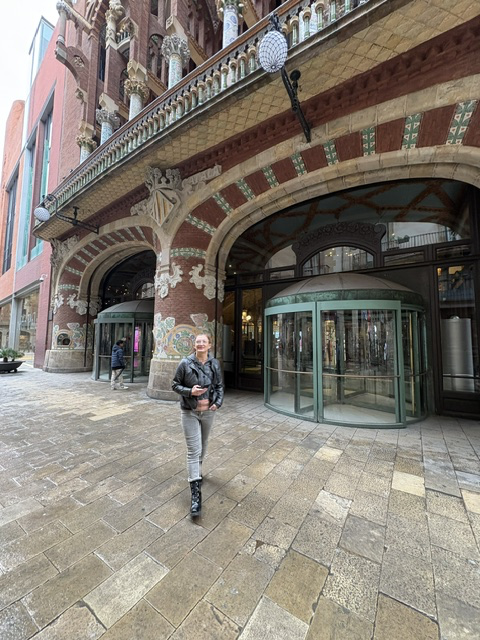
The Palau de la Musica Catalana
Walking through the narrow streets of Barcelona’s old city, it would be easy to pass by without realizing that one of the world’s great concert halls lies just ahead. Then, almost unexpectedly, the Palau de la Música Catalana comes into view, its colorful façade rising above the surrounding buildings. Unlike the stone churches and Gothic […]
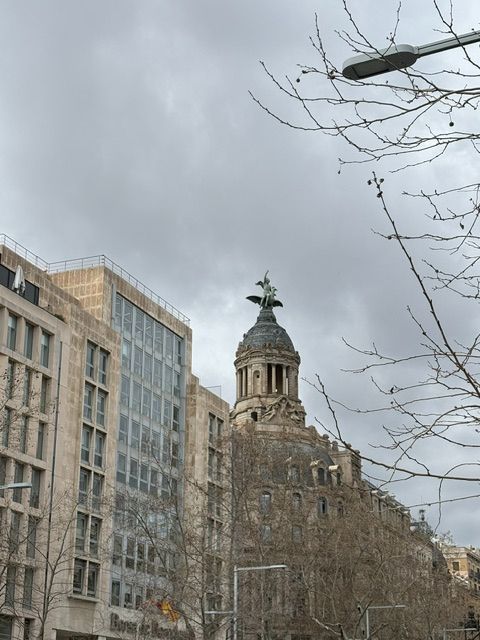
A Symbol Above the City
Walking along Passeig de Gràcia, I noticed a domed tower rising above the trees. At its summit, a winged figure stood against the sky. It was a detail that invited a closer look, and learning its purpose revealed a connection between architecture, mythology, and the business that commissioned the building. This was the Barcelona headquarters […]

