The Eagle Above the Common
Walking through downtown Greenfield, I noticed a tall reddish stone column rising above an iron fence, with a bronze eagle poised at its summit. Its height drew my attention first, but the sculpture above it held a story that was less obvious from the ground. This is Greenfield’s Soldiers’ Monument, dedicated to the town’s men who served in the Civil War.
In March 1869, four years after the war ended, the town authorized a committee to arrange for a memorial. Greenfield had sent approximately five hundred men into military service, and fifty had died. The monument would honor everyone who had served while giving particular recognition to those who never returned. Its placement on the Common brought remembrance into the center of community life.
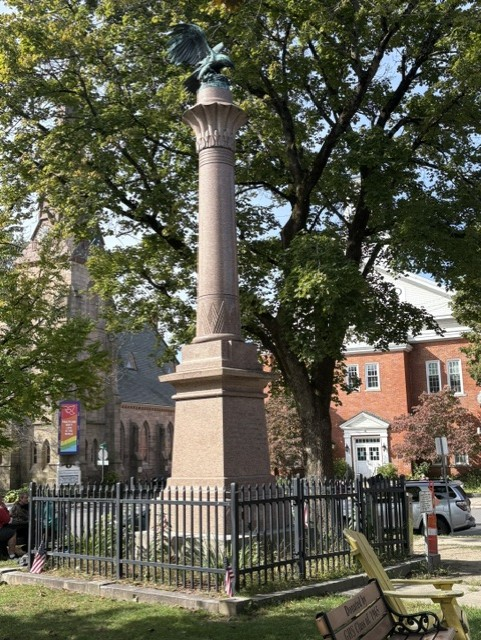
The monument’s distinctive design is credited to George Keller and James Goodwin Batterson. Its twenty-seven-foot shaft was fashioned from granite brought from Aberdeen, Scotland, while the bronze eagle was made in Paris. The reddish stone and ornamented column give it a different appearance from the familiar soldier statues found on many New England greens
The eagle is engaged in a struggle: it is destroying serpents that have entered its nest. This was a political image as well as a patriotic one. The eagle represented the United States defending the Union, while the snakes represented threats to it, including secession and Northern opposition to the war. Such imagery appeared elsewhere in Civil War memorial art, but Greenfield’s large, dramatically posed eagle makes the symbolism especially prominent.
The dedication took place on October 6, 1870. General Charles Devens delivered the address, recalling the service of Greenfield soldiers, some of whom he had personally commanded. Among the town’s early volunteers were the Greenfield Guards, who became a company in the 10th Massachusetts Infantry. Their captain, Edwin E. Day, was killed at the Battle of Seven Pines in May 1862. Greenfield later named its Grand Army of the Republic veterans’ post in his honor.
There was also a literary contribution to the ceremony. Frederick Goddard Tuckerman, the Greenfield poet associated with Poet’s Seat, composed an ode for the dedication. His words considered the memorial’s meaning for the grieving community and for generations still to come.
Knowing that history changed the monument for me. The column and eagle became a connection to families who had watched men leave, waited for news, and lived with the consequences of war. More than a century and a half later, their community’s act of remembrance remains part of an ordinary walk through Greenfield.
Read More From Nancy
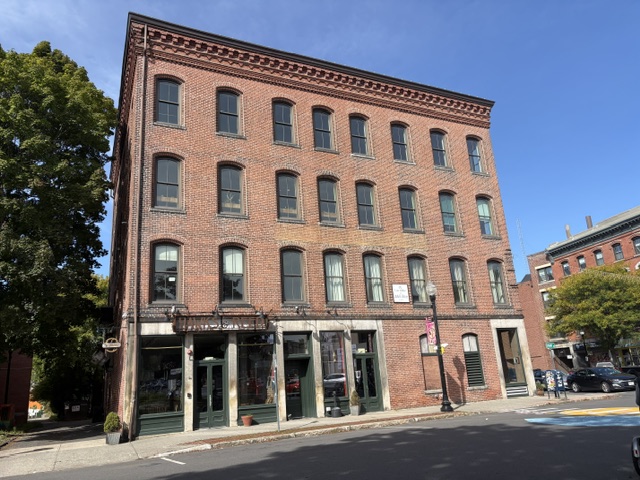
The George A. Arms Block
Walking through downtown Greenfield, I noticed a tall brick building whose decoration became more apparent the longer I looked. Rows of arched windows rise above the storefronts, and an elaborate band of brickwork crowns the façade. Between the upper floors, faded painted lettering preserves the name of George A. Arms. It is a reminder that […]
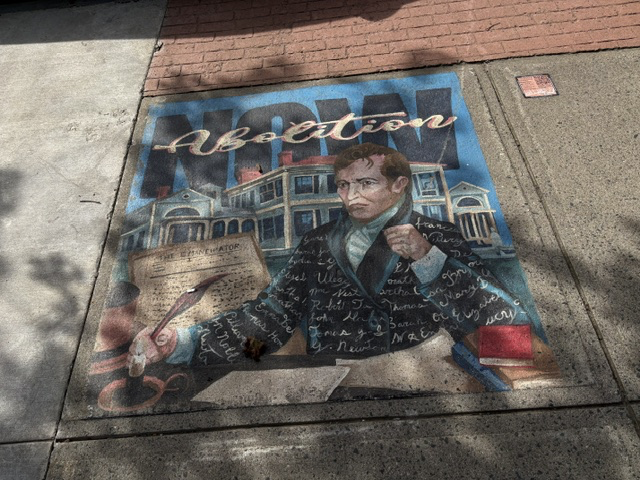
The Leavitt Family and the Fight Against Slavery
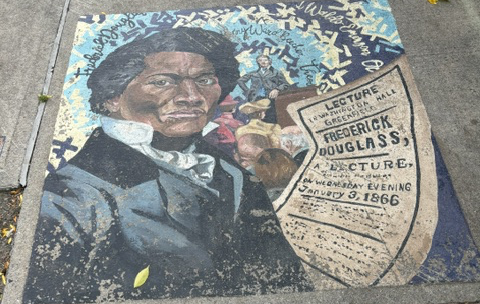
Continuing my search for Greenfield’s sidewalk art, I found a mural with the words “New Abolition” above a man writing with a quill. Behind him stood a familiar building: the Leavitt-Hovey House, which I had already stopped to learn about. A newspaper titled The Emancipator offered another clue. This artwork connected the house and the […]
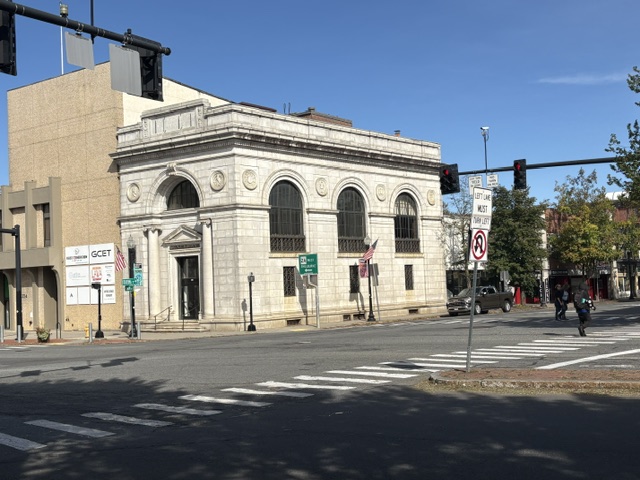
Franklin Savings Bank
Walking through downtown Greenfield, I was drawn to a granite building at the corner of Main and Federal Streets. Its tall arched windows, carefully framed entrance, and circular carvings gave it a distinctive presence among the neighboring storefronts. Learning that it had been a bank helped explain its substantial appearance. Looking more closely revealed an […]

