The Leavitt Family and the Fight Against Slavery
Continuing my search for Greenfield’s sidewalk art, I found a mural with the words “New Abolition” above a man writing with a quill. Behind him stood a familiar building: the Leavitt-Hovey House, which I had already stopped to learn about. A newspaper titled The Emancipator offered another clue. This artwork connected the house and the Leavitt family to a much wider campaign against slavery.
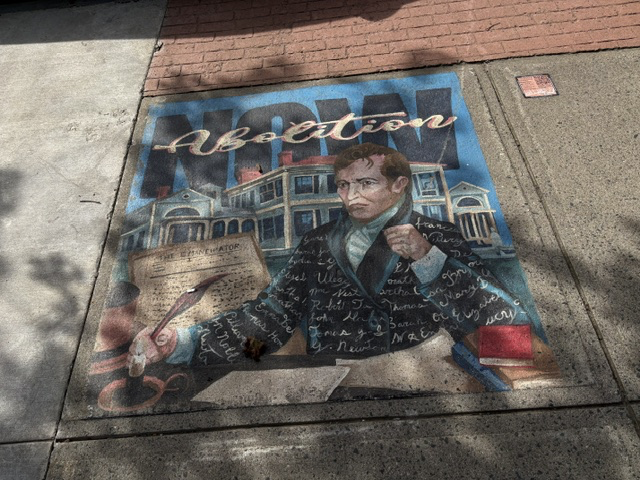
The Leavitts’ involvement extended across several generations and communities in western Massachusetts. Roger Leavitt, a farmer in Charlemont, served as president of the Franklin County Anti-Slavery Society. His wife, Chloe Maxwell Leavitt, collected signatures on petitions calling for the abolition of slavery in the District of Columbia. Their work shows how the movement depended on meetings, organizing, and persistent efforts to bring public pressure to bear on government
Their son Joshua carried that commitment into national journalism. He became an influential abolitionist editor associated with The Emancipator, the newspaper whose title appears in the mural. The writing desk, quill, and newspaper emphasize the importance of the printed word: articles and arguments could reach readers far beyond a single meeting hall and help turn opposition to slavery into political action.
The words “New Abolition” also recall divisions within the antislavery movement. Some reformers emphasized moral persuasion and distrusted electoral politics; others believed that voting, supporting candidates, and changing laws were essential to ending slavery. Members of the Leavitt family helped establish the American and Foreign Anti-Slavery Society in 1840, joining the branch of the movement that pursued political engagement.
The house in the background adds a more complicated family history. Jonathan Leavitt and his wife, Emelia, lived there. Emelia was the daughter of Ezra Stiles, a minister who had enslaved a man named Newport before freeing him in 1778. Newport and his wife, Nabby, later came briefly to Greenfield with Emelia. Their experience reminds us that the history of slavery and emancipation was present within New England households as well as in the distant places abolitionists wrote about.
Read More
Read More From Nancy
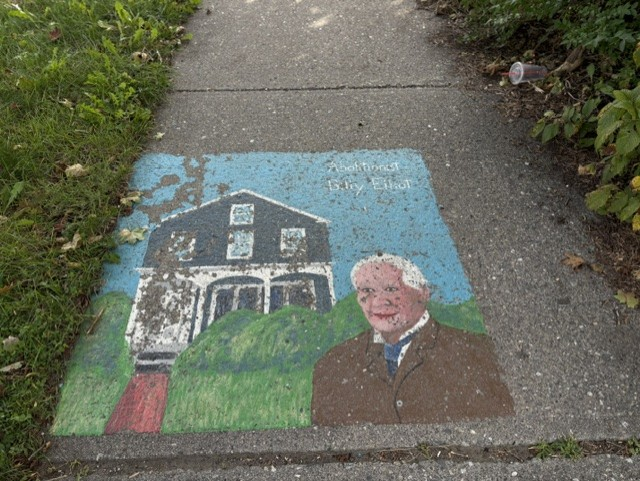
Billy Elliot’s House: A Place of Refuge
Following Greenfield’s sidewalk art led me to a portrait of a man standing before a house. The lettering identified him as abolitionist Billy Elliot. Here was another person whose name I had not known, but whose story connected an ordinary Main Street home with the struggle for freedom. Artist Robert Markey created this mural for […]
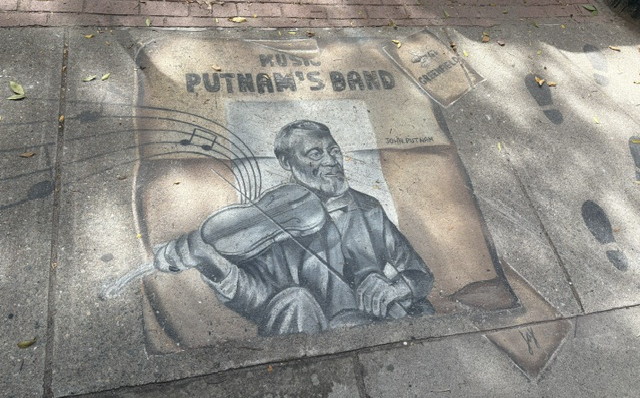
Music and the Road to Freedom
Once I knew Greenfield’s sidewalk art existed, I went looking for more. The next mural introduced me to John Putnam, shown holding a violin beneath the words “Putnam’s Band.” Musical notes curve through the artwork, inviting a closer look at a man whose story connects the town’s musical life with its history of resistance to […]
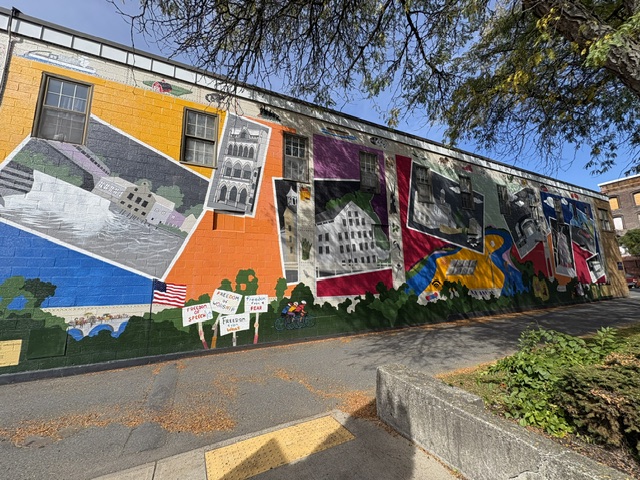
A Place for Remembrance
While walking through downtown Greenfield, I discovered a place where the activity of Main Street gives way to remembrance. Between the buildings, Veterans Mall brings together bronze sculpture, memorial plaques, benches, and a colorful mural. My curiosity drew me toward the details: the figures worked into the bronze, the names of local people who died […]

