Frederick Douglass Beneath Our Feet
Walking along the sidewalk in Greenfield, I discovered a painted mural on the ground. Frederick Douglass’s face looked up from the pavement, surrounded by color, figures, and a reproduction of an old lecture announcement. I stopped to look more closely. Later, I learned that Greenfield has a guide explaining these sidewalk artworks and the history behind them. This was the first one I discovered.
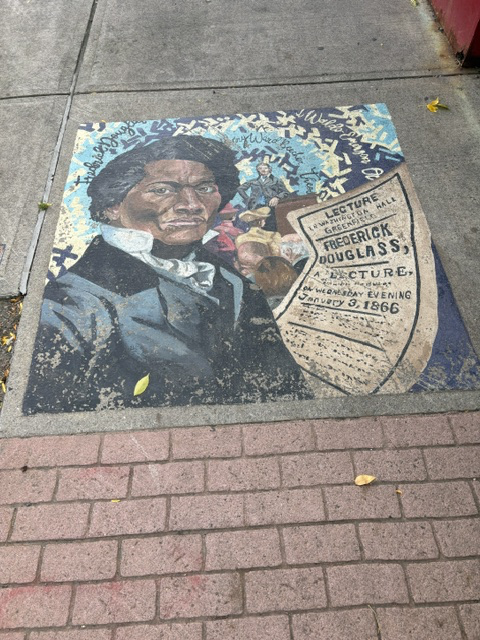
The mural connects Douglass to an actual event in Greenfield. The illustrated announcement advertises his appearance at Washington Hall on Wednesday evening, January 3, 1866. That date places the lecture just after the Civil War and the ratification of the Thirteenth Amendment, which abolished slavery. The country had reached a moment of enormous change, but the question of what freedom would mean in everyday life remained unresolved.
Douglass understood that struggle through his own experience. Having escaped slavery, he became an influential writer and speaker, using his life story and his command of language to challenge slavery and demand equal rights. His work continued after emancipation, when freedom still needed to be supported by citizenship, political participation, and protection from discrimination.
The lecture announcement gives that national story a local setting. It reminds us that people in Greenfield had the opportunity to gather and hear Douglass speak. His ideas reached communities through meetings and lectures, where listeners confronted questions that would shape the country’s future.
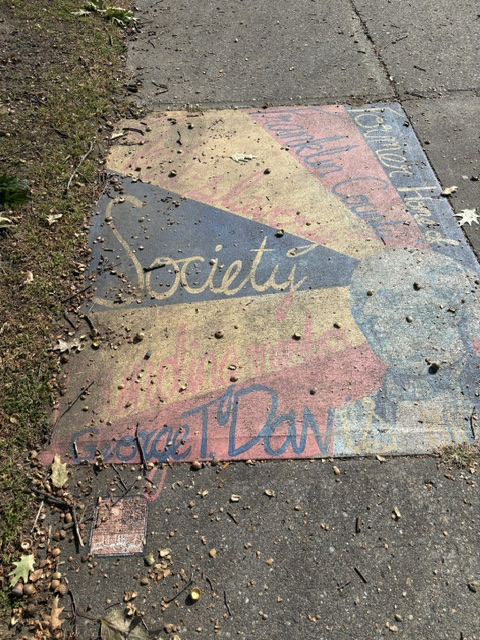
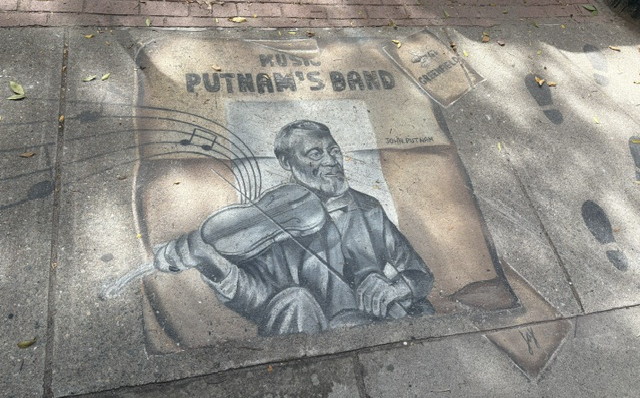
The artwork belongs to Greenfield’s Abolitionist and Underground Railroad Downtown Art Walk, a project created to connect public art with places associated with the community’s antislavery history. Twelve sidewalk murals were introduced in 2024, with a self-guided map and virtual tour helping visitors explore their stories. The project includes former homes, businesses, and locations where prominent speakers addressed local audiences.
Read More From Nancy
The Leavitt-Hovey House
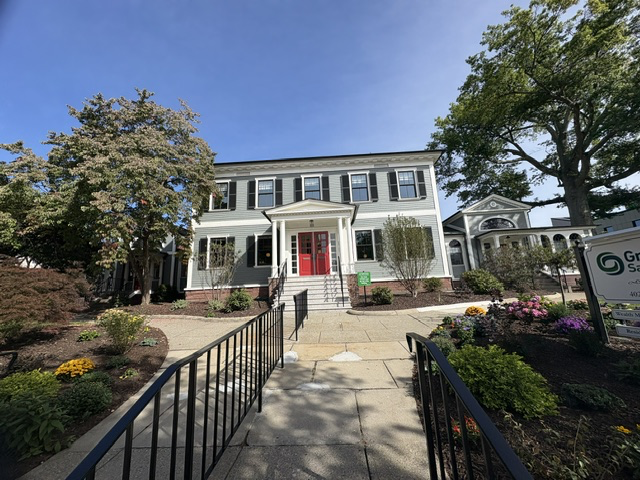
A sidewalk sign is always a reason to stop and explore. In Greenfield, one pointed me toward the Leavitt-Hovey House, a building whose story reaches back to 1797. Its white clapboards, dark shutters, and columned entrance caught my attention, but the name on the marker introduced something more: a connection to Asher Benjamin, an architect […]
The Eagle Above the Common
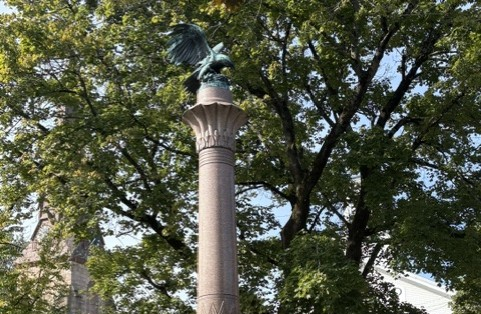
Walking through downtown Greenfield, I noticed a tall reddish stone column rising above an iron fence, with a bronze eagle poised at its summit. Its height drew my attention first, but the sculpture above it held a story that was less obvious from the ground. This is Greenfield’s Soldiers’ Monument, dedicated to the town’s men […]
Billy Elliot’s House: A Place of Refuge
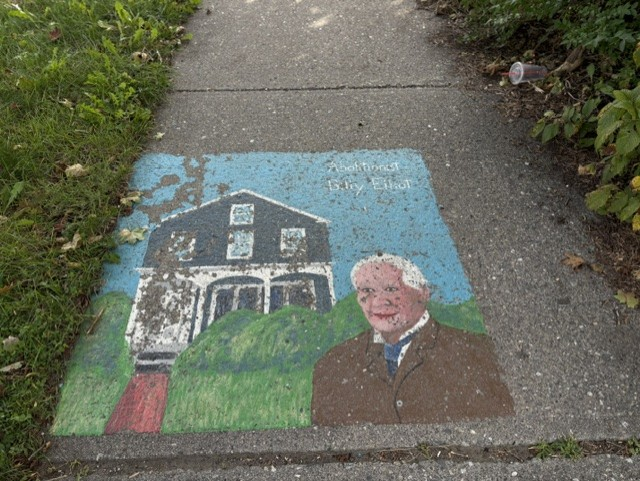
Following Greenfield’s sidewalk art led me to a portrait of a man standing before a house. The lettering identified him as abolitionist Billy Elliot. Here was another person whose name I had not known, but whose story connected an ordinary Main Street home with the struggle for freedom. Artist Robert Markey created this mural for […]

