The Spanish-American War Memorial
I drove into Greenfield for a quick stop, and the first monument I noticed was this bronze soldier standing above a granite pedestal on Main Street. As always, I was curious. Who did he represent, and what had brought this memorial to the center of town? Those questions led me to a chapter of Greenfield’s history connected to a brief war with lasting consequences.
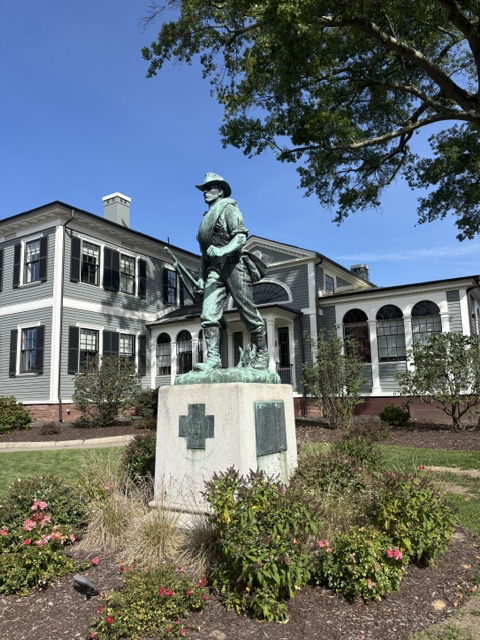
The statue commemorates local men who served in the Spanish-American War of 1898. Dedicated on June 9, 1928, thirty years after the conflict, it gave their service a permanent place in the community. The soldier wears a broad-brimmed campaign hat and carries his military equipment, giving the memorial a human presence above the names recorded below.
The honor roll identifies Company L of the 2nd Massachusetts Volunteer Infantry. It lists Captain Frederick E. Pierce, First Lieutenant Charles H. Field, and Second Lieutenant Fayette B. Mason, along with the company’s sergeants, corporals, musicians, and privates. Another inscription remembers members of the Lieutenant Charles H. Field Camp No. 51 of the United Spanish War Veterans. Together, these inscriptions preserve both the men’s military service and the fellowship through which veterans remained connected afterward.
The war began amid the struggle over Cuba’s independence from Spain. Fighting extended from the Caribbean to the Pacific, and the resulting peace treaty required Spain to relinquish its claim to Cuba and cede Puerto Rico, Guam, and the Philippines to the United States. Although the conflict lasted only a few months, it marked a major expansion of American power overseas.
By the time Greenfield dedicated this memorial, the First World War had already brought another generation into military service. The veterans of 1898 were looking back across three decades, ensuring that their comrades and their experiences would remain part of the town’s memory.
My quick stop became an opportunity to learn something I might otherwise have passed by. Reading the names beneath the soldier brought a distant conflict back to this Massachusetts community. That is what draws me to these monuments: behind a familiar bronze figure is a particular story, waiting for someone to stop and ask about it.
Read More From Nancy
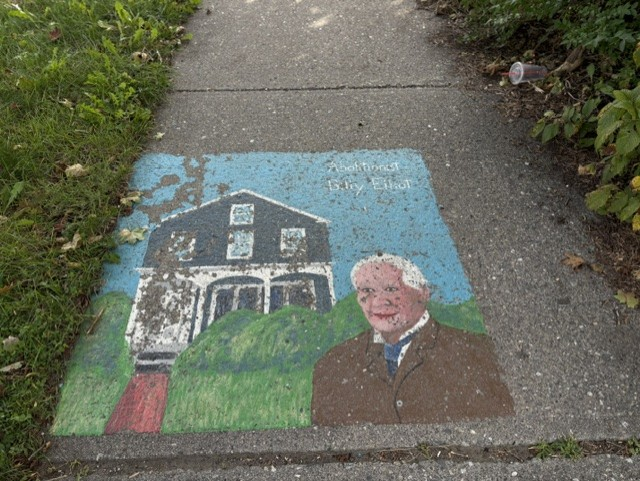
Billy Elliot’s House: A Place of Refuge
Following Greenfield’s sidewalk art led me to a portrait of a man standing before a house. The lettering identified him as abolitionist Billy Elliot. Here was another person whose name I had not known, but whose story connected an ordinary Main Street home with the struggle for freedom. Artist Robert Markey created this mural for […]
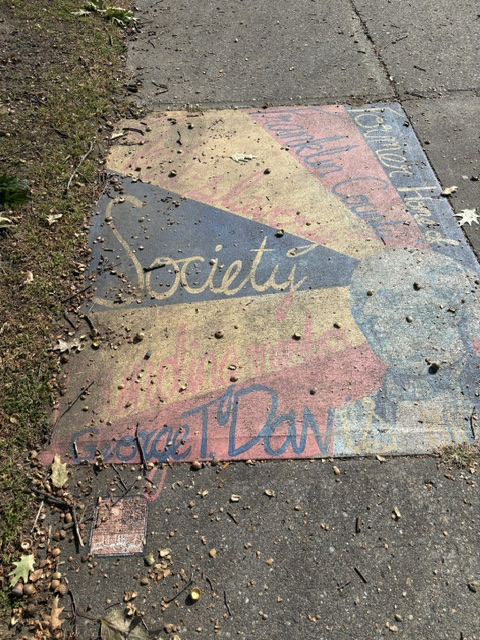
George T. Davis: Working for Freedom
Once I discovered Greenfield’s sidewalk art, I began looking for the next piece and the story it might reveal. This mural carried the name George T. Davis among colorful shapes and lettering referring to the anti-slavery movement. It introduced me to a man whose work connected Greenfield’s local history with the larger struggle to end […]
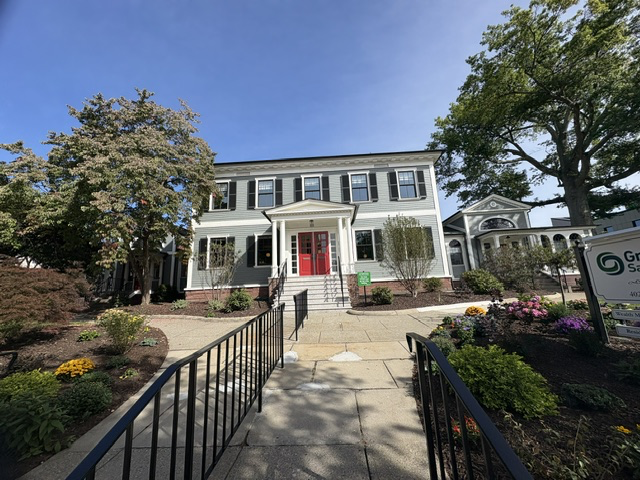
The Leavitt-Hovey House
A sidewalk sign is always a reason to stop and explore. In Greenfield, one pointed me toward the Leavitt-Hovey House, a building whose story reaches back to 1797. Its white clapboards, dark shutters, and columned entrance caught my attention, but the name on the marker introduced something more: a connection to Asher Benjamin, an architect […]

