St. Mark’s Basilica
St. Mark’s Basilica rises at the end of Piazza San Marco with an appearance unlike almost any other church in Europe. Its domes, arches, mosaics and intricate stonework create a building that seems both grand and delicate. There is so much to see that the eye is continually drawn from one detail to another.
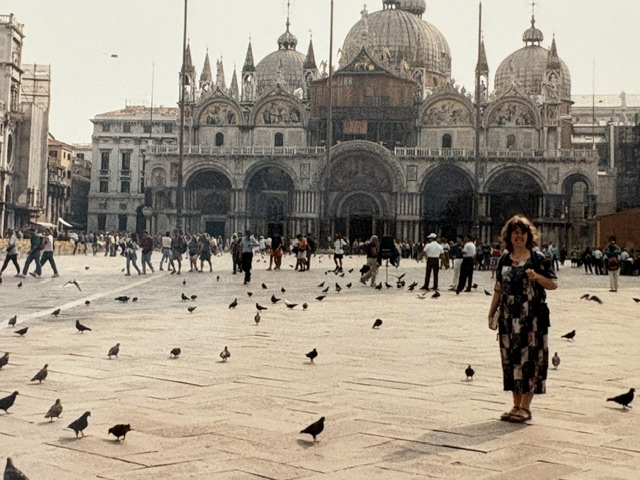
The broad façade is filled with graceful arches, carved columns and glowing mosaics. Marble in different colors and patterns covers much of the exterior, while statues and decorative spires create an irregular skyline above the square. Rather than presenting a single architectural style, the basilica reflects the many cultures that influenced Venice over the centuries.
The five domes give the building a distinctly eastern appearance. They reflect Venice’s close historical connections with Constantinople and the Byzantine world, reminding visitors that the city once stood at the meeting point between Europe and the eastern Mediterranean. This blending of traditions contributes to the basilica’s unusual beauty.
Golden mosaics fill the spaces above the entrances, illustrating scenes connected with the life of Christ and the arrival of the remains of St. Mark in Venice. As the sunlight changes throughout the day, the mosaics catch the light differently, allowing the façade to appear brighter, softer or more deeply shadowed from one moment to the next.
Above the main entrance stand four bronze horses, now replicas of the ancient originals preserved inside. Their position overlooking the square adds another dramatic element to a façade already filled with detail. Below them, the deep entrance arches invite visitors into the darker and even more richly decorated interior.
The beauty of St. Mark’s Basilica is not based upon perfect symmetry or simplicity. It comes from its layers. Columns, statues, carvings and pieces of marble were added over many centuries, creating a building that carries the history of Venice across its exterior. Every section seems to tell a different part of the city’s story.
The openness of Piazza San Marco allows the basilica to be appreciated from a distance. The wide square creates a sense of anticipation as the building gradually reveals its details. Pigeons cross the pavement, people gather beneath the arches and the domes rise above the movement of the square.
St. Mark’s Basilica has stood at the center of Venetian life for nearly a thousand years. It was created as a place of worship, but it also became an expression of the city’s confidence, prosperity and connection with the wider world. Its beauty lies not only in its decoration, but also in the way the entire building captures the distinctive character of Venice.
Read More From Nancy
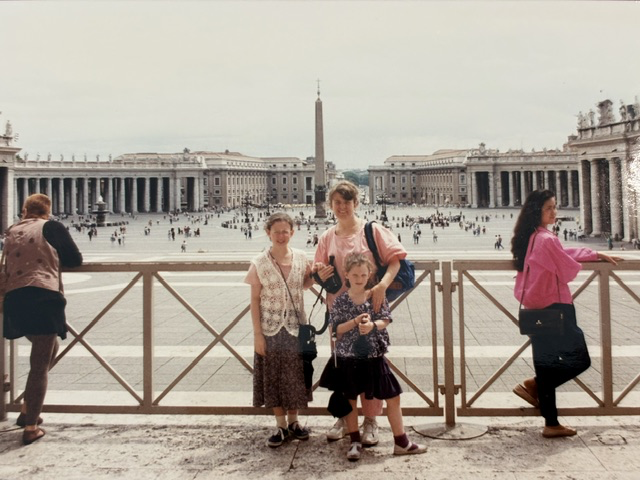
St. Peter’s Square
Photographs of St. Peter’s Square do not convey its size. It was only when we were actually standing there and walking across the enormous open space that I began to appreciate its massiveness. The people crossing the square seemed small against the architecture surrounding them, and the distance from one side to the other was […]
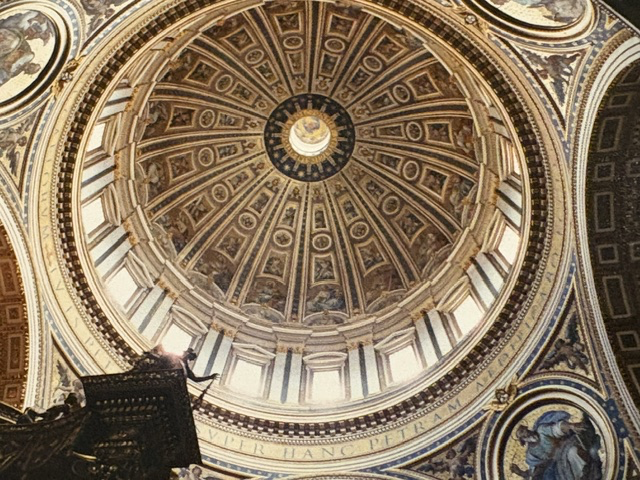
Dome of St. Peter’s Basilica
Looking upward inside St. Peter’s Basilica reveals one of the great architectural achievements of the Renaissance. The vast dome rises above the crossing of the church, directly over the papal altar and the traditional location of the tomb of Saint Peter. Michelangelo became the chief architect of St. Peter’s Basilica in 1546, when he was […]
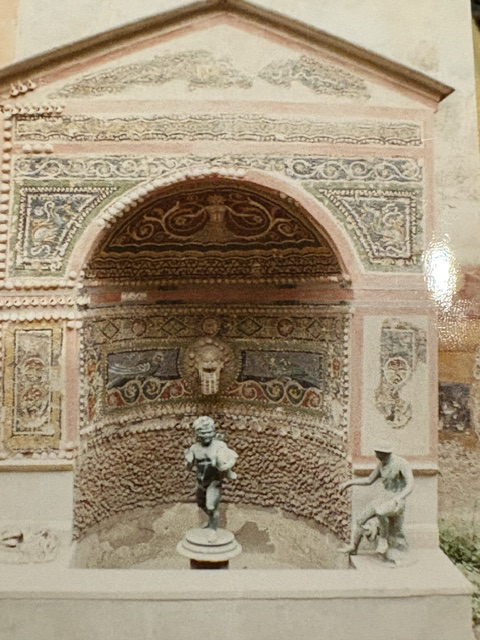
Mosaic Fountain at the House of the Small Fountain
The elaborate fountain at Pompeii’s House of the Small Fountain transformed an ordinary garden wall into a richly decorated water display. Constructed within an arched niche, it combined flowing water, colorful mosaics and small sculptures to create an artistic focal point within the private residence. The surface was decorated with glass tesserae, shells, pieces of […]

