Mosaic Fountain at the House of the Small Fountain
The elaborate fountain at Pompeii’s House of the Small Fountain transformed an ordinary garden wall into a richly decorated water display. Constructed within an arched niche, it combined flowing water, colorful mosaics and small sculptures to create an artistic focal point within the private residence.
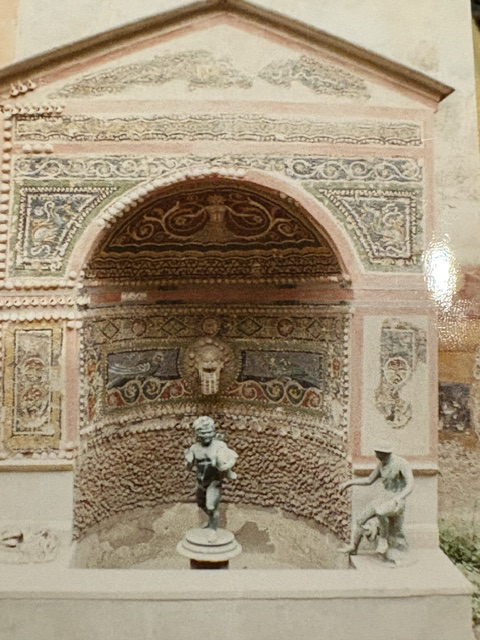
The surface was decorated with glass tesserae, shells, pieces of stone and other materials arranged in geometric and scrolling patterns. A theatrical mask occupies the center of the design, surrounded by bands of color and ornamentation. The curved ceiling and textured background were intended to resemble a grotto, bringing the appearance of a natural spring into a carefully designed domestic setting.
At the center stood a bronze putto embracing a goose. Water flowed through the figure, allowing the sculpture to function as part of the fountain. Additional figures placed around the basin included a seated fisherman holding a rod and basket and a sleeping fisher boy. These playful subjects complemented the garden setting and reinforced the fountain’s connection with water and leisure.
Water, sculpture and reflected light would have animated the entire arrangement. As the fountain operated, water moved across the decorated surfaces and into the basin, making the mosaics and glass elements shimmer. The combination of sound, motion and color created a cool and inviting atmosphere within the garden.
The fountain demonstrates the importance of garden design in Pompeian homes. It was both a source of pleasure and a visible expression of refinement, showing how Roman homeowners used art and water to transform private spaces into carefully arranged environments for relaxation and entertaining.
Read More From Nancy
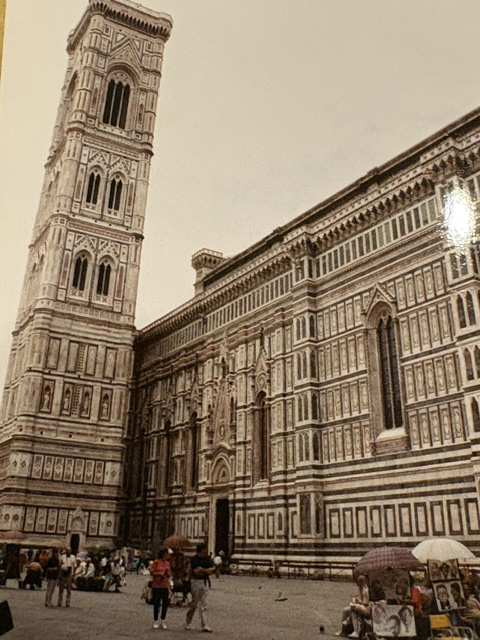
Cathedral of Santa Maria del Fiore
The Cathedral of Santa Maria del Fiore stands at the religious and historic center of Florence. Commonly known as the Duomo, it was created to replace the earlier Cathedral of Santa Reparata, which had become too small for the city’s growing population and increasing importance. Construction began in 1296 under architect Arnolfo di Cambio. The […]
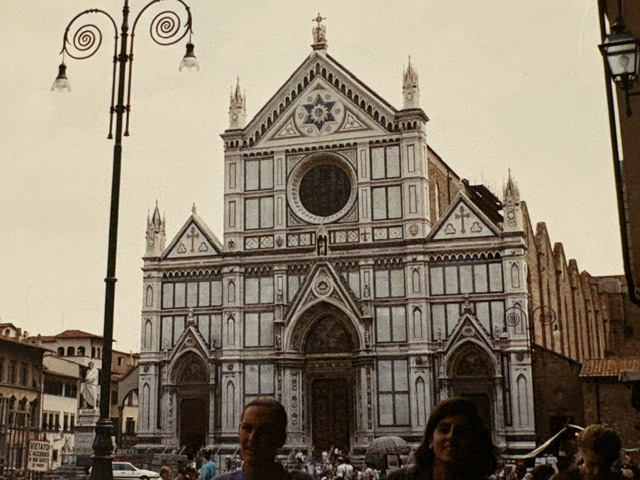
Giotto’s Campanile
Giotto’s Campanile rises beside the Cathedral of Santa Maria del Fiore as one of Florence’s most recognizable architectural landmarks. Although it forms part of the cathedral complex, the bell tower stands as a separate structure with its own design and construction history. Work began in 1334 under Giotto di Bondone, already celebrated as one of […]
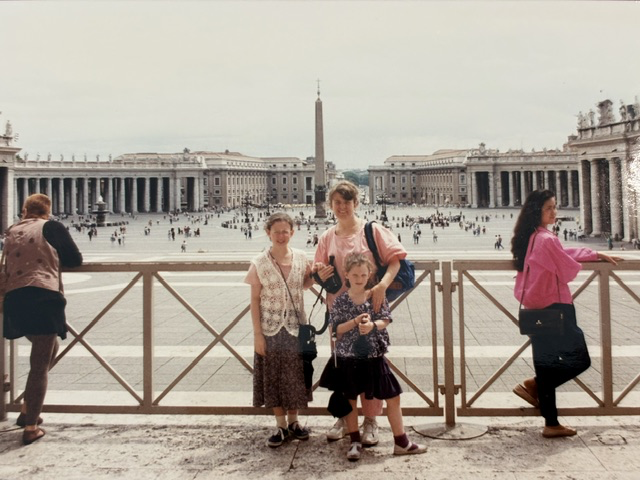
St. Peter’s Square
Photographs of St. Peter’s Square do not convey its size. It was only when we were actually standing there and walking across the enormous open space that I began to appreciate its massiveness. The people crossing the square seemed small against the architecture surrounding them, and the distance from one side to the other was […]

