Hadrian’s Villa
Hadrian’s Villa, known in Italian as Villa Adriana, was constructed during the second century for the Roman emperor Hadrian. Located near Tivoli, approximately 18 miles east of Rome, the enormous estate served as an imperial residence and administrative retreat away from the crowded capital.
Hadrian became emperor in A.D. 117 and ruled until his death in 138. He traveled extensively throughout the Roman Empire and developed a strong interest in the architecture and cultures of the provinces he visited. Construction of the villa began early in his reign and continued for many years. Its buildings incorporated architectural ideas drawn from Greece, Egypt and other parts of the Roman world.
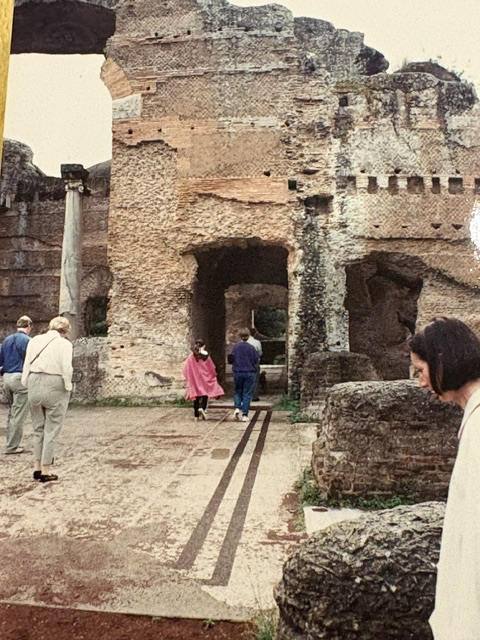
The estate extended across hundreds of acres and contained residential palaces, reception halls, libraries, dining rooms, temples, gardens, baths and accommodations for servants and guards. A network of underground passages allowed supplies and workers to move through the complex without interfering with the formal spaces used by the emperor and his guests.
One of the villa’s most recognizable features is the Canopus, a long pool surrounded by columns and sculptures. Its name refers to the Egyptian city of Canopus and the canal that connected it with Alexandria. At one end of the pool stood a large dining pavilion known as the Serapeum, where water, architecture and sculpture combined to create an elaborate setting for imperial gatherings.
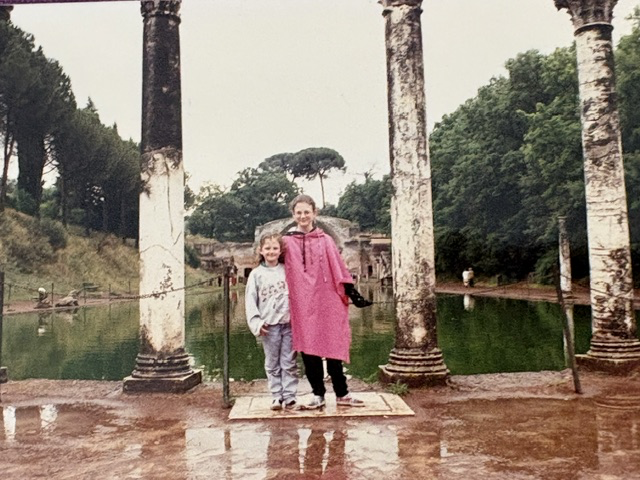
Our daughters stood together beside the Canopus during our family visit. The surviving columns and reflecting pool helped us imagine the scale and beauty of the estate as it appeared during Hadrian’s lifetime. Elsewhere, we walked among massive brick walls, open arches and the remains of rooms that once formed part of the villa’s extensive complex.
After Hadrian’s death, the villa continued to be used by later emperors but gradually declined as the Roman Empire weakened. Marble, statues and other building materials were removed and reused elsewhere. Archaeological investigations eventually revealed the extent of the estate and recovered sculptures and decorative objects that are now preserved in museums.
Hadrian’s Villa was designated a UNESCO World Heritage Site in 1999 because of its exceptional combination of Mediterranean architectural traditions and its influence on later architecture. Its surviving ruins reveal both the extraordinary resources available to a Roman emperor and Hadrian’s ambition to bring elements of the wider empire together within one remarkable estate.
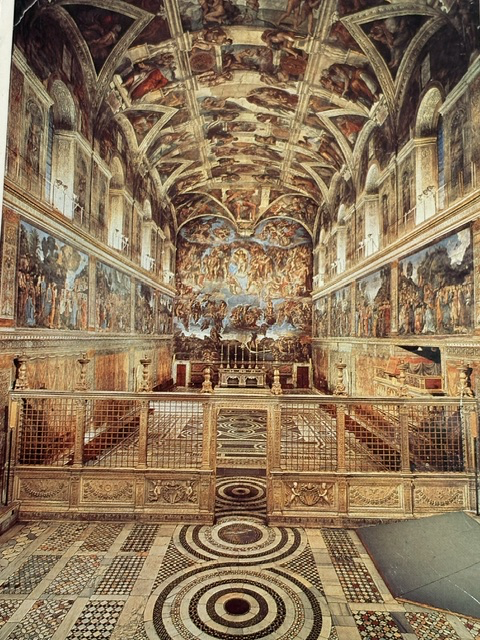
Read More From Nancy
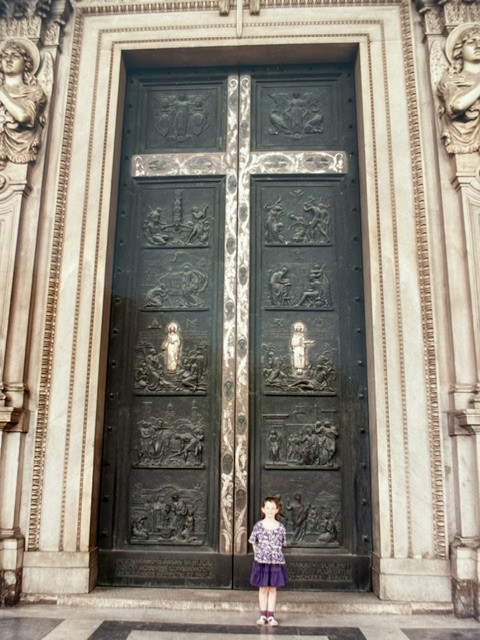
The Holy Door of St. Peter’s Basilica
On one of our family trips to Rome, we visited St. Peter’s Basilica, where this photograph of Erin was taken standing in front of the enormous bronze Holy Door. Known as the Porta Santa, it is one of the most significant entrances to St. Peter’s Basilica and has been associated with the Catholic Church’s Jubilee […]
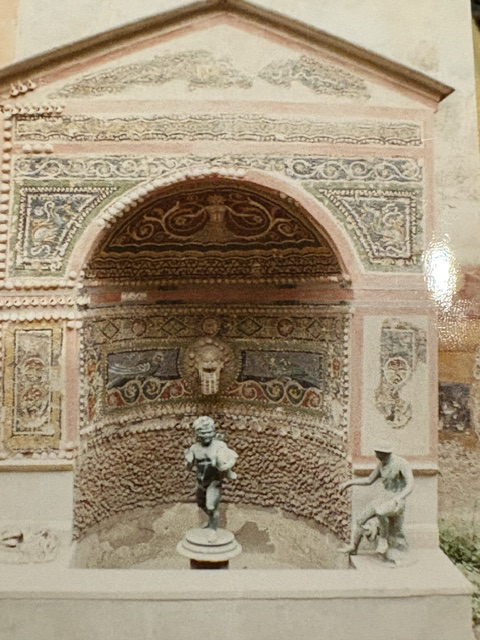
Mosaic Fountain at the House of the Small Fountain
The elaborate fountain at Pompeii’s House of the Small Fountain transformed an ordinary garden wall into a richly decorated water display. Constructed within an arched niche, it combined flowing water, colorful mosaics and small sculptures to create an artistic focal point within the private residence. The surface was decorated with glass tesserae, shells, pieces of […]
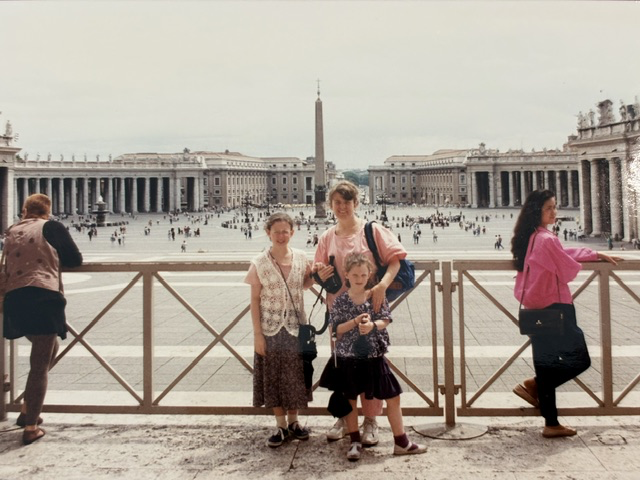
St. Peter’s Square
Photographs of St. Peter’s Square do not convey its size. It was only when we were actually standing there and walking across the enormous open space that I began to appreciate its massiveness. The people crossing the square seemed small against the architecture surrounding them, and the distance from one side to the other was […]

