Town Pound
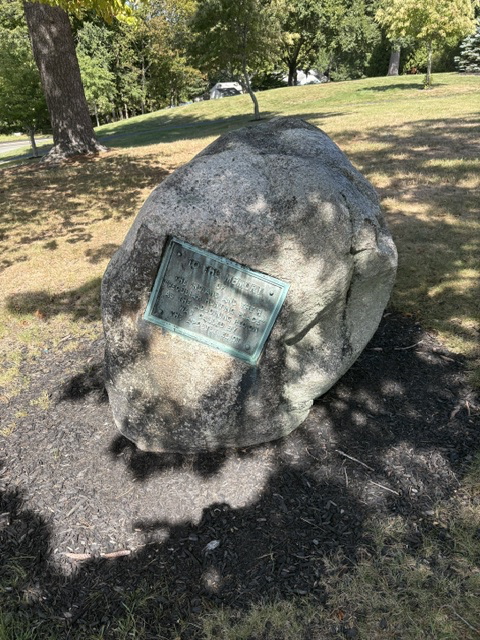
Dover’s Town Pound was built in 1794, when farming shaped nearly every part of community life. Families depended upon cattle, pigs, sheep and other animals for food, labor and income. Before the pound was constructed, cattle and swine were generally permitted to roam, creating problems when they wandered onto neighboring farms or damaged fields and gardens.
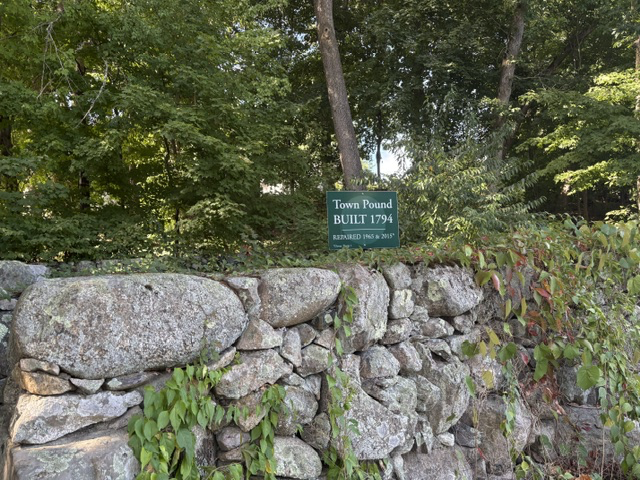
The stone-walled enclosure provided a secure place for holding stray or improperly controlled livestock. An animal found wandering could be brought to the pound, where it remained until its owner claimed it. The owner was generally responsible for paying a fine along with any expenses incurred for feeding and caring for the animal. Livestock that remained unclaimed could eventually be sold.
A town-appointed pound keeper supervised the enclosure. This was an official local responsibility rather than simply a private farm task. The keeper received wandering animals, attempted to identify their owners and enforced the rules governing their release. The system protected property while offering an orderly way to resolve disagreements among neighbors.
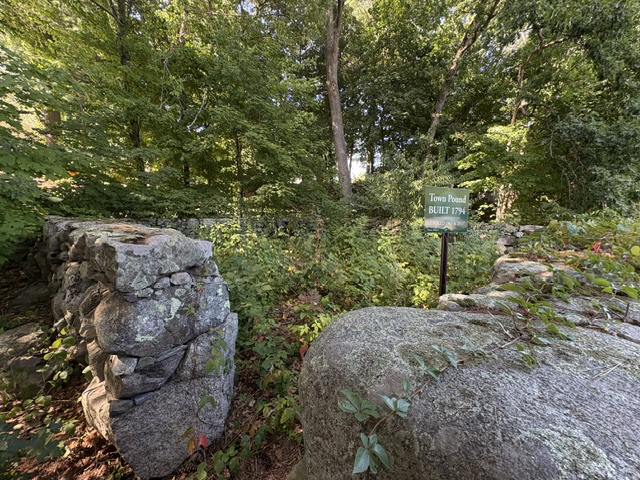
The pound’s dry-laid stone walls were constructed from the abundant fieldstone cleared from the surrounding land. Their strength created a durable enclosure without mortar. As fencing improved and livestock was no longer allowed to wander freely, town pounds gradually lost their practical purpose.
Dover’s Town Pound was restored in 1965 and again in 2015. Its surviving walls preserve a feature once essential to the management of an agricultural community. The enclosure provides a reminder that local government once concerned itself not only with roads, schools and taxes, but also with wandering animals and the everyday responsibilities shared among neighbors.
Read More From Nancy
Amelia Peabody
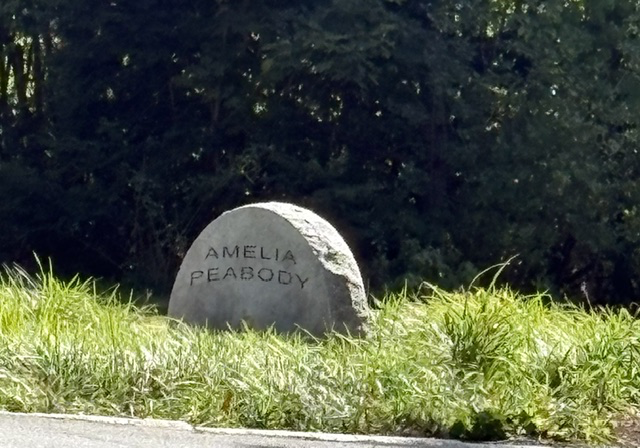
Amelia Peabody was born into a prominent Boston family in 1890, but she created a life that extended far beyond the social expectations placed upon a woman of her background. Although she did not attend college, she studied sculpture in Boston, New York and Paris. Her work included portraits, human figures and animals created in […]
E. F. Hodgson Portable Houses
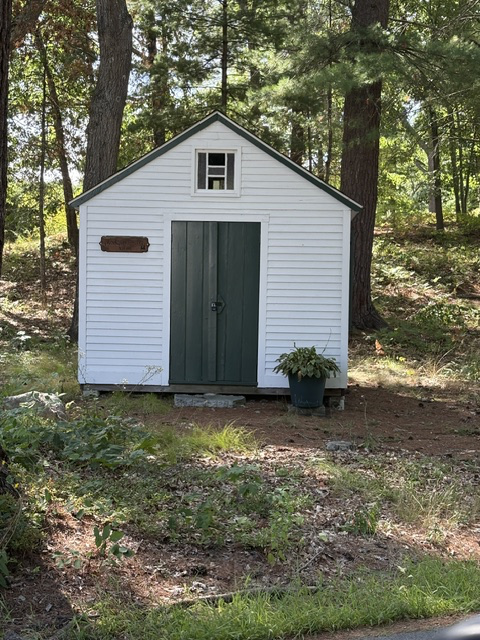
In 1892, Ernest F. Hodgson began manufacturing portable poultry brooders in Dover. Marketed under names such as “Peep o’ Days” and “Wigwarms,” the small structures were designed to be produced efficiently, transported easily and assembled where they were needed. The success of the brooders encouraged Hodgson to expand into other prefabricated products. The company manufactured […]
Highland Cemetery
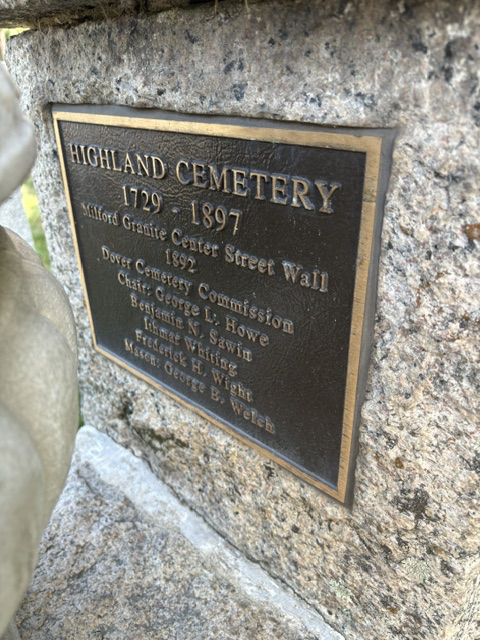
Highland Cemetery began as a small colonial burying ground on land belonging to Nathaniel Chickering. Dating to 1729, it was established when Dover was still part of Dedham and consisted of scattered farms connected by narrow roads and footpaths. Chickering later formally gave the original tract to the community, ensuring that local families would have […]

