Sawin Museum
The Dover Historical Society was established in 1895 to collect and preserve the objects, documents and stories of the town’s past. As its collection grew, the Society needed a permanent place where these materials could be protected and shared with the community.
Benjamin and Eudora Sawin, charter members of the Society, recognized that need. Because the couple had no surviving children, Benjamin’s will left the remainder of his estate to the Historical Society on the condition that it construct a building bearing the Sawin name. If the Society failed to complete the building within two years of his death, the property was to pass to the town for the benefit of its “worthy” poor.
The Society fulfilled the terms of the bequest. Designed by architects Philip Howard and Walter P. Henderson, the Sawin Memorial Building was completed in 1906 and formally opened on May 14, 1907. Its Federal-style design, red brick exterior, white marble details and enduring inscription created a small but dignified memorial to the couple whose generosity made it possible.
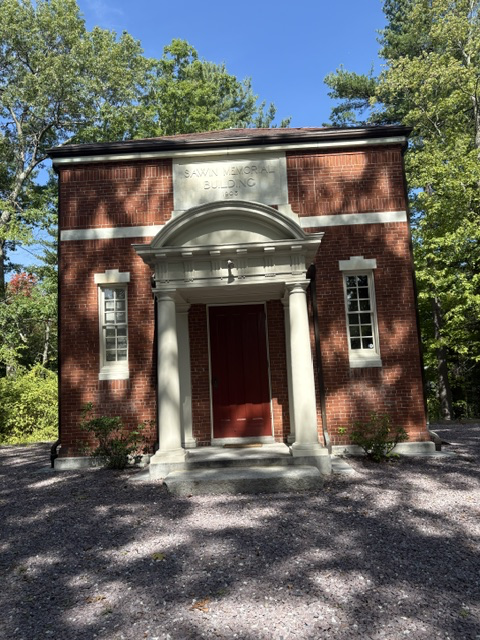
Now known as the Sawin Museum, the building presents Dover’s history through household objects, tools, toys, photographs, documents and materials associated with the town’s schools, industries and military service. Exhibits include a nineteenth-century schoolroom, a cobbler’s workshop and objects that reflect the everyday lives of generations of Dover residents.
The Sawins did more than provide a building. Their gift created a permanent home for the ordinary objects and local stories that might otherwise have disappeared, allowing a small community to preserve and interpret its own history.
Read More From Nancy
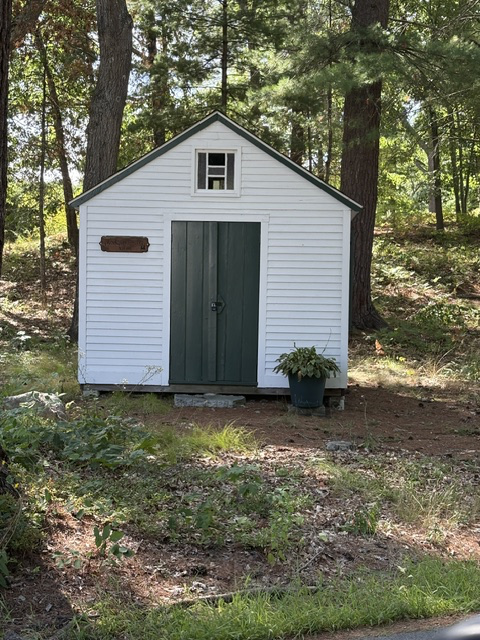
E. F. Hodgson Portable Houses
In 1892, Ernest F. Hodgson began manufacturing portable poultry brooders in Dover. Marketed under names such as “Peep o’ Days” and “Wigwarms,” the small structures were designed to be produced efficiently, transported easily and assembled where they were needed. The success of the brooders encouraged Hodgson to expand into other prefabricated products. The company manufactured […]
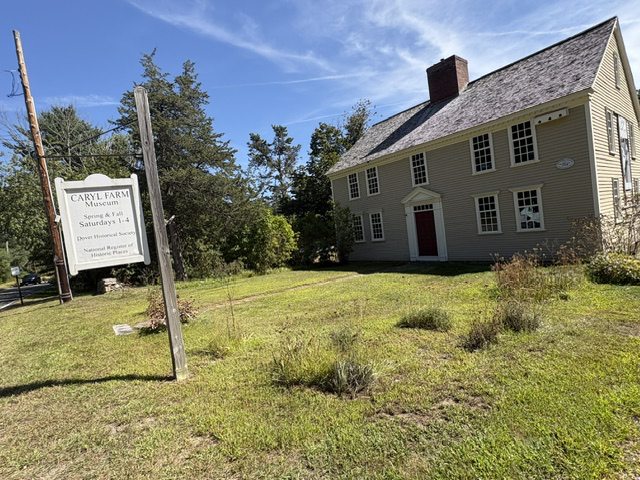
Caryl Farm Museum
The Caryl Farm Museum, also known as the Benjamin Caryl House, was built around 1777 for the Reverend Benjamin Caryl. At the time, the area was still Springfield Parish, part of the much larger town of Dedham. It later became the District of Dover in 1784 and was incorporated as a separate town in 1836. […]
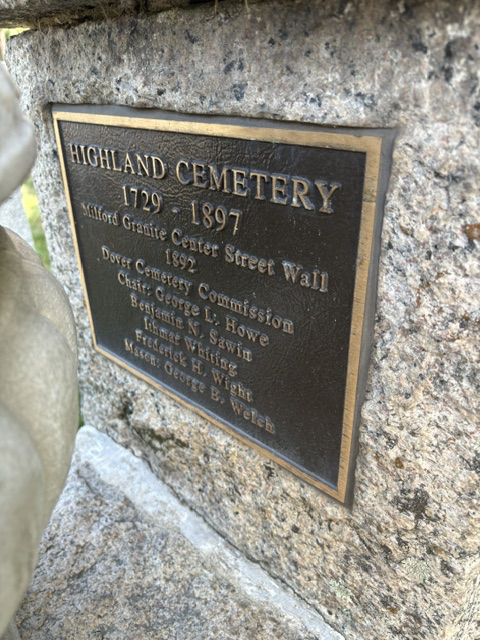
Highland Cemetery
Highland Cemetery began as a small colonial burying ground on land belonging to Nathaniel Chickering. Dating to 1729, it was established when Dover was still part of Dedham and consisted of scattered farms connected by narrow roads and footpaths. Chickering later formally gave the original tract to the community, ensuring that local families would have […]

