A “Peculiar Hunting Place”
Long before Dover became a town, Indigenous people traveled, hunted and fished throughout the hills, forests and waterways of the region. The Charles River and its tributaries provided fish, while the surrounding woodlands supported deer, bear, fox and other animals. Springs, meadows and elevated hills made the area well suited for seasonal movement and hunting.
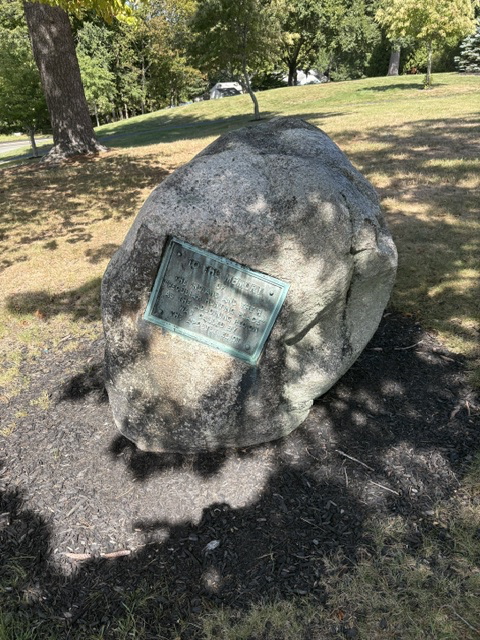
During a seventeenth-century disagreement concerning the establishment of a Native settlement at Natick, the Reverend John Eliot described the land south of the Charles River, including present-day Dover, as a “peculiar hunting place”. Eliot, a Puritan missionary known as the “Apostle to the Indians,” associated the territory with the Massachusetts leader Wampatuck and his family.
Evidence of this earlier presence remains within Dover’s geography. Noanet, Powisset, Pegan Hill and the Neponset River retain names derived from Indigenous languages or associations. These names continued to identify the landscape even as European settlement transformed the land into farms, roads and communities.
In 1912, the Dover Historical Society placed a bronze tablet upon a large stone to commemorate the Indigenous people who had once lived and hunted in the area. The tablet was dedicated on January 13 during a ceremony held at the Town Hall. Speakers discussed the region’s Native history and the natural features that had made it a valuable hunting and fishing territory.
The dedication included an unusually direct acknowledgment for its time that European settlers had taken possession of Indigenous land and inflicted injustice upon its earlier inhabitants. At the same time, the ceremony’s language and interpretations reflected the attitudes and limited historical understanding of the early twentieth century.
The memorial preserves both an older history and a later act of remembrance. It recognizes that Dover’s story did not begin with its incorporation or European settlement, while also revealing how residents in 1912 attempted to understand and commemorate the people who had occupied the land before them.
Read More From Nancy
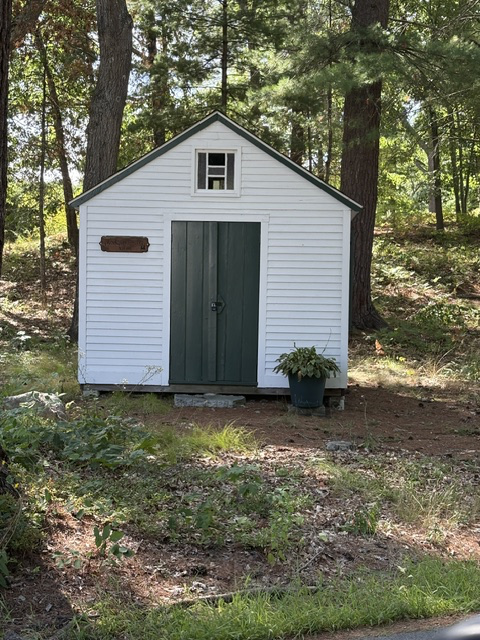
E. F. Hodgson Portable Houses
In 1892, Ernest F. Hodgson began manufacturing portable poultry brooders in Dover. Marketed under names such as “Peep o’ Days” and “Wigwarms,” the small structures were designed to be produced efficiently, transported easily and assembled where they were needed. The success of the brooders encouraged Hodgson to expand into other prefabricated products. The company manufactured […]
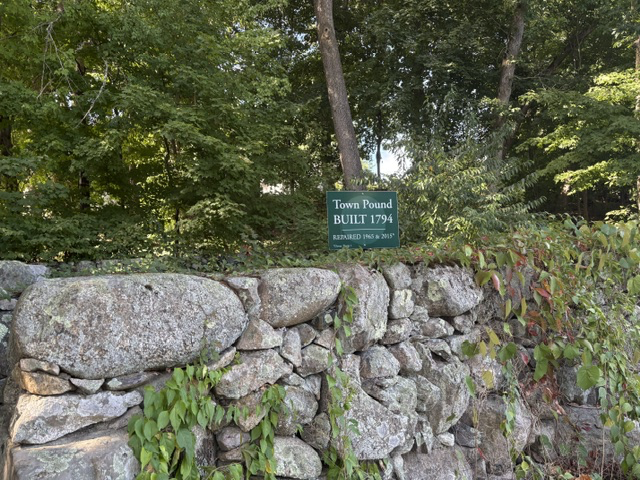
Town Pound
Dover’s Town Pound was built in 1794, when farming shaped nearly every part of community life. Families depended upon cattle, pigs, sheep and other animals for food, labor and income. Before the pound was constructed, cattle and swine were generally permitted to roam, creating problems when they wandered onto neighboring farms or damaged fields and […]
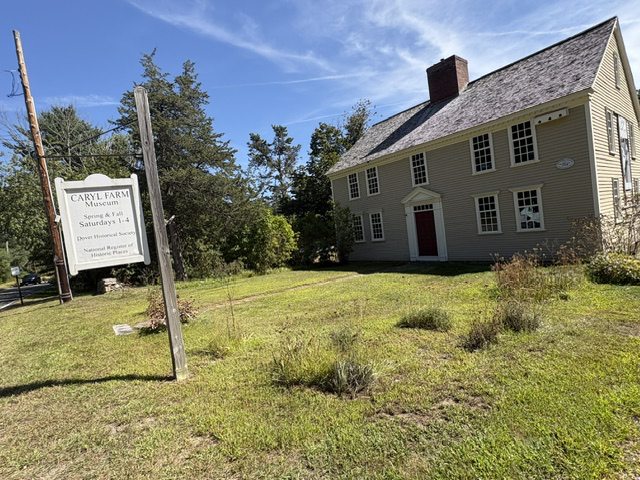
Caryl Farm Museum
The Caryl Farm Museum, also known as the Benjamin Caryl House, was built around 1777 for the Reverend Benjamin Caryl. At the time, the area was still Springfield Parish, part of the much larger town of Dedham. It later became the District of Dover in 1784 and was incorporated as a separate town in 1836. […]

