Bäckerbreitergang
While visiting Hamburg, we walked along Bäckerbreitergang, where this row of carefully restored half-timbered houses offers a rare glimpse of the city’s earlier residential neighborhoods. The photograph was taken beside number 49, the first house in a surviving group extending from numbers 49 through 58.
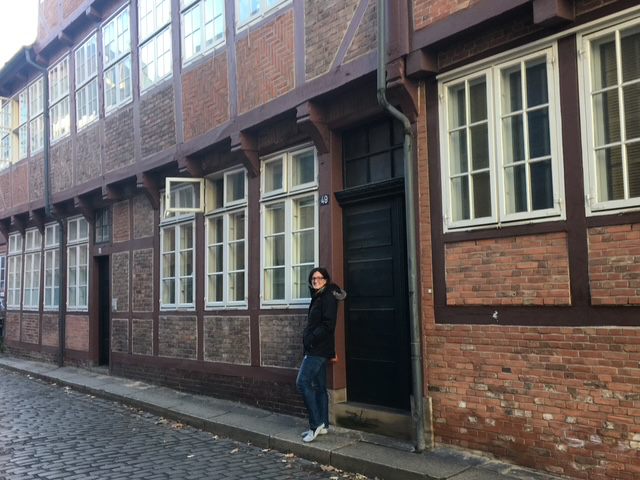
The buildings date from the late eighteenth and early nineteenth centuries. Their exposed wooden framing, patterned brickwork, projecting upper floors, and narrow arrangement reflect a type of modest urban housing once common in Hamburg. Unlike the substantial homes and warehouses associated with the city’s prosperous merchants, these buildings preserve part of the story of the laborers and working families who supported Hamburg’s growth.
Bäckerbreitergang formed part of what Hamburg called its Gängeviertel, or alley quarters. These neighborhoods consisted of houses crowded together along narrow lanes, passageways, and interior courtyards. Some residences could be reached only by walking through passages between other buildings. The density placed families close to their work near the harbor, but it also created cramped living conditions with limited light, ventilation, and sanitation.
By the nineteenth century, thousands of Hamburg’s working-class residents lived in these densely populated districts. The conditions contributed to the rapid spread of disease, particularly during Hamburg’s devastating cholera epidemic of 1892. Redevelopment and demolition followed, removing much of the old alley-quarter housing. Additional buildings were lost during the bombing of Hamburg in the Second World War.
The houses numbered 49 through 58 survived these changes and were eventually restored. Today, they form one of the few remaining continuous rows of the simple half-timbered homes that once filled Hamburg’s working-class neighborhoods.
Standing beside these buildings provided a different view of Hamburg’s history. The city’s harbor, warehouses, and grand public buildings tell the story of international trade and commercial success. Bäckerbreitergang tells the equally important story of the people who worked in that economy and returned each evening to homes along Hamburg’s narrow lanes. Their survival preserves a small but meaningful part of the everyday city that might otherwise have disappeared.
Read More From Nancy
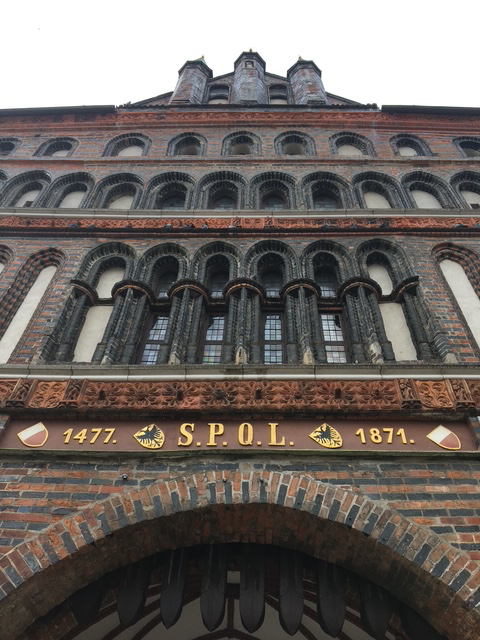
S.P.Q.L. – The Senate and People of Lübeck
While standing beneath the Holstentor in Lübeck, one detail caught my attention. Above the entrance are the letters S.P.Q.L., an inscription modeled after the famous Roman initials S.P.Q.R., meaning “The Senate and People of Rome.” In Lübeck, the letters stand for Senatus Populusque Lubecensis—”The Senate and People of Lübeck.” The inscription reflects the city’s pride in its long […]
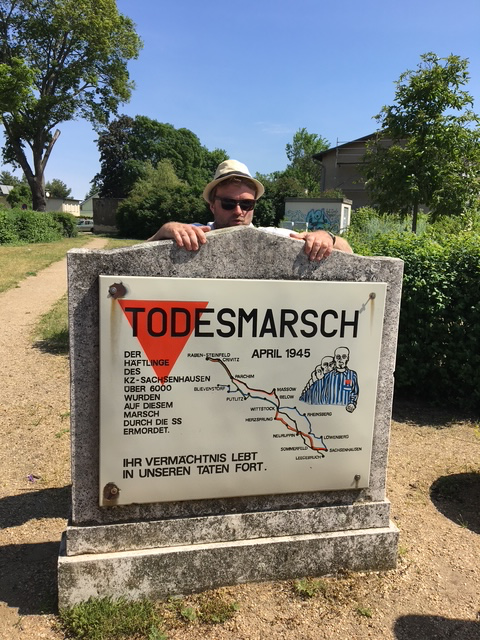
Todesmarsch, April 1945
While visiting Sachsenhausen, Marty and I came upon this memorial marker with one word that required no translation: Todesmarsch — Death March. The map beneath it traces the route taken by prisoners during the final days of the concentration camp in April 1945. It marks a chapter of the Sachsenhausen story that did not take […]
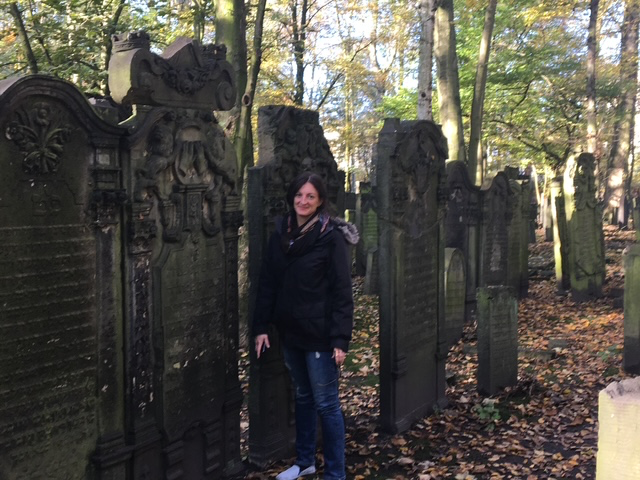
Jewish Cemetery of Altona
One of the most memorable stops on Erin’s and my Jewish heritage tour of Hamburg was a visit to the historic Jewish Cemetery of Altona. It is not a place that most visitors ever see. Access is carefully controlled to protect this remarkable site, and through the special arrangements of our guide, we were able […]

