Historic Fish Auction Hall
During our visit to Hamburg, we explored the waterfront that has shaped the city’s identity and prosperity for centuries. Along the Elbe River stands the historic Fish Auction Hall, or Fischauktionshalle, a reminder of the time when fishing boats, merchants, and dockworkers filled this part of the harbor.
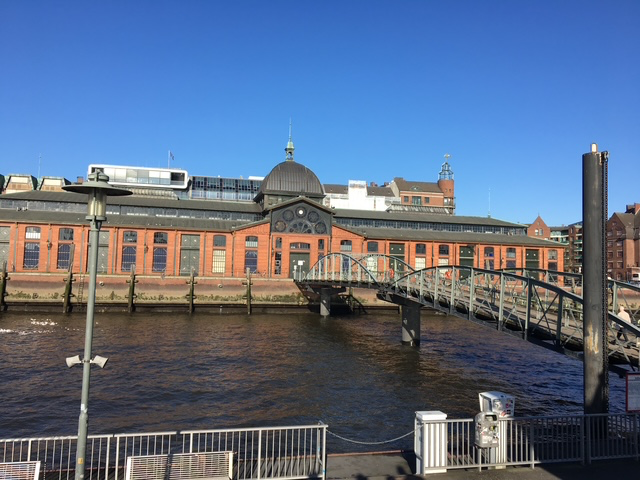
The fishing tradition in this area dates to 1703, when Altona established its own fish market. At the time, Altona was an independent community and a commercial rival of neighboring Hamburg. By the end of the nineteenth century, its growing fishing industry needed a larger and more efficient place where freshly landed catches could be sold, packed, and shipped.
The Fish Auction Hall was constructed in 1895–96 beside Altona’s newly developed fishing port. Its steel framework and brick walls were modeled after the spacious form of an ancient Roman market hall. A connection to the docks allowed fishing vessels to unload their catches directly beside the building. Inside, buyers competed for fresh fish that would quickly be distributed to shops, restaurants, and markets throughout the region.
Hamburg and Altona eventually combined their fish-market operations, and Altona became part of Hamburg in 1937. The auction hall continued serving the fishing industry, but the building was badly damaged during the Second World War. Later alterations obscured much of its original design, and by the 1970s it stood empty and deteriorating along the waterfront.
A major restoration undertaken between 1982 and 1984 rescued the hall and returned much of its original character. The building was given a new purpose as a public gathering place while preserving its connection to the traditional Sunday Fish Market. Early each Sunday morning, vendors sell fish, fruit, flowers, clothing, and other goods as early risers mingle with people ending a Saturday night in the nearby entertainment district. Music and breakfast inside the hall have become part of the experience.
The Fish Auction Hall represents more than Hamburg’s fishing industry. Its survival preserves the story of the rivalry between two neighboring cities, the labor of generations who depended upon the Elbe, and the successful restoration of a waterfront landmark. What began as a working center of commerce remains part of the life of Hamburg, continuing to bring people together beside the river.
Read More From Nancy
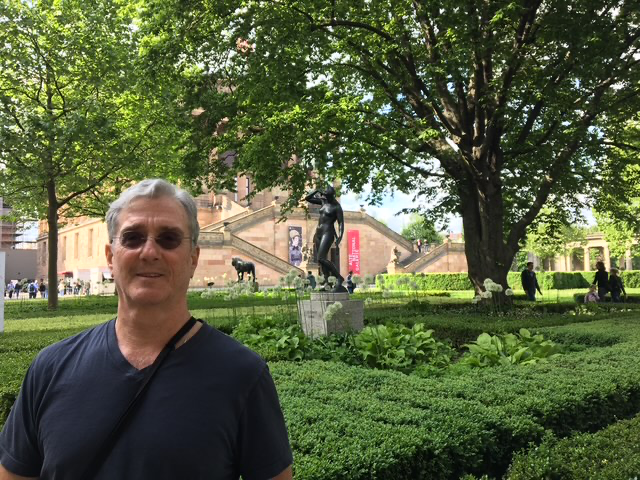
The Kolonnadenhof, Museum Island
On our trip to Berlin, we spent time exploring the museums on Museum Island. There was so much to see inside that it would have been easy to hurry from one collection to the next. Instead, we found ourselves lingering in the Kolonnadenhof, the garden shared by the Alte Nationalgalerie, the Neues Museum, and the Pergamon Museum. It gave […]
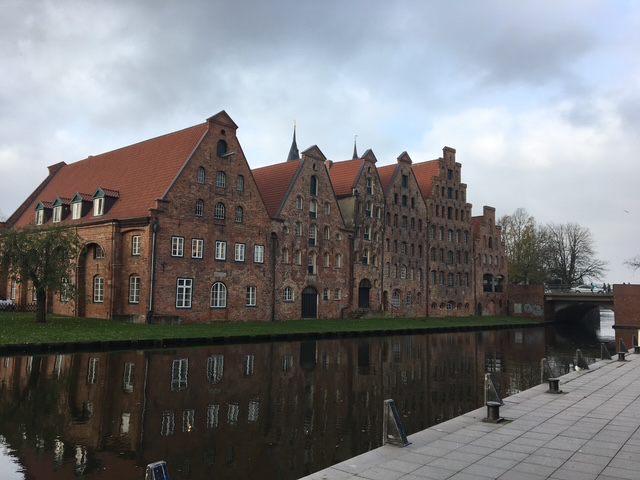
The Salt Storehouses
Standing along the Trave River near Lübeck’s Holsten Gate, the six buildings known as the Salzspeicher, or Salt Storehouses, preserve the story of a commodity that helped make this northern German city wealthy and powerful. Their rows of windows, steep red roofs, and distinctive stepped gables reflect in the water, creating one of Lübeck’s most […]
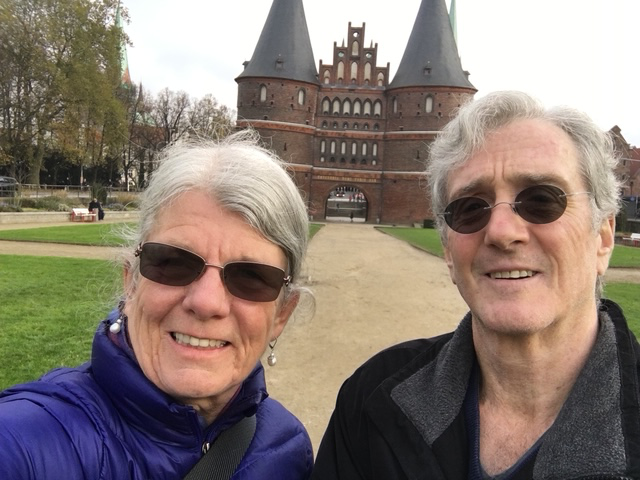
The Holstentor
While traveling through northern Germany, Marty and I visited the historic city of Lübeck, where one building immediately captures every visitor’s attention: the Holstentor. With its twin towers, red brick construction, and distinctive silhouette, it has become the enduring symbol of the city. Construction of the Holstentor began in 1464 and was completed in 1478 […]

