Todesmarsch, April 1945
While visiting Sachsenhausen, Marty and I came upon this memorial marker with one word that required no translation: Todesmarsch — Death March. The map beneath it traces the route taken by prisoners during the final days of the concentration camp in April 1945. It marks a chapter of the Sachsenhausen story that did not take place behind the camp walls, but along the roads, through villages and into the forests of northern Germany.
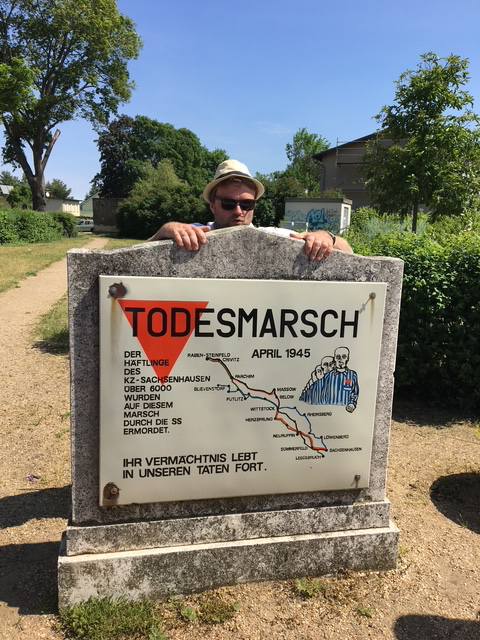
By April 1945, Nazi Germany was collapsing. Soviet forces were advancing toward Berlin, and the SS knew that Sachsenhausen would soon be reached. Rather than leave the prisoners behind to be liberated, the SS began evacuating the camp. On April 21, more than 30,000 prisoners were forced out of Sachsenhausen and driven northwest toward Mecklenburg under armed SS guard.
Many of these men and women were already desperately weak. Years or months of imprisonment, forced labor, inadequate food, disease and abuse had left them in poor physical condition. Yet they were expected to walk many miles each day with little food, inadequate clothing and almost no opportunity to recover. Those who could no longer keep up risked being beaten, abandoned or shot.
The columns of prisoners passed through towns and villages as they moved farther from the approaching Soviet army. This is an important part of the story. The concentration camp system was no longer hidden behind fences and walls. Thousands of emaciated prisoners were now moving through the German countryside in plain sight, guarded by SS troops.
One of the most significant stops occurred at the Belower Forest near Wittstock. Beginning around April 23, more than 16,000 Sachsenhausen prisoners were concentrated in the woods there. For several days they lived outdoors with almost nothing to eat and little access to water. Some prisoners stripped bark and leaves from trees in an effort to survive. Others carved names, initials and messages into tree trunks, traces of their presence that became part of the memorial landscape.
As the days passed, the authority of the SS began to disintegrate along with the Nazi regime itself. Guards fled or abandoned groups of prisoners, while advancing Soviet and American forces moved into the region. Between May 3 and May 6, many of the surviving prisoners finally gained their freedom in the area between Parchim, Ludwigslust and Schwerin.
The memorial itself has a history. Beginning in the 1970s, markers like this one were placed along the approximately 200-kilometer route of the death march. The design is deliberately simple: the red triangle once used to identify categories of concentration-camp prisoners, a drawing of prisoners under guard, and a map tracing the route from Sachsenhausen toward Schwerin.
At the bottom are the words:
“Ihr Vermächtnis lebt in unseren Taten.” “Their legacy lives in our deeds.”
What makes these markers particularly powerful is where they stand. They are not confined to the grounds of Sachsenhausen. They follow the route the prisoners themselves were forced to take, carrying the memory of the concentration camp out into the landscape through which they marched. The camp would soon be liberated, but for more than 30,000 prisoners, liberation did not begin when the gates of Sachsenhausen opened. First, they had to survive the death march.
Read More
Read More From Nancy

Berliner Dom
When Marty and I visited Berlin, our timing happened to coincide with a celebration of Martin Luther. It was the 500th anniversary of the Protestant Reformation in 2017, commemorating Luther’s posting of the Ninety-Five Theses in Wittenberg on October 31, 1517. Throughout Germany, churches were filled with visitors who had traveled to take part in […]
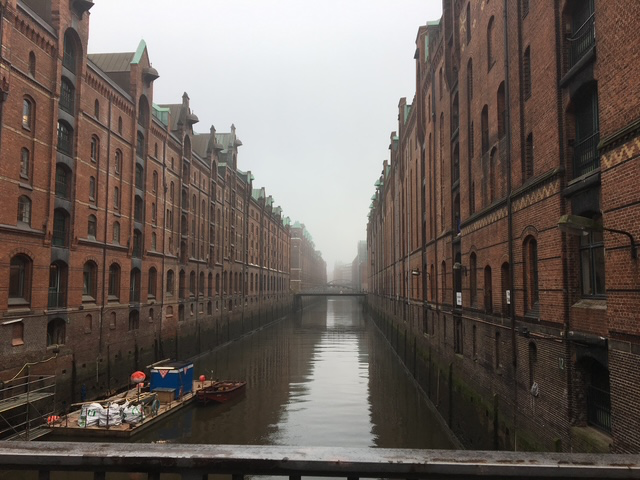
The Speicherstadt
When I first stood on this bridge, my eyes were drawn down the long, quiet canal framed by rows of towering brick buildings. The water was perfectly still, reflecting the warehouses that seemed to stretch endlessly into the distance. Even on a misty day, there was something captivating about the scene. It felt less like […]
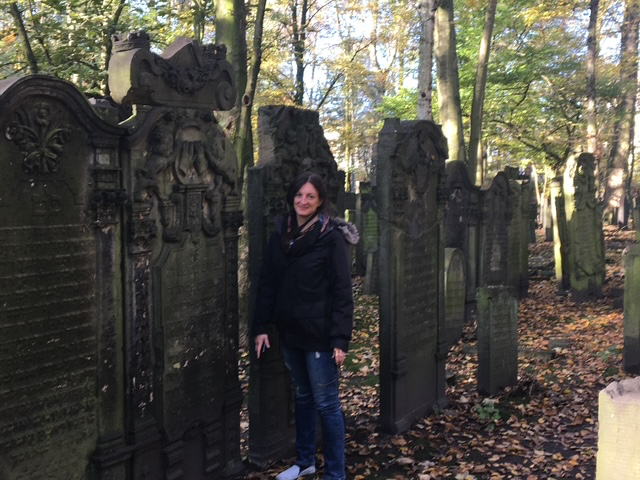
Jewish Cemetery of Altona
One of the most memorable stops on Erin’s and my Jewish heritage tour of Hamburg was a visit to the historic Jewish Cemetery of Altona. It is not a place that most visitors ever see. Access is carefully controlled to protect this remarkable site, and through the special arrangements of our guide, we were able […]

