S.P.Q.L. – The Senate and People of Lübeck
While standing beneath the Holstentor in Lübeck, one detail caught my attention. Above the entrance are the letters S.P.Q.L., an inscription modeled after the famous Roman initials S.P.Q.R., meaning “The Senate and People of Rome.”
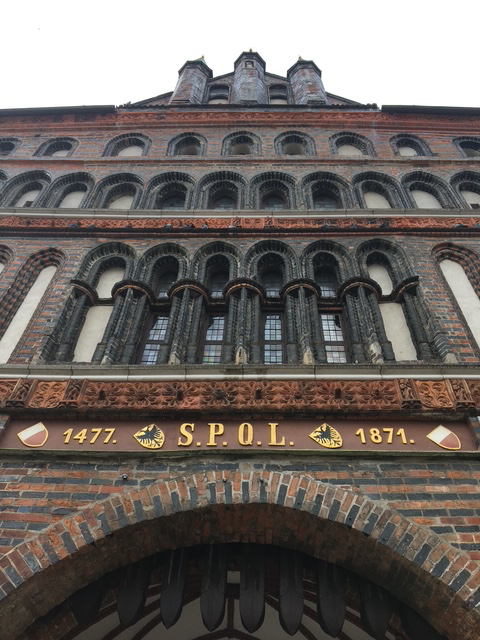
In Lübeck, the letters stand for Senatus Populusque Lubecensis—”The Senate and People of Lübeck.” The inscription reflects the city’s pride in its long history as the leading city of the Hanseatic League and its tradition of self-government.
The dates on either side tell another story. Although the Holstentor was completed in 1477, the inscription was added in 1871 during an extensive restoration. By then, medieval gates throughout Europe were disappearing as cities expanded, but the people of Lübeck chose a different path. Rather than demolishing their famous gateway, they restored it and celebrated it as a symbol of their city’s identity.
I enjoy noticing details like this because they reveal that historic buildings are not frozen in time. Each generation leaves its own mark, adding another chapter to the story. In the case of the Holstentor, a medieval city gate became not only a reminder of Lübeck’s past but also a symbol of the pride its citizens continued to hold nearly four hundred years after it was built.
Read More From Nancy
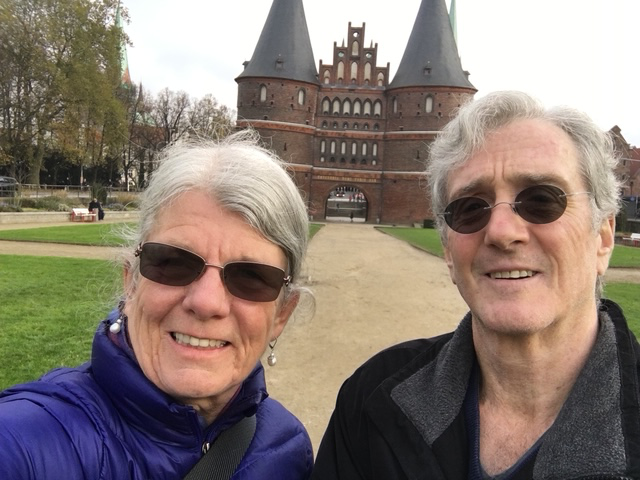
The Holstentor
While traveling through northern Germany, Marty and I visited the historic city of Lübeck, where one building immediately captures every visitor’s attention: the Holstentor. With its twin towers, red brick construction, and distinctive silhouette, it has become the enduring symbol of the city. Construction of the Holstentor began in 1464 and was completed in 1478 […]
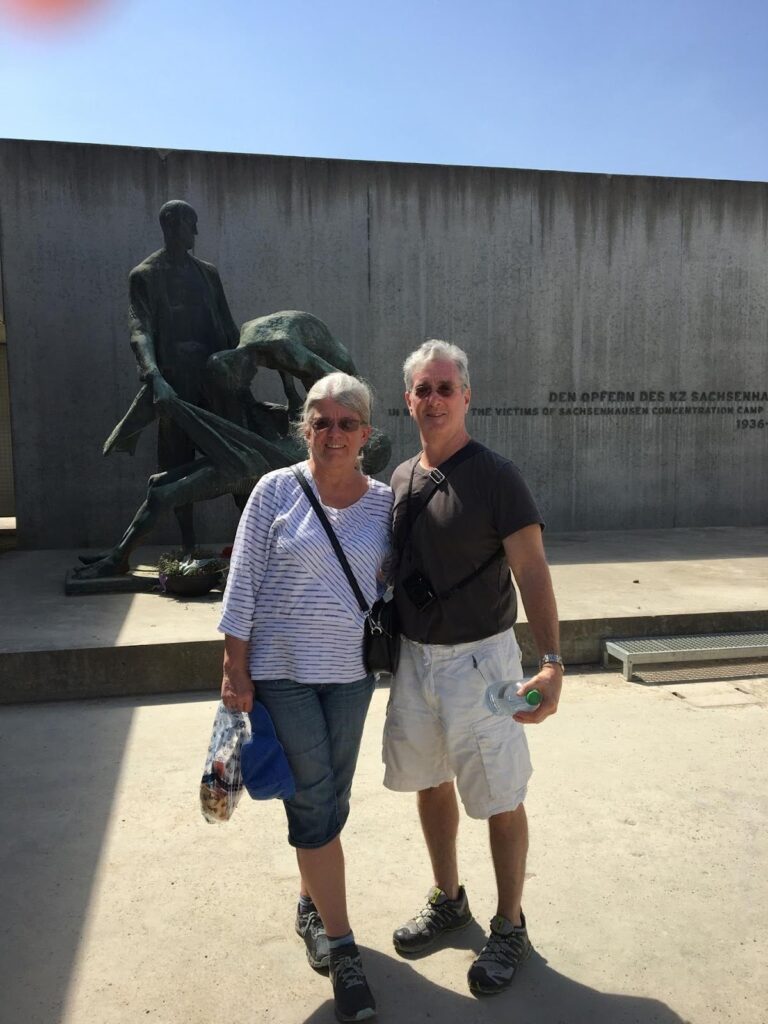
Sachsenhausen Concentration Camp
For me, exploring history means looking at the good, the bad, and the ugly. Traveling to Germany was a challenging choice for Marty. Our first German city was Berlin, a beautiful and vibrant place that embraces music, the arts, and an extraordinary culinary scene. Yet it was also here that we visited our first concentration camp: […]
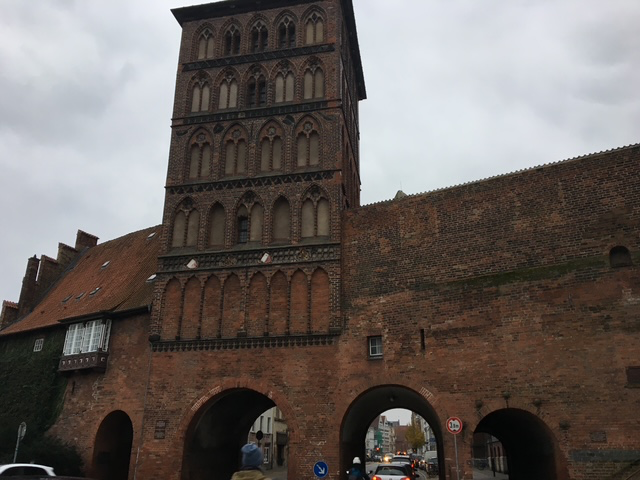
The Burgtor
During our visit to Lübeck, we passed through the Burgtor, or Castle Gate, one of the surviving entrances into the city’s historic center. Although it is less widely recognized than Lübeck’s famous Holsten Gate, the Burgtor is the older of the two and has guarded the northern approach to the city for centuries. Lübeck was […]

