Tisquantum (Squanto) Memorial
Tisquantum, better known as Squanto, is most often remembered as the Native American who helped the English settlers at Plymouth survive their first difficult years. His complete story, however, is far more complicated. It is a story of kidnapping, enslavement, survival, cultural displacement and an extraordinary ability to move between two very different worlds.
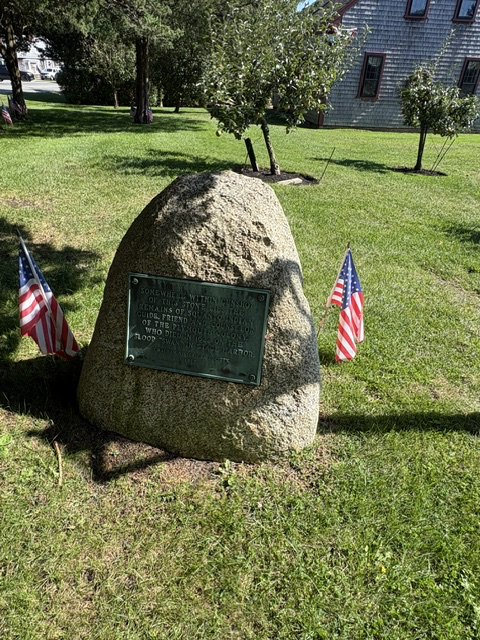
Tisquantum was a member of the Patuxet community, part of the larger Wampanoag world of southeastern Massachusetts. Patuxet was located where Plymouth now stands. In 1614, English sea captain Thomas Hunt deceived more than 20 Native men and boys into boarding his ship. Among them was Tisquantum. Hunt carried his captives across the Atlantic, intending to sell them into slavery in Spain.
Tisquantum escaped enslavement and eventually reached England, where he lived with the household of London merchant John Slany. During these years, he learned English and became familiar with European customs. He later worked in Newfoundland before finally securing passage back across the Atlantic.
When Tisquantum returned to Patuxet in 1619, he discovered that nearly everyone in his community had died during the devastating epidemic that swept through coastal New England between 1616 and 1619. He had survived captivity and years of separation, only to return to a homeland emptied of his family and community.
The following year, the passengers of the Mayflower established Plymouth Colony on the former Patuxet village site. Because Tisquantum spoke English and understood both Native and European cultures, he became an interpreter, guide and intermediary. He helped the colonists understand local planting methods, locate food and establish communication with surrounding Native communities. William Bradford later described him as a special instrument sent by God for the colonists’ benefit.
Tisquantum’s position was nevertheless complicated. He was not simply a servant of the English settlers. Having lost his own community, he attempted to create a place for himself within the rapidly changing political world around Plymouth. His command of English and his ability to carry messages between Native leaders and the colonists gave him unusual influence. At times, he apparently used that influence to advance his own position, creating distrust between himself and the Wampanoag leader Ousamequin, commonly known as Massasoit.
In November 1622, Tisquantum accompanied Governor William Bradford on a trading expedition from Plymouth to Monomoit, the area now known as Chatham. The group hoped to acquire corn and beans from the Monomoy people. During the journey, Tisquantum suddenly became ill. Bradford wrote that he suffered from what he called an “Indian fever” and experienced severe bleeding from his nose, which was understood as a sign of approaching death.
According to Bradford, Tisquantum asked the governor to pray for him and distributed some of his possessions among his English friends as remembrances. He died within several days. The precise cause of his death remains unknown. Bradford recorded the colonists’ sense of loss, recognizing how dependent they had become upon Tisquantum’s knowledge, language skills and guidance.
Tisquantum was buried somewhere in the Chatham area, but the exact location of his grave has never been established. The memorial does not claim to identify the burial place. Instead, it acknowledges that somewhere within the surrounding region lie the remains of the man whose remarkable and tragic life became inseparable from the early history of Plymouth Colony.
The memorial was placed by the Chatham Historical Society in 1955. It marks not merely the death of the familiar figure called Squanto, but the final resting region of Tisquantum—the Patuxet survivor who was carried across an ocean against his will, found his way home and used the knowledge gained through adversity to navigate a world transformed beyond recognition
Read More From Nancy
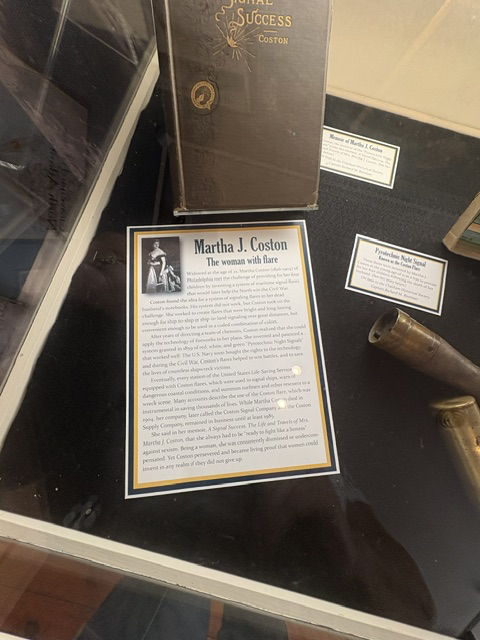
Martha J. Coston and the Signals That Saved Lives
Before radio, ships traveling at night had few reliable ways to communicate with one another or with people on shore. Flags could not be seen in darkness, and lanterns lacked the brightness and distinctive patterns needed to carry clear messages across long distances. Martha J. Coston helped solve this problem by developing a system of […]
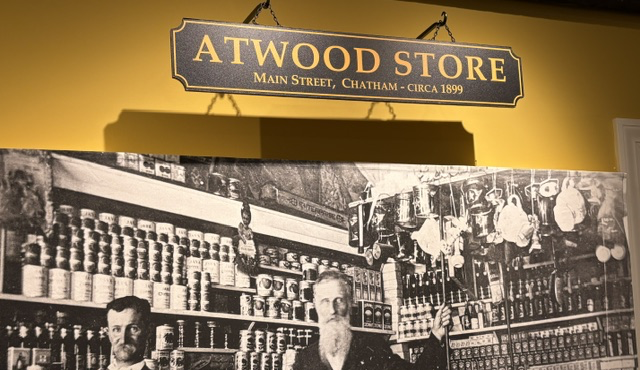
The Atwood Store
The Atwood Store was one of Chatham’s earliest markets. Levi Atwood opened the business in 1849 near the corner of Atwood Street, now Stage Harbor Road, and Cedar Street. It was later moved to Main Street, where it remained in operation until the Atwood family sold it in 1965. Like many 19th-century general stores, the […]
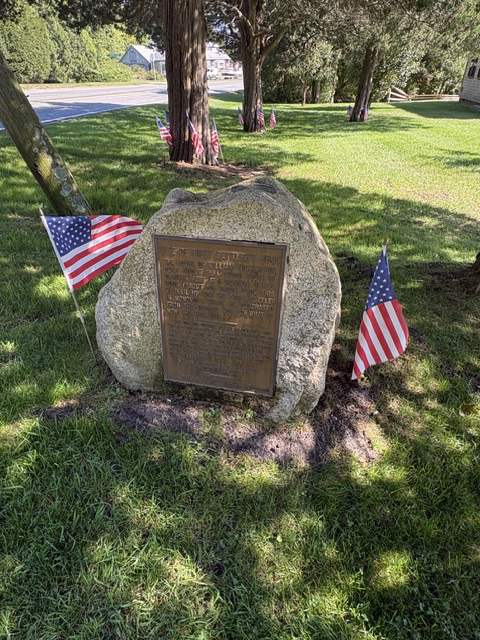
William and Anne Nickerson
William and Anne Busby Nickerson occupy an important place in the history of Chatham as its first permanent English settlers. Their arrival, however, did not mark the beginning of human history here. The region was already known as Monomoit or Monomoyick and was home to the Monomoy people. The Nickerson story is therefore one of English settlement, family determination […]

