Martha J. Coston and the Signals That Saved Lives
Before radio, ships traveling at night had few reliable ways to communicate with one another or with people on shore. Flags could not be seen in darkness, and lanterns lacked the brightness and distinctive patterns needed to carry clear messages across long distances. Martha J. Coston helped solve this problem by developing a system of colored pyrotechnic signals that transformed maritime communication.
Coston was widowed at the age of twenty-one and left to support four children. Among her late husband’s papers, she discovered plans for a nighttime signaling system that he had begun while working for the United States Navy. The idea was incomplete, but Coston recognized its potential. Although she had little formal knowledge of chemistry or pyrotechnics, she spent nearly a decade working with chemists, fireworks manufacturers, and naval officials to make the system practical.
Her signals used combinations of brilliant colors to create messages that sailors could recognize from a distance. In 1859, she secured a United States patent for the system through her late husband’s estate. She later patented improvements in her own name and established a company to manufacture the signals.
The United States Navy adopted Coston signals during the Civil War, using them to communicate between vessels and coordinate naval operations. The United States Life-Saving Service also equipped its coastal stations with the flares. Surfmen used them to warn ships of dangerous conditions, summon rescuers, and communicate with vessels in distress. Along the exposed coastline of Cape Cod, a dependable nighttime signal could mean the difference between confusion and a coordinated rescue.
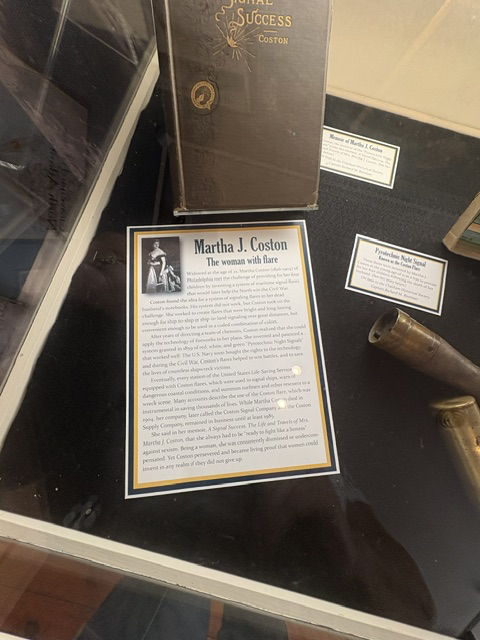
Coston later described her work and travels in her 1886 autobiography, A Signal Success. Her signaling system remained in maritime use for decades and demonstrated how persistence and practical innovation could improve communication and safety at sea.
Read More From Nancy

Marconi-RCA Wireless Museum
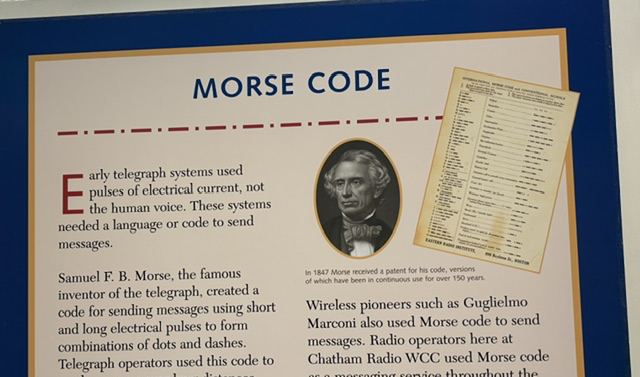
Long before messages could be sent instantly by telephone, satellite or the internet, Chatham served as an important link between ships at sea and the rest of the world. The Marconi-RCA Wireless Museum preserves the story of the people and technology that made those connections possible. Italian inventor Guglielmo Marconi helped transform communication through his […]
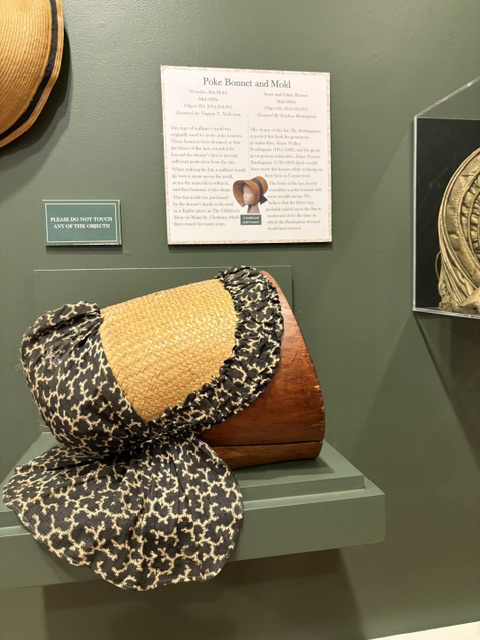
Measuring History Through Hats
It is always interesting to measure the passage of history through an ordinary object. At the Atwood Museum, the history of hats becomes a timeline of changing customs, occupations, technology and fashion. What people placed on their heads was rarely chosen for appearance alone. Hats offered protection, identified social position and occupation, reflected expectations of […]
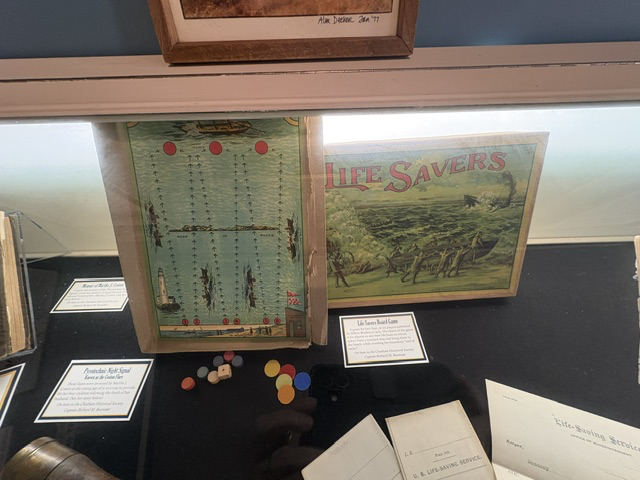
Life Savers and the Rise of American Board Games
The game Life Savers transformed the dangers of a shipwreck into a contest of rescue. Produced by the Milton Bradley Company near the turn of the twentieth century, the game challenged players to send lifeboats to a wrecked vessel, rescue its sailors, and return them safely to shore. Its illustrated cover, playing board, spinner, and colored pieces […]

