William and Anne Nickerson
William and Anne Busby Nickerson occupy an important place in the history of Chatham as its first permanent English settlers. Their arrival, however, did not mark the beginning of human history here. The region was already known as Monomoit or Monomoyick and was home to the Monomoy people. The Nickerson story is therefore one of English settlement, family determination and land transactions conducted during a complicated period of colonial expansion.
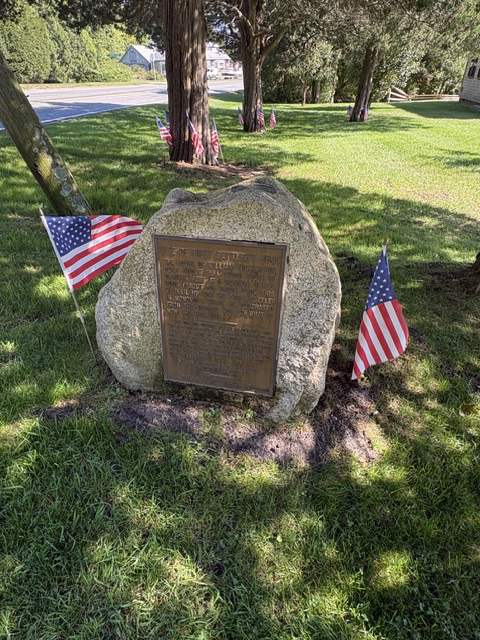
William Nickerson was a weaver from Norwich, England. He and Anne left England during a period when religious nonconformists faced pressure from Church of England authorities. In 1637, they crossed the Atlantic aboard the John and Dorothy, accompanied by four of their children and Anne’s parents. They landed at Salem before eventually moving to Yarmouth, where they became part of the growing English population of Cape Cod.
William became interested in the land farther east at Monomoit. In 1656, he negotiated directly with Mattaquason, a Monomoy sachem, for a large tract of land. The transaction created problems because Plymouth Colony prohibited individuals from purchasing Native land without the colonial government’s approval. William was brought before the court and punished for proceeding without permission.
His persistence continued for years. In 1672, the earlier transaction was formalized through another deed from the Monomoy leaders Mattaquason and John Quason. Goods exchanged in connection with the purchase included coats of cloth, kettles, axes, hoes, knives, wampum and other useful items. Additional purchases eventually gave Nickerson control over much of the land that would become Chatham, although an area east of present-day Old Harbor Road remained reserved for the Monomoy people.
William and Anne established their home on the western side of Ryder’s Cove around 1664. At the time, they were entering the later years of their lives, and most of their children were grown. Yet the homestead they created was not a modest retirement cottage. Archaeological evidence would eventually show that it was a substantial household surrounded by work areas, agricultural activity and other structures.
The Nickersons’ arrival helped begin the permanent English settlement of Monomoit. Other families followed, and by the 1690s approximately 17 English families were living in the community. The settlement was first connected administratively with Yarmouth and then Eastham. It became a constablewick known as Monamoy in 1696 and was incorporated as the town of Chatham in 1712.
The Nickerson family grew into one of Chatham’s largest and most enduring families. Its descendants became part of the town’s maritime, agricultural, commercial and civic life. The Nickerson name remains familiar throughout Cape Cod, while the family association established in 1897 continues to preserve the history and genealogy of William and Anne’s descendants.
Read More From Nancy
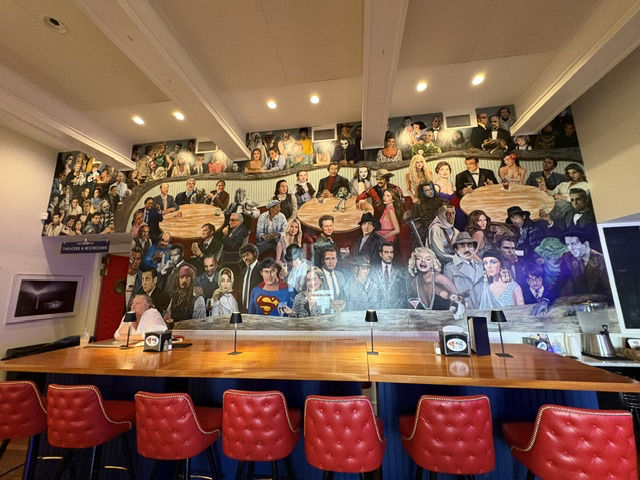
“You Are the Star” Cinema Mural at the Chatham Orpheum Theater
The cinema mural inside the Chatham Orpheum Theater is based on the concept of You Are the Star, a celebrated Hollywood mural painted by artist Thomas Suriya in 1983. The original was created on the side of a building near Hollywood Boulevard in Los Angeles and depicts a theater filled with famous actors and movie characters. […]
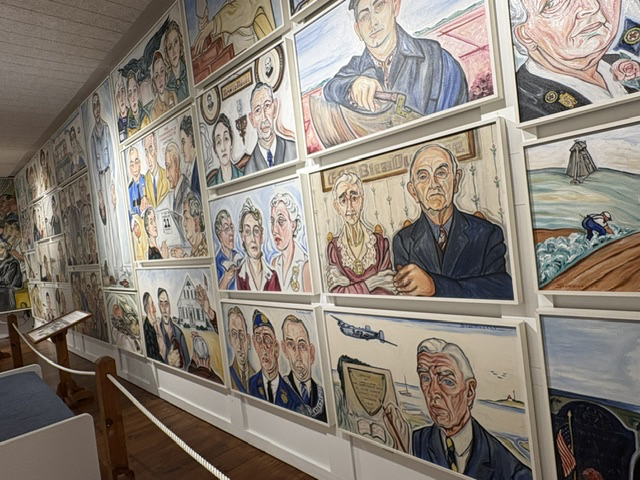
Alice Stallknecht’s Murals of a New England
During the 1930s and 1940s, artist Alice Stallknecht created a series of murals that combined religious imagery with portraits of the people, occupations and institutions of Chatham. Rather than placing biblical figures in a distant historical setting, she presented Christ as a contemporary working man surrounded by recognizable members of the local community. Her first […]
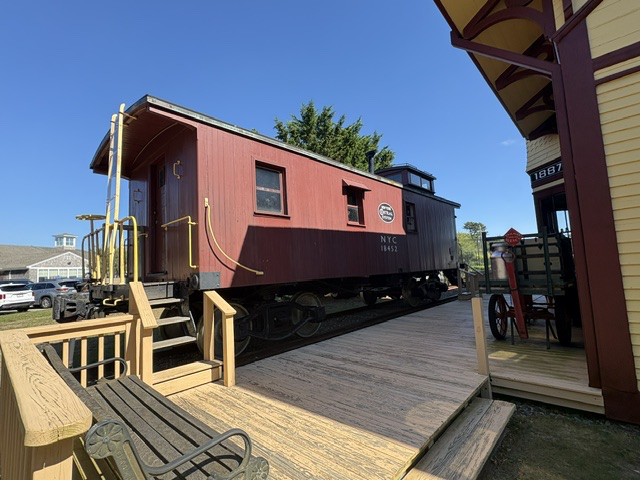
New York Central Caboose No.18452
For generations, the caboose was a familiar sight at the end of an American freight train. It served as a mobile office, observation post and temporary living space for the conductor and brakemen responsible for managing the train’s cargo and safe operation. New York Central Caboose No. 18452 was constructed in the railroad’s shops in […]

