Thinkers’ Lodge
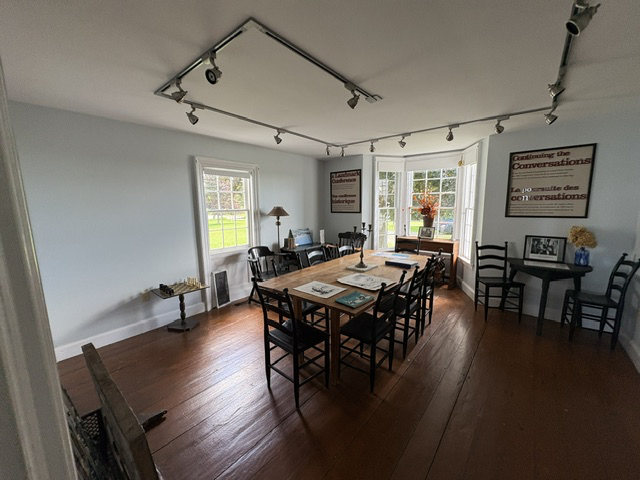
As we started our road trip home from Halifax, Marty and I decided to get off the main road and make our way to the small village of Pugwash, Nova Scotia. We had never heard of Pugwash, nor did we know anything about the remarkable events that had taken place there. What we found was an unassuming white house overlooking the water and a story with international significance.
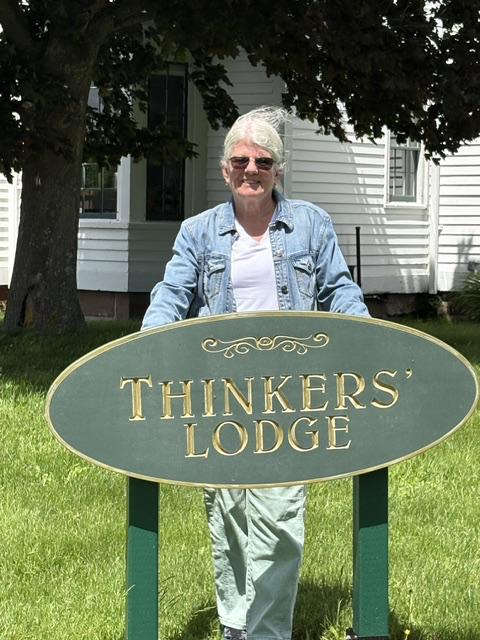
The house is known as Thinkers’ Lodge. Its peaceful location on the Northumberland Strait seems an unlikely setting for a gathering that would become part of the history of the Cold War and the international movement against nuclear weapons.
The story centers on Cyrus Eaton, a Canadian American industrialist and philanthropist who was born near Pugwash in 1883. Although Eaton went on to become a successful businessman in the United States, he maintained strong connections to his Nova Scotia birthplace. In 1929, he acquired the property that would become Thinkers’ Lodge and eventually envisioned it as a place where people could gather to exchange ideas away from the political pressures of the larger world.
That idea took on extraordinary importance during the 1950s.
The development of nuclear weapons had changed the nature of warfare. In 1955, philosopher Bertrand Russell and Albert Einstein joined other prominent scientists in issuing what became known as the Russell-Einstein Manifesto. It warned of the potentially catastrophic consequences of nuclear war and called upon scientists from different nations and political systems to meet and discuss the dangers facing humanity.
Eaton offered to finance such a meeting and proposed Pugwash as the location.
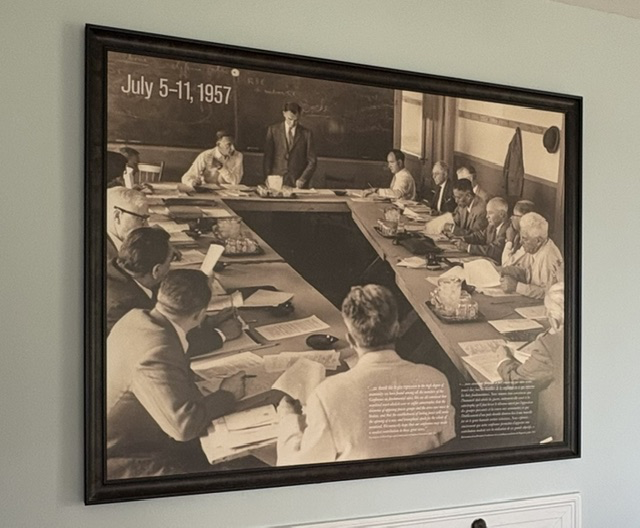
In July 1957, twenty-two scientists from ten countries arrived in this small Nova Scotia community. They represented nations on both sides of the Cold War divide, including the United States and the Soviet Union. At a time when distrust between East and West was profound, these scientists came together not as government representatives but as individuals concerned about the consequences of nuclear weapons.
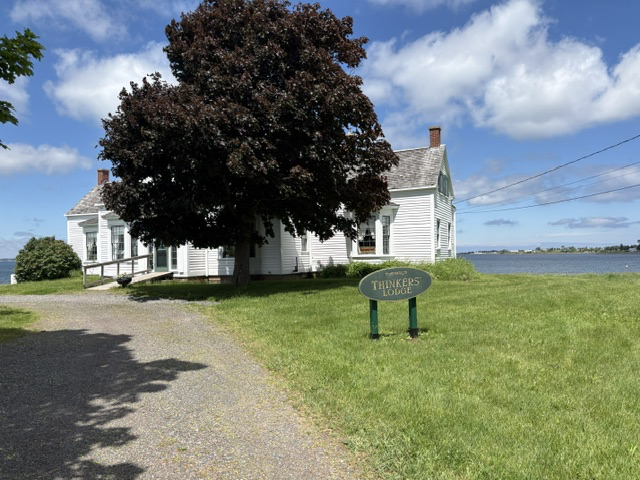
They met here at Thinkers’ Lodge.
For several days they ate together, walked along the shore, talked and debated. The simplicity of the surroundings was part of what made the gathering remarkable. There were no grand diplomatic chambers and no armies of government officials. Instead, people whose countries regarded one another as enemies sat together in a house overlooking the water and tried to find areas of common understanding.
The meeting became the first Pugwash Conference on Science and World Affairs.
The conversations begun here did not end when the scientists left Nova Scotia. The Pugwash movement continued throughout the Cold War, providing an unofficial channel through which scientists and scholars from opposing nations could communicate about nuclear weapons, arms control and international security.
In 1995, the importance of that work received extraordinary recognition when the Pugwash Conferences on Science and World Affairs and physicist Joseph Rotblat, one of the participants in the original 1957 meeting, jointly received the Nobel Peace Prize for their efforts toward nuclear disarmament.
Thinkers’ Lodge was designated a National Historic Site of Canada in 2008 and has been preserved as a place where the history of those conversations can still be explored.
What stayed with me was how completely unexpected this visit was. We had simply begun our drive home from Halifax, turned away from the main road and traveled into a town we had never heard of. There, beside the water in Pugwash, stood a modest white house where scientists from opposing sides of the Cold War once gathered because they believed conversation might accomplish something confrontation could not. It was another reminder of why I enjoy getting off the main road. Sometimes the places we know nothing about are the ones that introduce us to stories we never expected to find.
Read More From Nancy
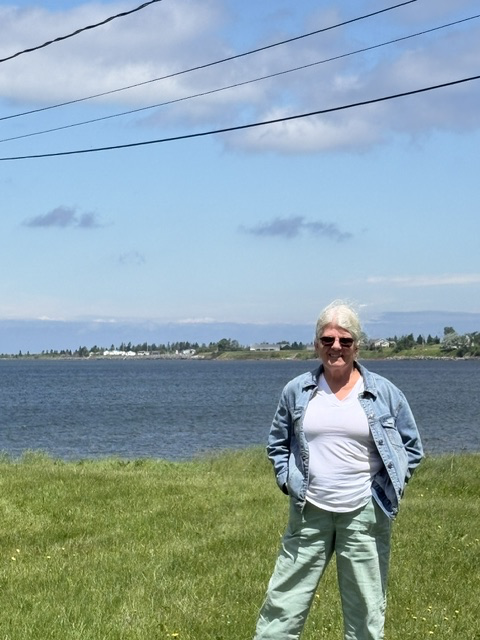
Where the Land Meets the Sea
Standing along the waterfront in Pugwash, it is easy to understand why a community developed here. The water behind me is part of a landscape that has shaped life in this part of Nova Scotia for thousands of years. Long before Europeans arrived, the Mi’kmaq knew this area as Pagweak, a name associated with the shallow […]
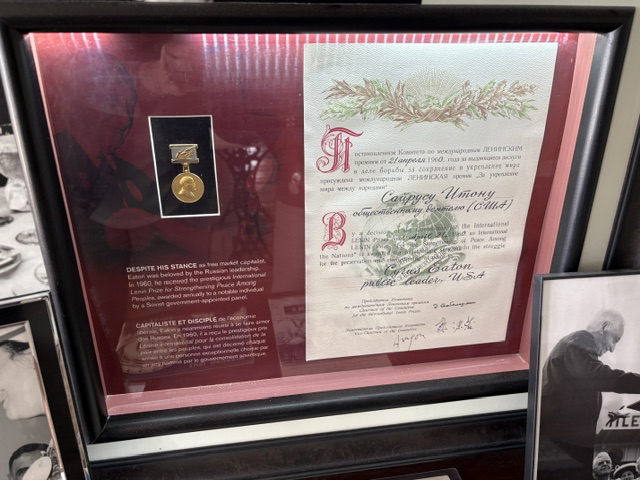
Cyrus Eaton and the International Lenin Peace Prize
I had never heard of the International Lenin Peace Prize before seeing Cyrus Eaton’s medal and certificate at Thinkers’ Lodge, but understanding what the award was makes this display much more interesting. The award was created by the Soviet Union in 1949, originally as the International Stalin Prize for Strengthening Peace Among Peoples. Following Stalin’s […]
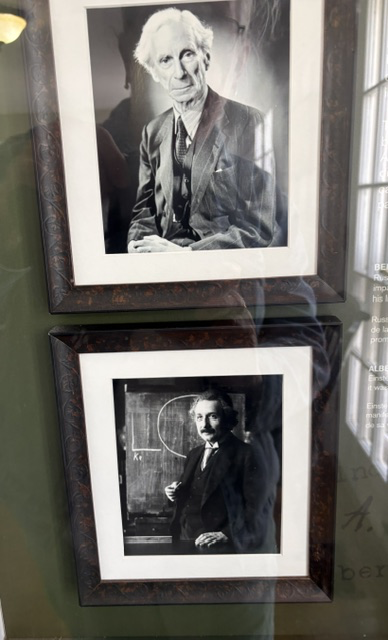
The Russell-Einstein Manifesto
Before there was a meeting at Thinkers’ Lodge, there was a warning. In the years following World War II, scientists who had witnessed the development of nuclear weapons increasingly understood that humanity had entered a fundamentally different age. Among those most concerned were philosopher and mathematician Bertrand Russell and physicist Albert Einstein. In 1955, Russell […]

