Where the Land Meets the Sea
Standing along the waterfront in Pugwash, it is easy to understand why a community developed here. The water behind me is part of a landscape that has shaped life in this part of Nova Scotia for thousands of years.
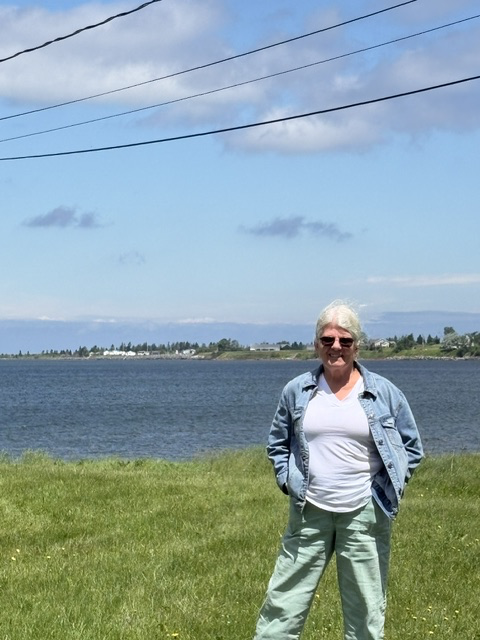
Long before Europeans arrived, the Mi’kmaq knew this area as Pagweak, a name associated with the shallow waters of the harbor. The river and the nearby Northumberland Strait provided transportation, fishing and access to the surrounding land. When European settlers established themselves here, they too built their lives around the water.
During the nineteenth century, Pugwash became a busy maritime community. Its protected harbor supported fishing, trade and especially wooden shipbuilding. Vessels constructed here carried local products to distant markets, connecting this small Nova Scotia community with ports far beyond its shores. Agriculture, lumbering and commerce developed alongside the maritime economy.
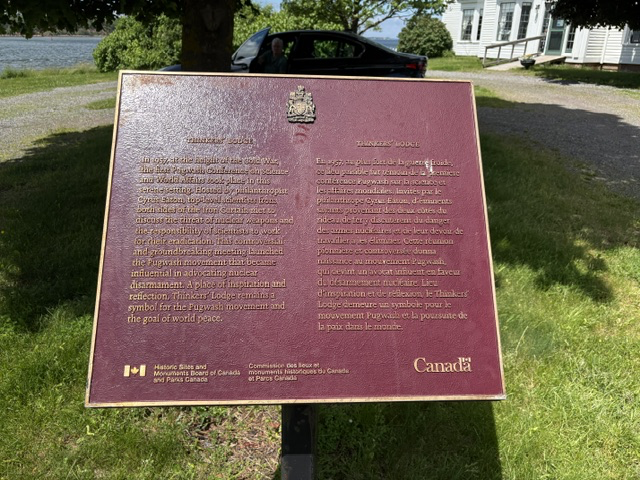
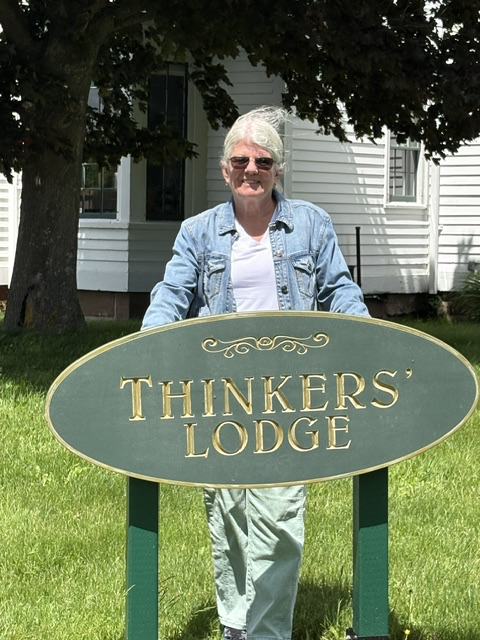
The water continued to shape the town as transportation changed. Sailing vessels eventually gave way to steamships, railroads and roads, but Pugwash remained connected to the wider world. When I first arrived, I knew Pugwash primarily for the extraordinary peace movement that began here in 1957. But standing beside the water reminded me that the story of this community began long before scientists arrived at Thinkers’ Lodge.
For generations, this harbor connected Pugwash to the world through ships and commerce. Then, in the twentieth century, people began traveling here for a very different reason—to sit together and search for ways to prevent nuclear war.
Read More From Nancy
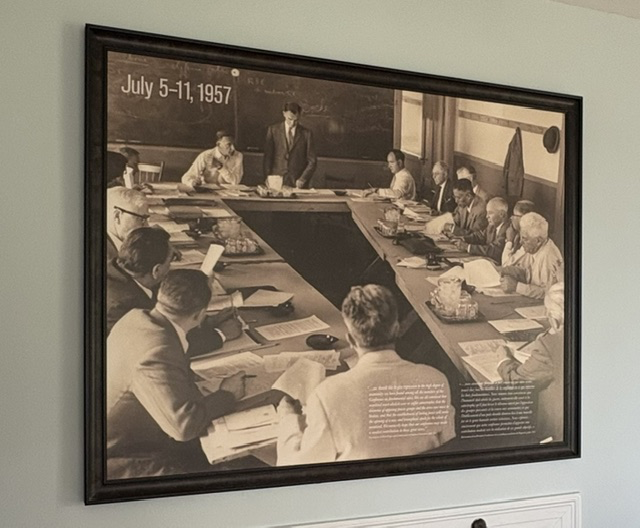
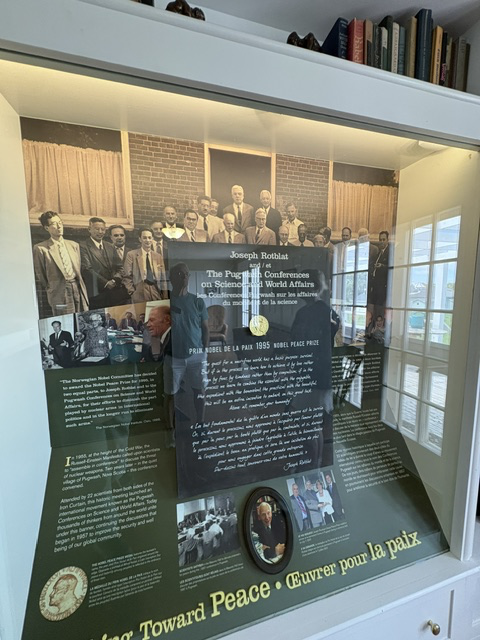
The First Pugwash Conference — July 1957
This photograph takes us into the room where the event that gave Pugwash its international significance happened. The date printed on the display, July 5–11, 1957, marks the period surrounding the first Pugwash Conference on Science and World Affairs. Twenty-two scientists from ten countries came to Pugwash following the call issued by the 1955 Russell-Einstein Manifesto, […]
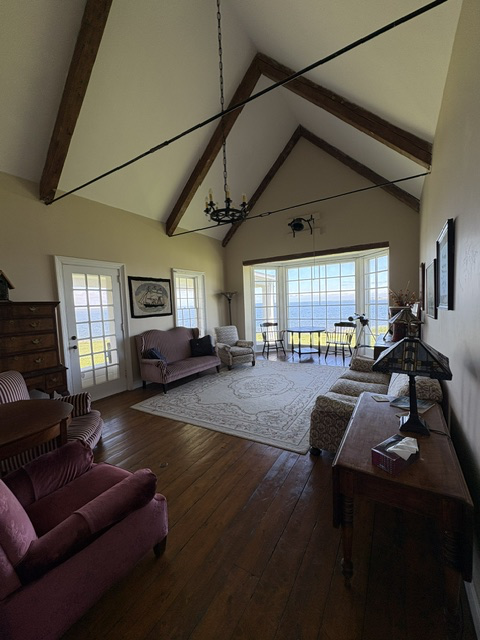
The Living Room at Thinkers’ Lodge
This room helps explain why Thinkers’ Lodge was such an unusual setting for an international gathering. Rather than meeting in a formal conference center, the scientists who came to Pugwash lived and spent time together in a house overlooking the Northumberland Strait. Rooms like this provided informal spaces where conversations could continue beyond the scheduled […]
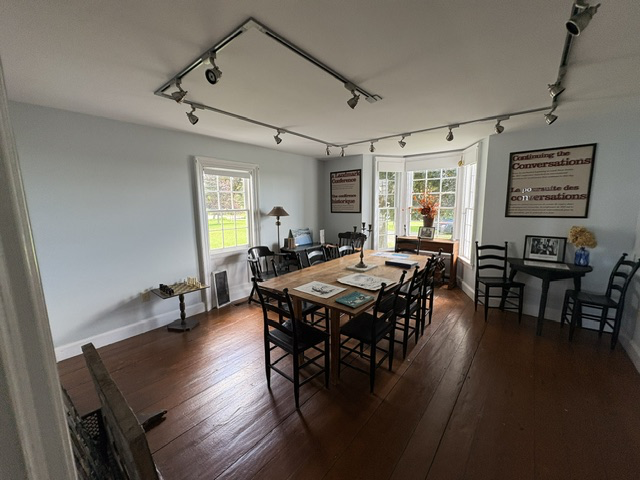
The Conference Room
This is the conference room at Thinkers’ Lodge, a space that represents the kind of face-to-face conversation at the heart of the Pugwash idea. Its simplicity is striking: a long wooden table, closely arranged chairs, wooden floors and windows looking out over the grounds. There is little here to suggest the formality of international diplomacy. […]

