The Squamscott House
The substantial brick building at 24 Front Street has served Exeter as a hotel, student residence and place of political gathering. Known historically as the Squamscott House and later as Gorham Hall, it connects the town with the organizing efforts that preceded the emergence of the Republican Party.
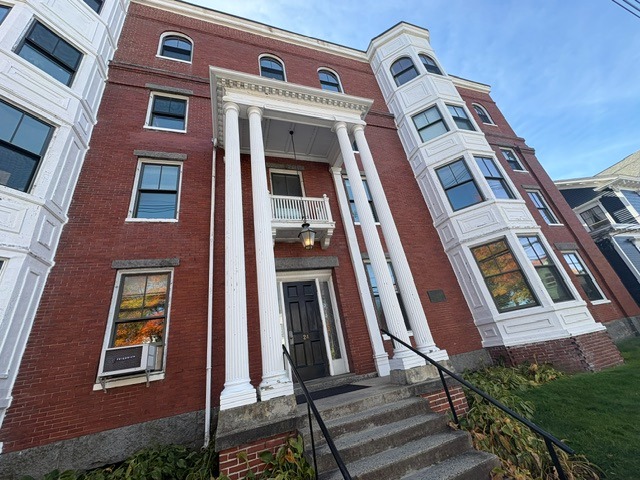
The present building dates to 1851. Abraham P. Blake erected it after a fire destroyed the earlier hotel on the property in 1850. Its prominent location at the corner of Front and Court streets placed travelers near Exeter’s civic, religious and educational institutions.
On October 12, 1853, Amos Tuck gathered political associates at Blake’s hotel to discuss a new organization opposing slavery’s expansion. The meeting brought together people seeking an alternative to existing party divisions. Exeter’s claim to a place in the Republican Party’s founding rests on this gathering and the use of the Republican name associated with it.
The party’s formation was a broader process involving organizing in several states. Exeter’s meeting preceded the better-known 1854 gathering in Ripon, Wisconsin, another community associated with the party’s beginnings. The Squamscott House preserves the setting of an early contribution to that national political realignment.
The building later acquired an educational role. In 1873, Phillips Exeter Academy purchased the former hotel to address a shortage of student accommodations. Converted into a boarding and lodging house, it was renamed Gorham Hall. Rooms once used by travelers became part of the academy’s residential life.
Its history illustrates how one building could answer several changing needs within a town. Hospitality, political organizing and student housing each occupied the same address, linking an Exeter street corner with both everyday community life and the national struggle over slavery’s expansion.
Read More From Nancy
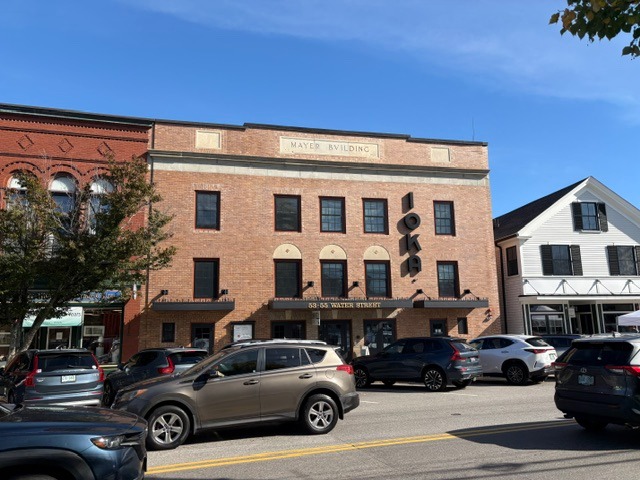
The Ioka Theatre and Mayer Building
The Mayer Building on Water Street preserves the setting of a new form of entertainment that arrived in Exeter during the early twentieth century. Built in 1915 for the Ioka Theatre, it brought a purpose-built moving-picture venue to the commercial heart of town. The building’s name and surviving IOKA lettering recall that original role. Judge […]
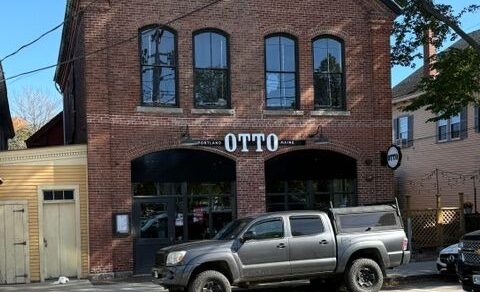
The Eagle Steamer House
The brick Steamer House on Water Street recalls a turning point in Exeter’s firefighting history. Its broad arched entrances, tall upper windows and small rooftop tower distinguish it from neighboring commercial buildings. Behind those entrances once stood equipment purchased to give firefighters greater power against the fires threatening downtown. In 1873, Exeter purchased a steam […]
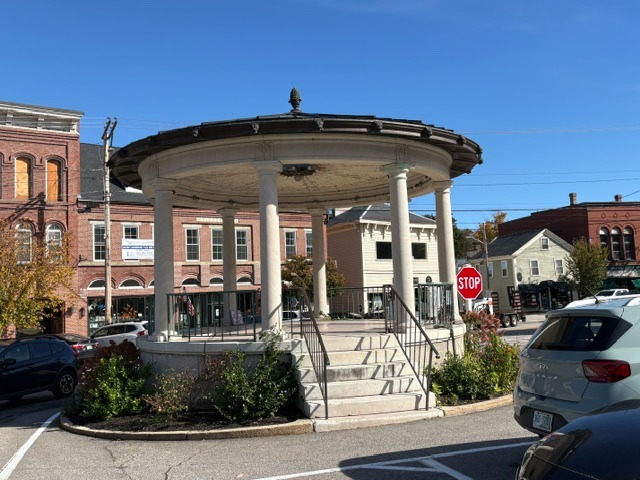
Swasey Pavilion: Exeter’s Bandstand
At the meeting of Front and Water Streets, Swasey Pavilion gives Exeter’s downtown a distinctive gathering place. Commonly called the bandstand, the circular structure was built in the summer of 1916 as a gift from industrialist Ambrose Swasey. Its architect was Henry Bacon, best known for designing the Lincoln Memorial in Washington, D.C. Bacon brought […]

