New Hampshire’s Revolutionary Capital
The “Revolutionary Capital” marker in downtown Exeter recalls a time when the town became the center of New Hampshire’s emerging government. As royal authority weakened, representatives gathered here to organize resistance, direct military support and establish a government that could function without a British governor.
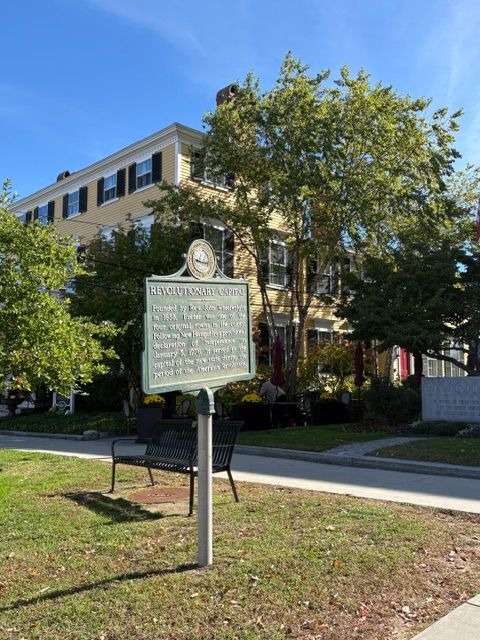
Exeter’s political importance grew in July 1774, when delegates met to discuss the escalating conflict with Britain. The town offered both practical accommodations and an inland location less vulnerable to British naval intimidation than Portsmouth. This gathering, later called the First Provincial Congress, arranged representation at the Continental Congress and established a Committee of Correspondence to exchange information among the colonies.
After fighting began at Lexington and Concord in April 1775, another Provincial Congress assembled in Exeter to organize assistance for Massachusetts. That summer, Royal Governor John Wentworth fled Portsmouth, and the royal Provincial Assembly ceased meeting. The congress in Exeter increasingly assumed responsibility for governing New Hampshire.
On January 5, 1776, delegates meeting in Exeter adopted the first written constitution established by an American colony during the Revolution. It created a House of Representatives and a separate legislative council, providing a framework for public appointments, taxation and military leadership. This step toward self-government preceded the Continental Congress’s Declaration of Independence by six months.
The January constitution also reveals how uncertain the future remained. Its authors described their government as a response to an emergency and expressed hope for an acceptable reconciliation with Britain. They were building institutions to protect public order while the larger question of independence was still unresolved.
Exeter served as New Hampshire’s capital during the Revolution. The marker preserves the significance of decisions made here: resistance required governing institutions as well as soldiers, and this town became a place where colonial opposition developed into the practical work of self-government.
Read More From Nancy
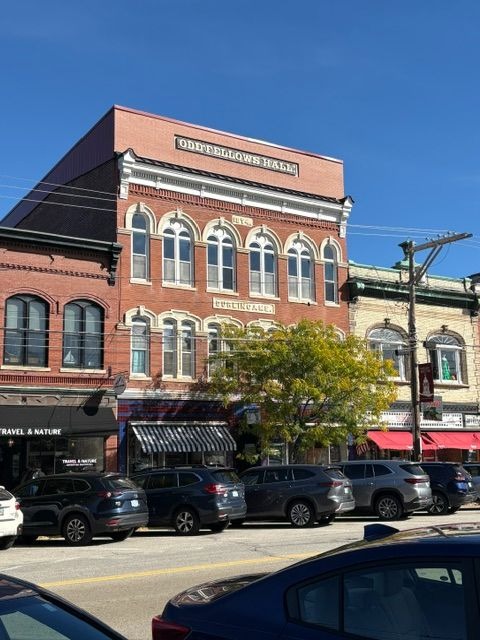
Odd Fellows Hall and the Burlingame Block
Two names on this Water Street building reveal different chapters of its history. “Burlingame” identifies the commercial block, while “Odd Fellows Hall” recalls its association with a fraternal organization. Built around 1874, the three-story brick structure combined downtown business space with rooms above, bringing commercial and community activities together under one roof. The building’s elaborate […]
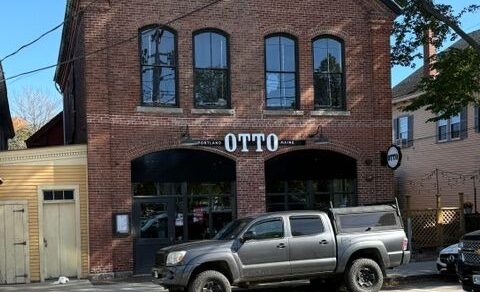
The Eagle Steamer House
The brick Steamer House on Water Street recalls a turning point in Exeter’s firefighting history. Its broad arched entrances, tall upper windows and small rooftop tower distinguish it from neighboring commercial buildings. Behind those entrances once stood equipment purchased to give firefighters greater power against the fires threatening downtown. In 1873, Exeter purchased a steam […]
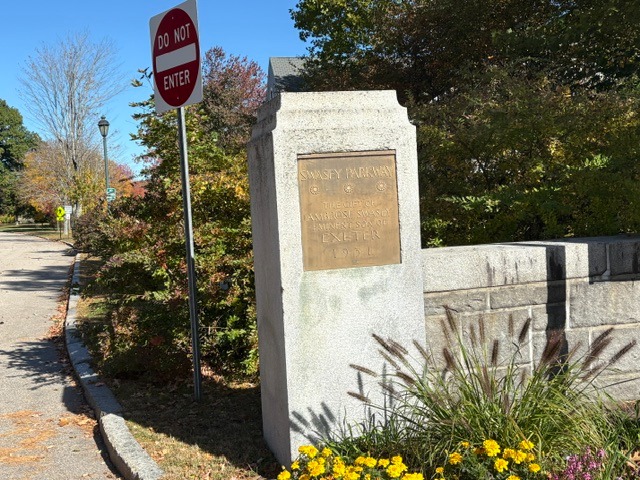
Swasey Parkway
Along the Squamscott River, Swasey Parkway preserves a landscape transformed through one resident’s generosity. Dedicated in November 1931, the parkway was a gift from inventor and industrialist Ambrose Swasey, who wanted to improve Exeter’s waterfront and create a welcoming public space near the town center. This shoreline had once been a working part of Exeter’s […]

