The Congregational Church
The Congregational Church on Front Street traces its beginnings to Exeter’s founding in 1638. Reverend John Wheelwright and his followers established both the congregation and the settlement after his expulsion from Massachusetts Bay Colony. Religious disagreement was therefore part of the community’s history from its beginning.
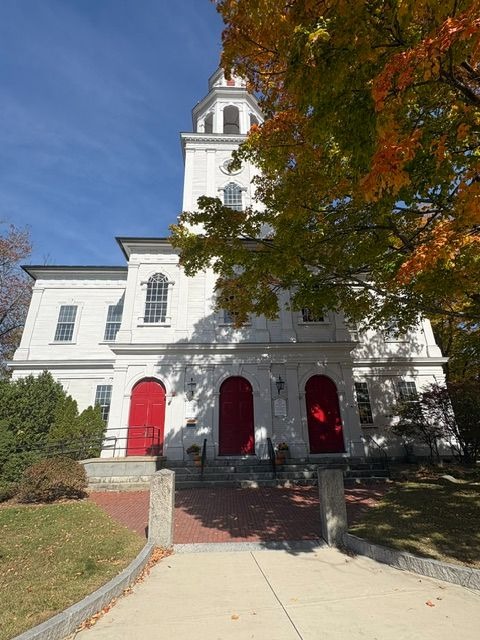
The present meetinghouse dates to the late 1790s and is Exeter’s oldest surviving church building. Its white exterior, arched entrances and clock tower give it a prominent place along Front Street. Built for a congregation already more than 150 years old, it replaced an earlier meetinghouse on the site.
The congregation’s history includes division as well as continuity. During the eighteenth-century Great Awakening, disagreements over religious revival and worship led members to establish a separate Second Parish. For generations, Exeter supported two Congregational communities, each with its own meetinghouse and minister.
The church also provided space for political debate. In February 1845, Amos Tuck and fellow opponents of slavery’s expansion met in its vestry to challenge their Democratic Party’s position, particularly over the annexation of Texas. Their organizing formed part of the political realignment that eventually contributed to the emergence of the Republican Party.
In 1920, the two Congregational parishes reunited. Members of Second Parish returned to the First Parish meetinghouse, and the combined congregation adopted the name Congregational Church in Exeter. Their former church building subsequently became Phillips Church at Phillips Exeter Academy.
The building preserves a history extending beyond its architecture. Its story encompasses colonial religious dissent, changing relationships between church and town, antislavery organizing and reconciliation between divided congregations. Together, those developments connect this enduring meeting place with several important chapters of Exeter’s past.
Read More From Nancy
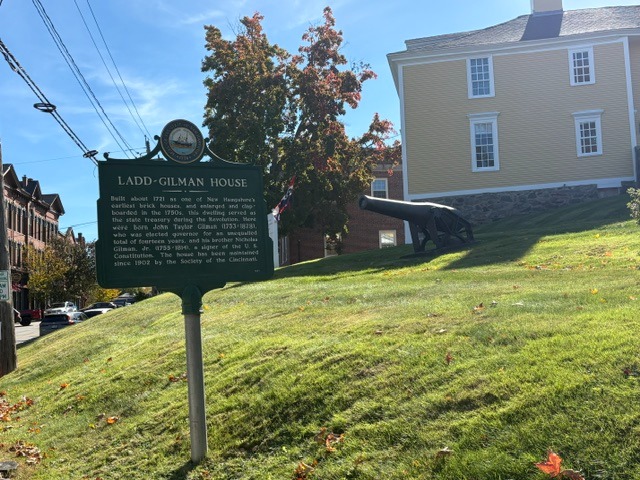
Ladd-Gilman House
Standing on a rise above the Squamscott River, the Ladd-Gilman House brings together the history of an Exeter family and the formation of a new state government. Behind its yellow clapboards is an early brick dwelling built around 1721 by Nathaniel Ladd. Daniel Gilman, a prominent Exeter merchant, purchased the property in 1747, beginning the […]
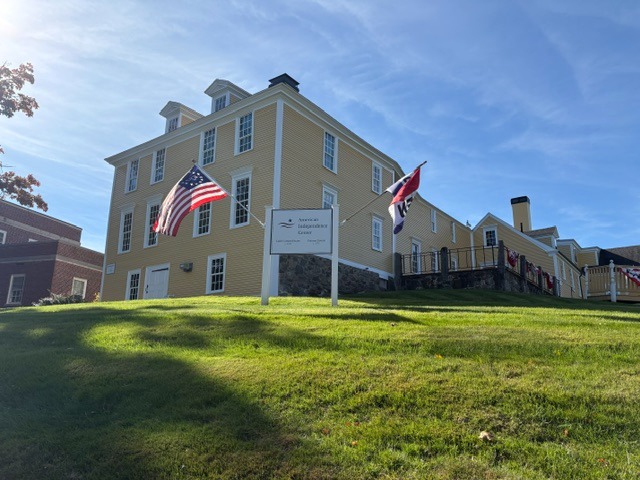
American Independence Museum
In 1985, a rare document rediscovered in the attic of Exeter’s Ladd-Gilman House brought renewed attention to the town’s connection with American independence. It was a Dunlap broadside, one of the first printed copies of the Declaration of Independence. The discovery helped inspire the creation of the American Independence Museum, which opened to the public […]
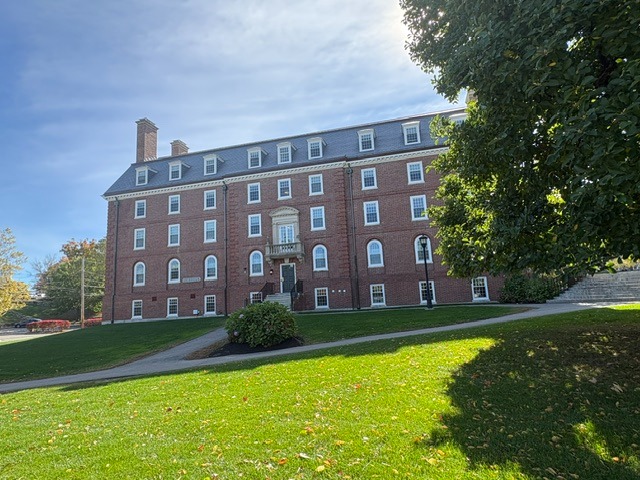
Phillips Exeter Academy
Founded in 1781 by John and Elizabeth Phillips, Phillips Exeter Academy emerged during the American Revolution, when the future of the country remained uncertain. Their gift established a school intended to unite intellectual development with moral responsibility. The relationship between goodness and knowledge became an enduring principle of the institution. The academy formally opened in […]

