The Royal Palace
Walking up Karl Johans gate toward the Royal Palace, it is impossible not to notice how the building dominates the end of Oslo’s grand boulevard. Set on a gentle rise overlooking the city, the palace has become one of Norway’s most recognizable landmarks. Yet its story is not simply one of royalty. It is also the story of a nation finding its own identity.
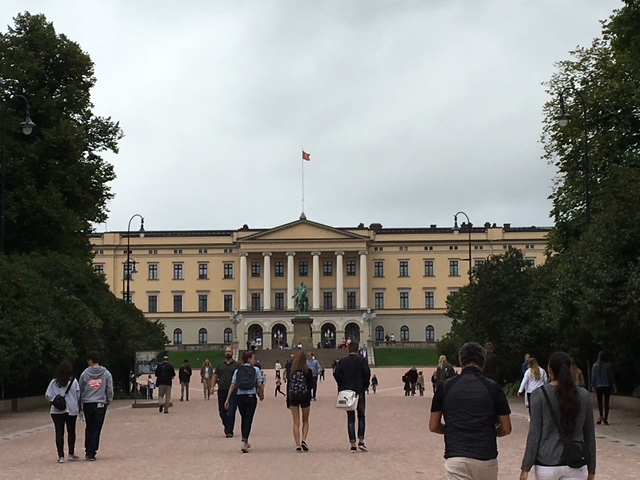
Construction of the Royal Palace began in 1825 during the reign of King Charles III John, at a time when Norway was united with Sweden following the Napoleonic Wars. Although Norway had adopted its own constitution in 1814, it remained in a political union with Sweden, sharing a monarch while maintaining its own parliament and many of its own institutions. The palace was intended to provide a royal residence in Christiania. today’s Oslo, and to demonstrate the importance of Norway within that union.
The building was designed by Danish-born architect Hans Ditlev Franciscus Linstow, who envisioned not only the palace but also the broad avenue leading to it. Today, Karl Johans gate remains the city’s principal street, connecting the Royal Palace with Parliament, the National Theatre, and Oslo Central Station. The palace and the city grew together, each helping to shape the other.
Unlike many royal residences in Europe, the Royal Palace is not separated from the public by high walls or extensive grounds. Visitors are free to walk through the surrounding park, and during the summer months guided tours allow guests to see many of the state rooms inside. The openness of the palace reflects something I came to appreciate throughout Norway: a monarchy that remains closely connected with its people.
This palace began as a residence for a monarch within a political union, but over time it became a symbol of an independent nation. Today it stands not only as the home of Norway’s royal family but also as a reminder of the country’s peaceful path to sovereignty and the resilience of its people during times of challenge.
Read More From Nancy
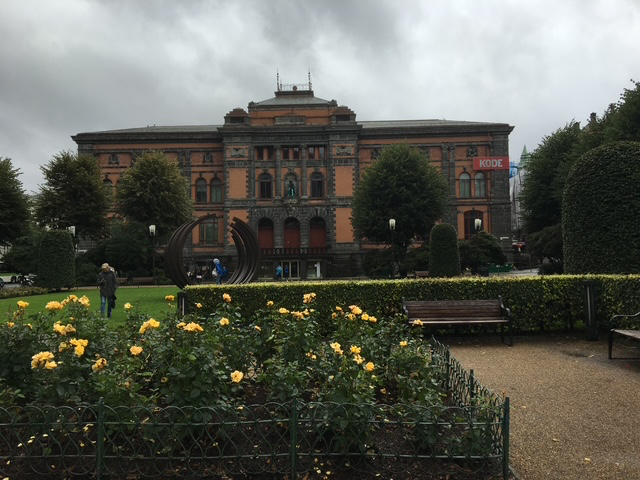
Byparken
In the heart of Bergen is Byparken, a green space surrounding Lille Lungegårdsvannet that provides a surprisingly peaceful setting in the middle of the city. The flower beds, lawns, pathways, sculptures, and benches make it feel almost like a formal garden set among Bergen’s cultural institutions. Byparken has roots in the nineteenth century. After a […]
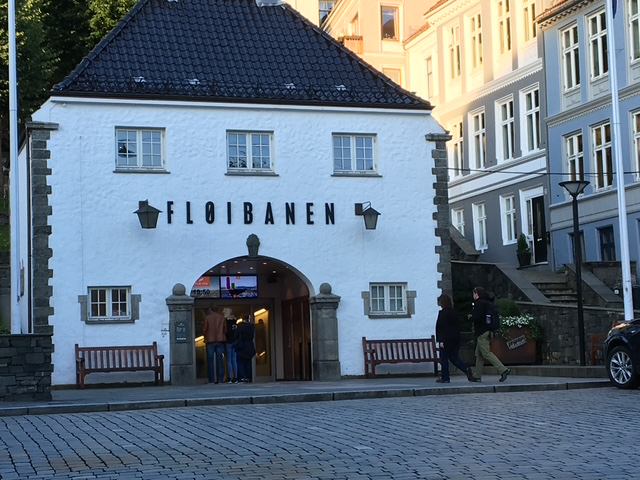
Fløibanen Funicular
One of the experiences we were most looking forward to in Bergen was riding the Fløibanen, the famous funicular railway that climbs the steep mountainside to the summit of Mount Fløyen. Since opening in 1918, the railway has carried millions of visitors from the heart of the city to one of Norway’s most spectacular viewpoints, […]
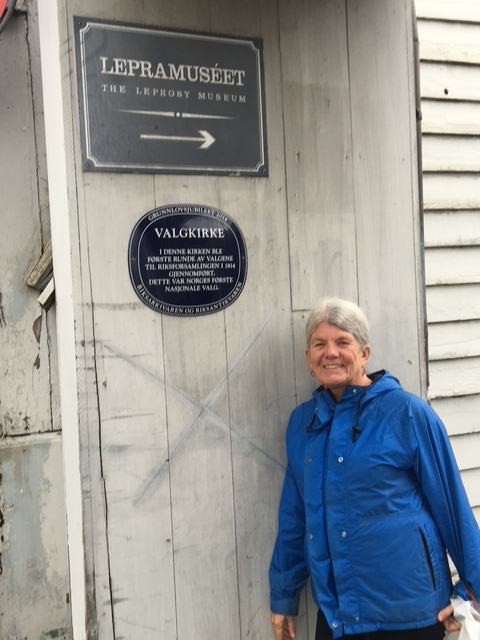
The Leprosy Museum
While traveling through Bergen, Norway, we found ourselves standing outside one of the most unusual museums we have ever visited: the Leprosy Museum. Housed in St. George’s Hospital, this quiet wooden building preserves the story of a disease that for centuries inspired fear, isolation, and misunderstanding. Leprosy, now known as Hansen’s disease, has been documented […]

