The Gol Stave Church
Among all the buildings preserved at the Norwegian Museum of Cultural History is the Gol Stave Church. Dark, soaring, and unlike any church I had ever seen, it immediately transported me back more than eight hundred years to medieval Norway. It is one of only twenty-eight surviving stave churches in the country, making it a rare survivor from a time when hundreds of similar churches stood throughout the Norwegian countryside.
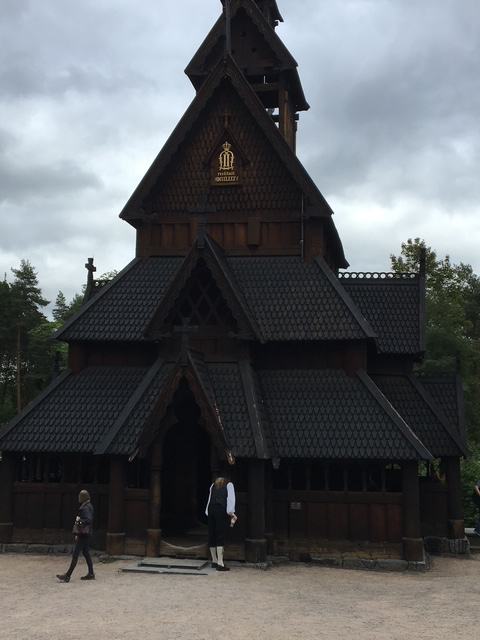
The church was originally constructed around the year 1200 in the village of Gol, nearly 120 miles northwest of Oslo. Built almost entirely of timber, it demonstrates the extraordinary woodworking skills of medieval Norwegian craftsmen. Rather than relying on stone, the builders created a structural framework using massive vertical wooden posts, or “staves,” from which the church takes its name. The precision of the joinery is remarkable, allowing the building to withstand centuries of harsh Scandinavian winters without the use of modern construction techniques.
The architecture is unlike that of any other church in Europe. Its steeply pitched roofs rise one above another, creating the impression of a building reaching toward heaven. Carved dragon-head finials project from the rooflines, reflecting Norway’s Viking heritage, while Christian crosses crown the highest peaks. The result is a fascinating blend of two worlds. The craftsmen who built these churches had grown up in a culture shaped by Norse traditions, yet they were constructing buildings dedicated to the new Christian faith. The Gol Stave Church beautifully illustrates this transition, where Viking artistry and Christian symbolism exist side by side.
The church standing in Oslo today owes its survival to an extraordinary act of preservation. By the late nineteenth century, the congregation in Gol had outgrown the medieval building and planned to replace it with a larger church. Recognizing its historical importance, King Oscar II arranged to have the structure carefully dismantled, transported to Oslo, and reconstructed in 1885. His efforts preserved one of Norway’s finest examples of medieval wooden architecture, allowing future generations to experience a building that might otherwise have disappeared forever.
Walking around the church, I found myself admiring not only its beauty but also the remarkable craftsmanship that has endured for more than eight centuries. Every beam, joint, and carved detail reflects the skill of artisans who worked with simple hand tools yet created a structure capable of surviving the passage of time. It is difficult to imagine the generations of worshippers who gathered here for baptisms, weddings, funerals, and weekly services, making this church not simply an architectural treasure but the spiritual center of a community for hundreds of years.
Read More From Nancy
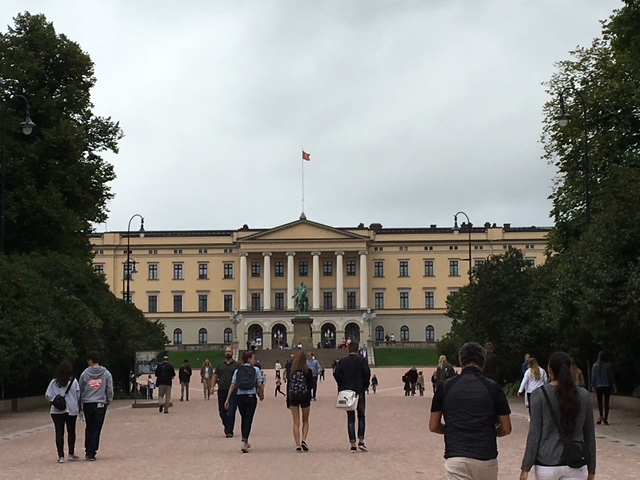
The Royal Palace
Walking up Karl Johans gate toward the Royal Palace, it is impossible not to notice how the building dominates the end of Oslo’s grand boulevard. Set on a gentle rise overlooking the city, the palace has become one of Norway’s most recognizable landmarks. Yet its story is not simply one of royalty. It is also […]
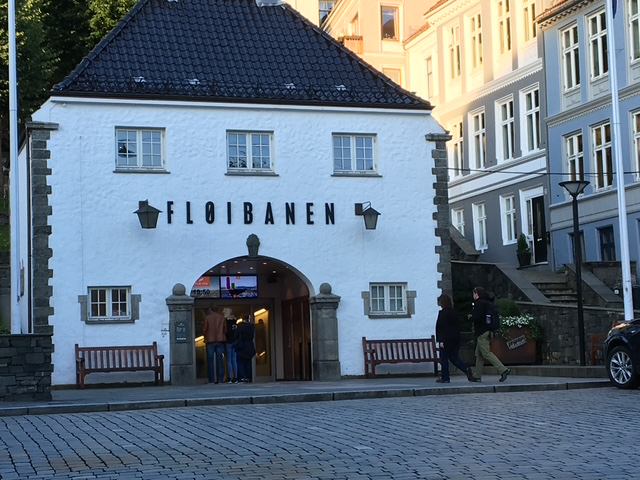
Fløibanen Funicular
One of the experiences we were most looking forward to in Bergen was riding the Fløibanen, the famous funicular railway that climbs the steep mountainside to the summit of Mount Fløyen. Since opening in 1918, the railway has carried millions of visitors from the heart of the city to one of Norway’s most spectacular viewpoints, […]
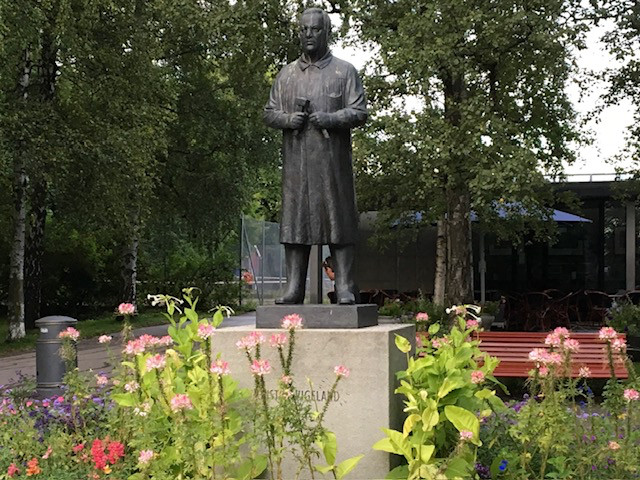
Gustav Vigeland
Standing just inside the entrance to Vigeland Park is a bronze figure dressed in a long work coat and holding the tools of his profession. This is Gustav Vigeland, the Norwegian sculptor who devoted much of his life to creating the remarkable landscape of sculpture that stretches beyond him. Born in 1869, Vigeland became one […]

