Byparken
In the heart of Bergen is Byparken, a green space surrounding Lille Lungegårdsvannet that provides a surprisingly peaceful setting in the middle of the city. The flower beds, lawns, pathways, sculptures, and benches make it feel almost like a formal garden set among Bergen’s cultural institutions.
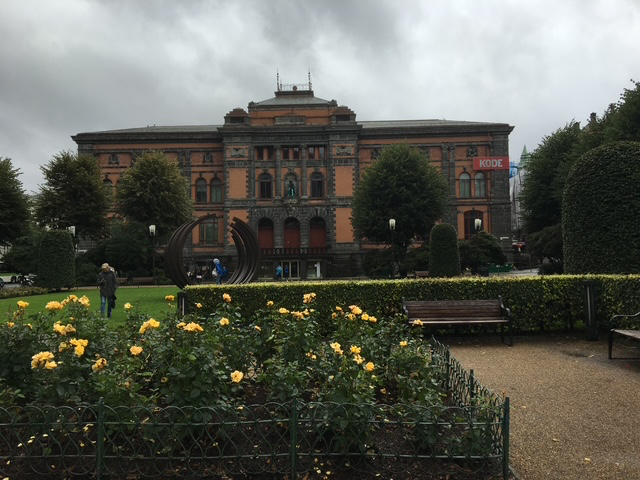
Byparken has roots in the nineteenth century. After a major fire in Bergen in 1855, the area was redesigned, and the park developed as Bergen’s first public park. It has been in use since the 1860s and gradually became an important recreational space for the growing city.
The substantial building in my photograph is Permanenten, today known as KODE 1, one of the buildings belonging to KODE, Bergen’s collection of art, craft, design, and music museums. It was designed by architect Henry Bucher and completed in 1896 specifically as a museum building. Its original name, Den Permanente Utstillingsbygning, essentially meant the Permanent Exhibition Building.
The architecture reflects the importance Bergen placed on art and craftsmanship at the end of the nineteenth century. Constructed of red brick with extensive stone detailing, the building was designed in a monumental Renaissance Revival style. Its symmetrical façade, arched windows, decorative stonework, and prominent central entrance gave it the appearance of an important civic institution rather than simply an exhibition hall. The building itself became part of the cultural statement the city was making.
It was originally created to provide permanent exhibition space for Norwegian handicrafts and industrial arts. Bergen had become an important center for promoting Norwegian decorative arts and craftsmanship, and Permanenten provided a place where these objects could be collected, exhibited, and studied. Over time, its role expanded, and it eventually became part of Bergen’s major art museum complex.
Today KODE 1 is particularly associated with craft and design. Its collections include decorative arts, silver, furniture, textiles, ceramics, and other objects demonstrating the development of Norwegian and European craftsmanship. The building is also home to the extraordinary Sølvskatten, or Silver Treasure, an important collection of historic silver and gold objects.
Byparken is a good example of something we encountered frequently while traveling through Europe: the way parks, architecture, museums, public art, and everyday city life are often woven together. You do not necessarily have to enter a museum to encounter the cultural life of Bergen. Even sitting among the roses in Byparken, you are surrounded by more than a century of the city’s cultural history.
Read More From Nancy
Bergen
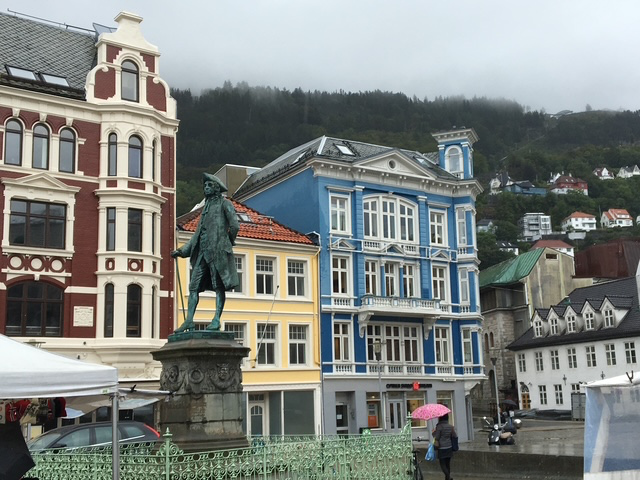
Marty and I enjoyed exploring the beautiful city of Bergen on a rainy day. Even with the weather far from perfect, we could not ignore the charm of this place. Bergen is both dramatic and welcoming. The colorful buildings, narrow streets, and changing weather give this Scandinavian harbor city its storybook appearance. For centuries, Bergen served […]
Gustav Vigeland
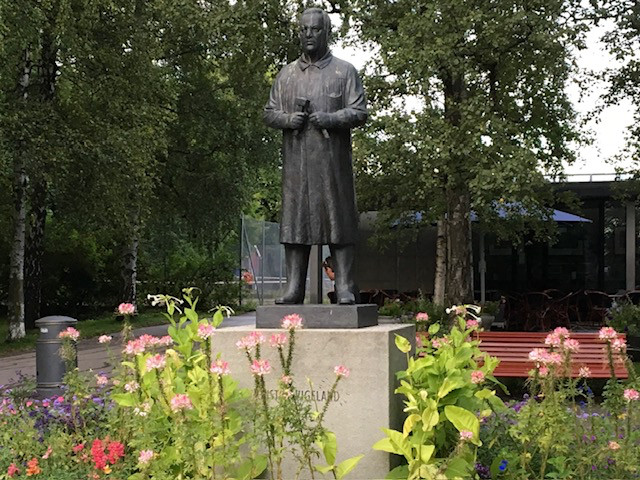
Standing just inside the entrance to Vigeland Park is a bronze figure dressed in a long work coat and holding the tools of his profession. This is Gustav Vigeland, the Norwegian sculptor who devoted much of his life to creating the remarkable landscape of sculpture that stretches beyond him. Born in 1869, Vigeland became one […]
Fløibanen Funicular
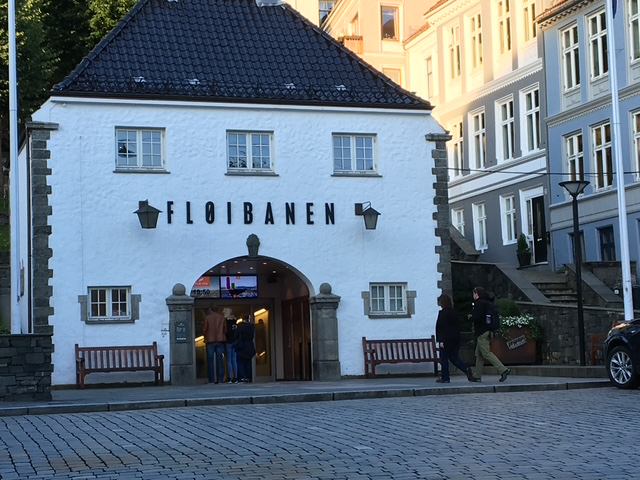
One of the experiences we were most looking forward to in Bergen was riding the Fløibanen, the famous funicular railway that climbs the steep mountainside to the summit of Mount Fløyen. Since opening in 1918, the railway has carried millions of visitors from the heart of the city to one of Norway’s most spectacular viewpoints, […]

