The Norwegian Museum of Cultural History
One of the highlights of our visit to the Norwegian Museum of Cultural History in Oslo was its remarkable collection devoted to Norway’s maritime heritage. Walking into the galleries, I was immediately struck by two exhibits separated by nearly a thousand years of history: the elegant Viking boats and the full-scale Kon-Tiki raft. Although they belong to very different eras, together they tell a continuous story of exploration, innovation, and the enduring relationship between the Norwegian people and the sea.

The Viking boats are extraordinary examples of craftsmanship. Built with overlapping wooden planks fastened together using techniques perfected over centuries, they are both graceful and remarkably strong. Every curve of the hull reflects an understanding of wind, waves, and balance that allowed these vessels to travel where few others could. These boats carried traders, fishermen, explorers, and settlers across the North Atlantic, opening routes to Iceland, Greenland, and eventually North America nearly five hundred years before Columbus.
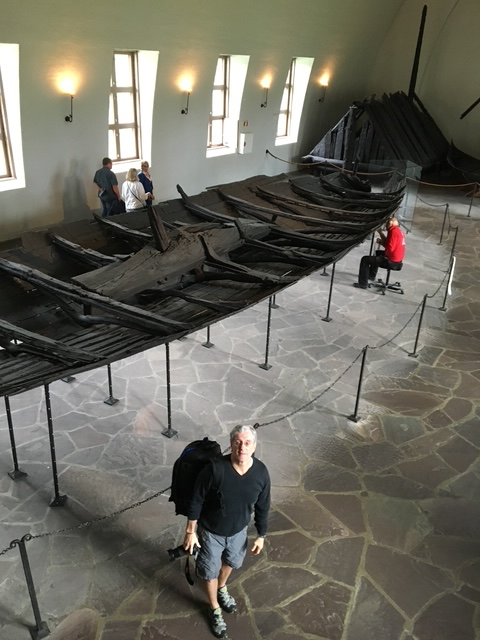
Standing beside them, it becomes easier to understand why the Vikings became some of history’s greatest navigators. Their success was not simply the result of courage. It was built upon generations of shipbuilding knowledge and an intimate understanding of the sea. These vessels were the lifeblood of Norway, connecting isolated communities, supporting trade, and making exploration possible long before the age of modern navigation.
The museum’s largest exhibit is equally captivating. Dominating the gallery is a full-scale reconstruction of the Kon-Tiki raft, the vessel that carried Norwegian explorer Thor Heyerdahl and his five companions across the Pacific Ocean in 1947. At first glance, it seems almost impossible to believe that such a simple craft could survive an ocean crossing. Constructed primarily of giant balsa logs tied together with rope and built without modern fasteners or engines, it appears almost fragile. Yet this humble raft successfully drifted more than 4,300 miles from Peru to the Tuamotu Islands over the course of 101 days.
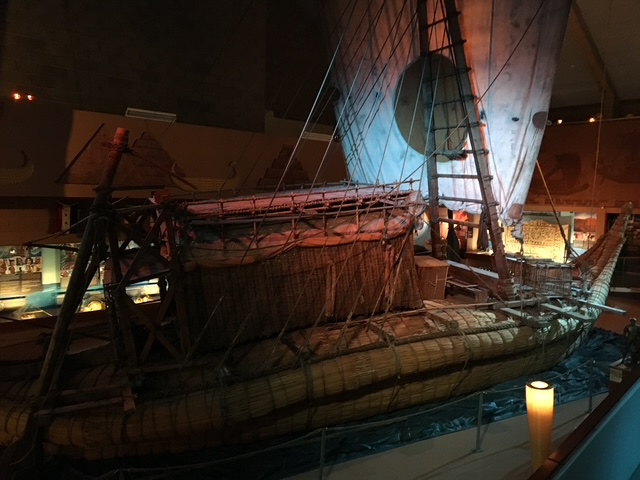
Heyerdahl’s expedition was inspired by a bold question rather than a desire to set a record. He wanted to test whether ancient peoples, using only the technology available to them, could have crossed the Pacific Ocean. His theory that South Americans had settled Polynesia has largely been disproven through later archaeological and genetic research. However, the expedition itself proved something equally important: ancient civilizations possessed remarkable seafaring capabilities and should never be underestimated. The journey captured the imagination of the world, and Heyerdahl’s book and Academy Award-winning documentary introduced millions to one of the greatest adventures of the twentieth century.
Seeing the Viking boats and the Kon-Tiki raft in the same museum creates an unexpected connection across the centuries. One represents the achievements of medieval Scandinavia, while the other reflects the curiosity and determination of a modern explorer willing to challenge accepted ideas.
As I walked through these exhibits, I realized they were telling the story of a nation whose identity has always been tied to the water. Norway’s mountains and fjords have long made the sea both a highway and a lifeline. From the Viking Age to Thor Heyerdahl’s Pacific voyage, Norwegians have repeatedly looked beyond familiar shores in search of new places, new ideas, and new understanding.