The Rockery
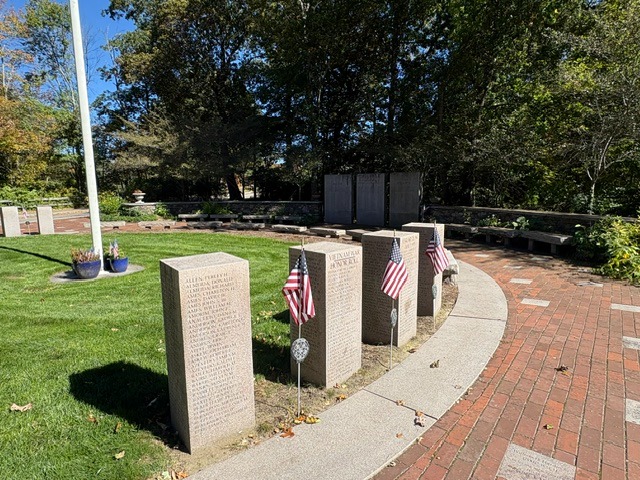
The Rockery in North Easton is a Civil War memorial whose meaning is expressed through stone and landscape. Designed by Frederick Law Olmsted in 1882, it honors local residents who died in the war. Its rugged walls, planted slopes, and stone archway create a memorial that visitors can walk through, bringing remembrance into the everyday life of the town.
Olmsted conceived the monument as a cairn, a form traditionally created by gathering stones into a mound to mark a place or commemorate an event. Here, the accumulated rocks gave physical form to the community’s remembrance of the war. Instead of placing a military figure on a pedestal, he made the landscape itself the monument.
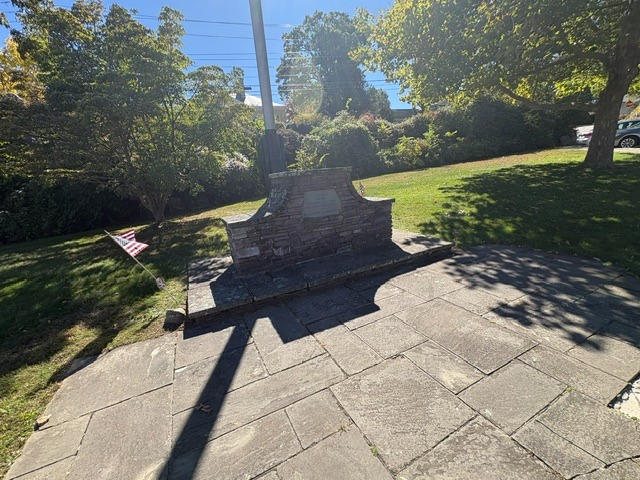
The contrast between rough stone and living plants was central to his design. Olmsted imagined the rockwork suggesting the strength of an old military fortification, softened by evergreens, vines, shrubs, and flowering plants. Vegetation growing over the stones would symbolize peace gradually covering the scars of war. The memorial could therefore acknowledge the struggle while also expressing hope for the life that followed.
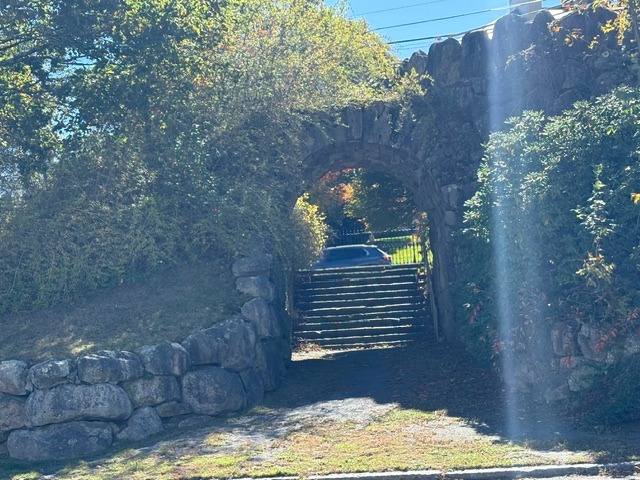
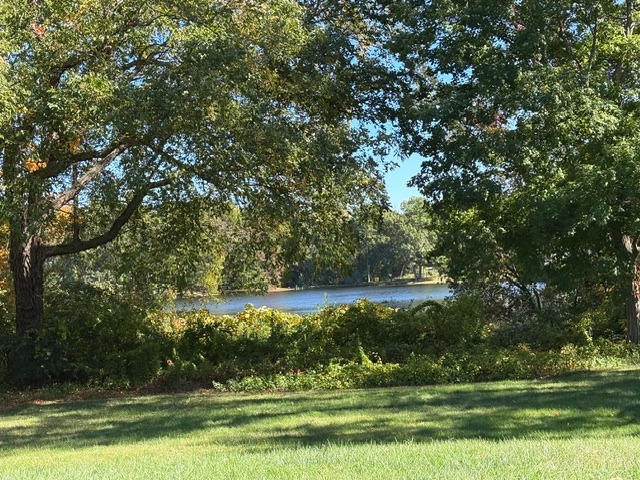
The stone archway provides a passage through the mass of rock, while paths and changes in elevation invite movement through the site. These features give the Rockery a public purpose beyond commemoration: it is also a place to walk, pause, and look across the village. The combination of memorial and public landscape reflects Olmsted’s belief that thoughtfully designed outdoor spaces could enrich community life.
Olmsted also wanted remembrance to involve the town’s children. In his proposal, he suggested that children and adults bring stones to place around the flagstaff, help with planting, and participate in an annual ceremony guided by veterans. These activities would allow each generation to take part in preserving the memory of those who had served. They were proposals for how the memorial might become a continuing community responsibility, rather than simply a completed structure.
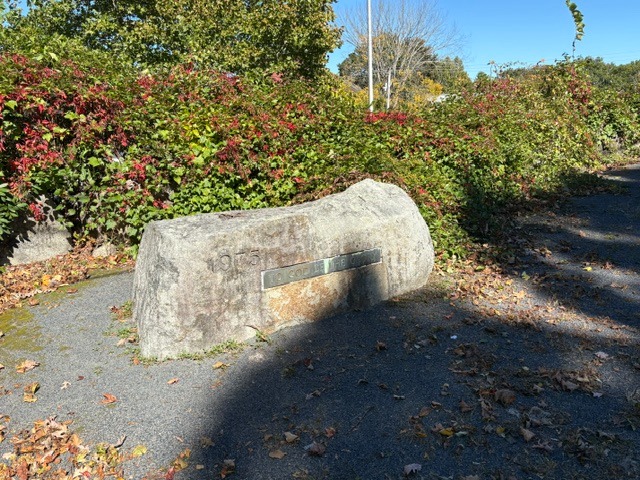
The Rockery’s significance lies in that union of remembrance and renewal. Its stones convey permanence, while its plants change with the seasons and grow over time. Together, they embody Olmsted’s intention to commemorate the sacrifices of the Civil War within a living landscape—a place where the memory of conflict could coexist with the ordinary activities of peace.
Read More From Nancy
Ames Shovels
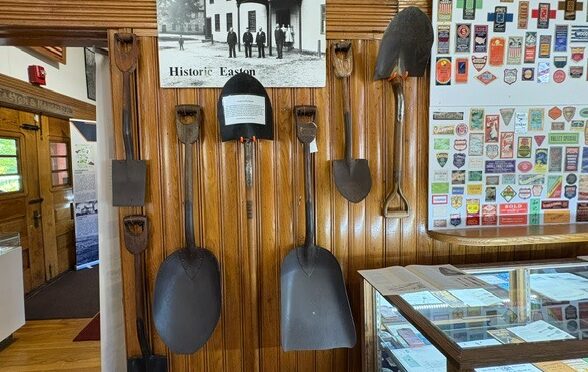
Displayed together in the Easton Historical Society Museum, the Ames shovels reveal how much variety can exist within an everyday tool. Some have broad, rounded blades, while others are narrower or nearly rectangular. Long wooden shafts and shorter handles with enclosed grips reflect different ways of lifting, digging, and moving materials. Their shapes invite a […]
Unity Close
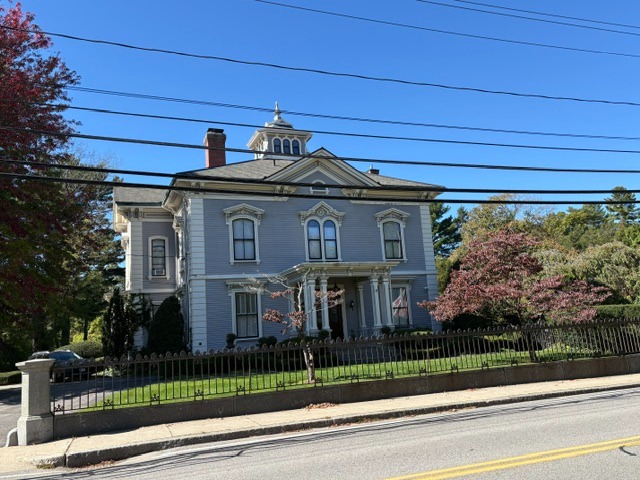
Unity Close, at 23 Main Street, was built in 1862 for Oliver Ames Jr. and his wife, Sarah Lothrop Ames. Designed by Boston architect George Snell, the house reflects the prosperity of the Ames family during the expansion of its shovel manufacturing business. Its location near the company’s operations kept the family home closely connected […]
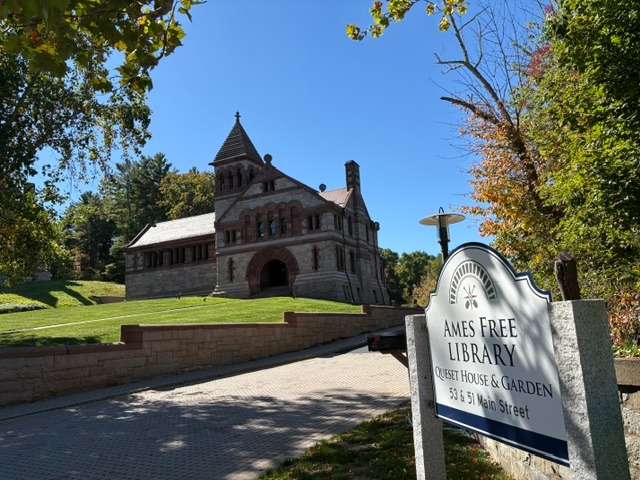
Ames Free Library
The Ames Free Library began with a gift intended to make books and learning available to the people of Easton. In his will, manufacturer and railroad investor Oliver Ames II left $50,000 for the construction and support of a library. Part of that bequest was reserved as a permanent fund to purchase books and maintain […]

