Shovel Shop Pond
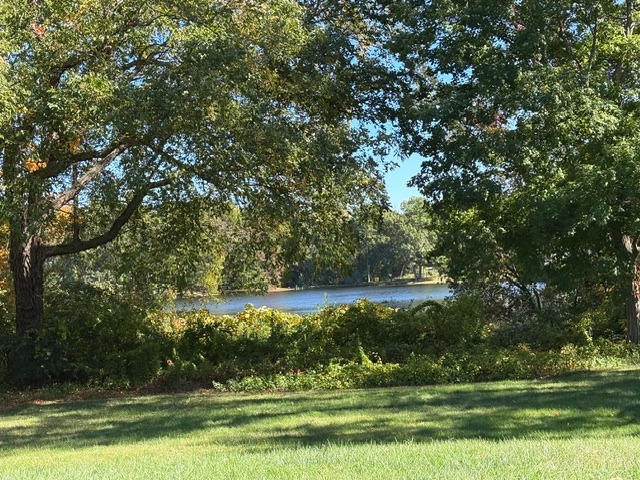
Shovel Shop Pond helped power the industry that shaped North Easton. Its water supplied the original Ames shovel works, making this small pond part of a manufacturing operation whose products would travel far beyond Massachusetts. The wooded shoreline now presents a quiet setting, but the pond’s history is closely tied to machinery, metalworking, and the daily demands of production.
In 1803, Oliver Ames purchased a forge, a nail-making shop, a dwelling, and land near the Shovel Shop Dam. The existing waterpower made the location valuable. By establishing his shovel business here, Ames connected the company’s beginnings to a resource already used for local manufacturing. In 1826, he added a stone shop at the pond’s dam as the enterprise expanded.
Waterpower depended on both flowing water and the ability to store it. A dam held water above the working machinery, allowing its controlled release to provide mechanical power. The pond therefore served a practical purpose: it was a reservoir of energy for the factory. Its usefulness also depended on the larger Queset watershed. In 1825, Ames joined other owners of water privileges along the Queset in enlarging the Long Pond dam to conserve additional water for their operations.
That dependence placed manufacturing within the rhythms of the local landscape. Rainfall, available storage, and the movement of water downstream mattered to the operation of the shops. The company’s investment in dams shows that expanding production required attention to the water supply as well as to tools, workers, and factory space.
Today, trees and vegetation soften the pond’s edges, and open water remains visible between the banks. Its industrial role is less immediately apparent than its natural setting. Yet Shovel Shop Pond preserves an essential part of North Easton’s history: the connection between a local waterway and the growth of the Ames shovel business. Before that business became nationally known, its work depended on the power available here.
Read More From Nancy
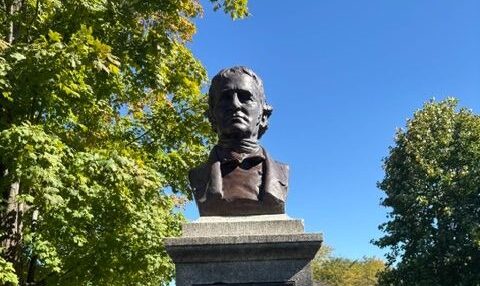
Oliver Ames Memorial
At the corner of Main and Oliver Streets in North Easton, a bronze bust rises above a granite pedestal framed by a curved stone bench. The memorial honors Oliver Ames Sr., the manufacturer whose shovel business helped transform Easton into an industrial town. Its inscription invites visitors to consider his legacy beyond the monument itself: […]
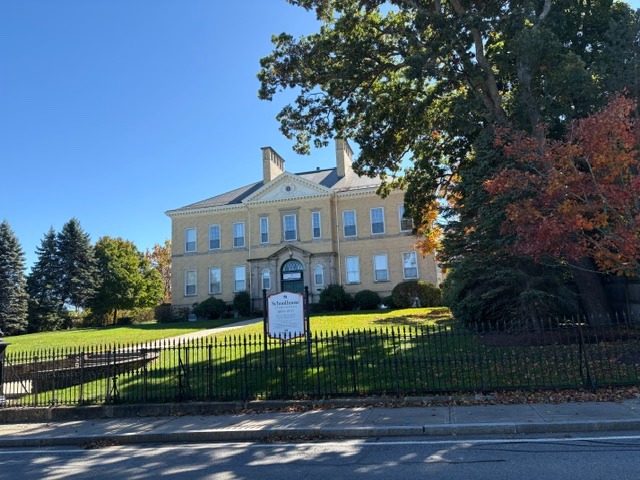
Former Oliver Ames High School
The former Oliver Ames High School represents a lasting investment in public education in Easton. Built in 1895–1896, the school was jointly financed by the town and former Massachusetts governor Oliver Ames. It was dedicated in December 1896, after Ames’s death, and carried his name as a recognition of his contribution to the community. Boston […]
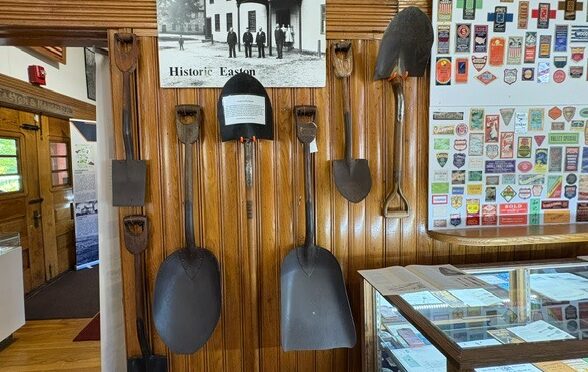
Ames Shovels
Displayed together in the Easton Historical Society Museum, the Ames shovels reveal how much variety can exist within an everyday tool. Some have broad, rounded blades, while others are narrower or nearly rectangular. Long wooden shafts and shorter handles with enclosed grips reflect different ways of lifting, digging, and moving materials. Their shapes invite a […]

