The Morse Runabout
With its tall wheels, upholstered seat, and overhead canopy, the Morse Runabout recalls a time when automobiles still resembled the horse-drawn vehicles they were beginning to replace. Preserved in the Easton Historical Society Museum, the car introduces a less familiar chapter of the town’s industrial history: its connection to early automobile manufacturing.
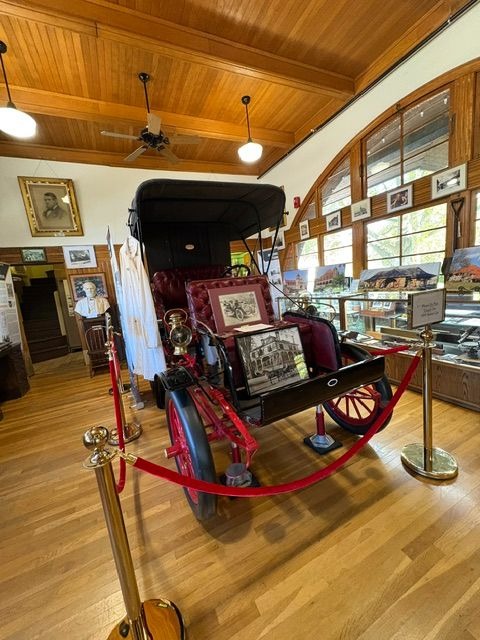
The museum identifies the vehicle as an 1899 Morse Runabout. Donated by the late George H. Morse and Morse Brothers Cranberries in September 2020, it became the centerpiece of a new industrial exhibit. Its preservation allows visitors to examine an automobile from a period when designers were still developing the arrangements and controls that would eventually become familiar to drivers.
The vehicle’s appearance reflects that experimental era. Its open passenger compartment, carriage-like proportions, and narrow wheels belong to an early approach to motoring. The canopy provided some shelter overhead, but the absence of doors and a windshield left occupants exposed to weather and road dust. Traveling in such a vehicle offered a very different experience from riding inside an enclosed modern car.
Operating it also required considerable attention. The museum’s description records a hand crank for starting the engine and separate levers for regulating fuel and adjusting the timing of the spark. These controls required the driver to manage aspects of engine operation that later automobiles would handle more automatically. Driving involved both steering the vehicle and understanding how to keep its machinery working.
A two-cylinder, air-cooled engine sits within a screened enclosure at the rear. Brass kerosene lamps supplied illumination, while leaf springs helped cushion the ride. These details reveal an automobile assembled from mechanical solutions that differ markedly from those used in cars today.
The runabout broadens the story of industry in Easton. Alongside the town’s better-known shovel production, it represents an interest in machinery, invention, and new forms of transportation. Building an automobile required manufacturers to bring together power, steering, braking, and suspension in a vehicle that people could operate on ordinary roads.
The surviving car makes that transition tangible. Its wheels and canopy retain the visual language of the carriage, while its engine points toward a changing world of travel. It preserves a moment when motoring was still a mechanical adventure and the automobile’s familiar form had yet to take shape.
Read More
Read More From Nancy
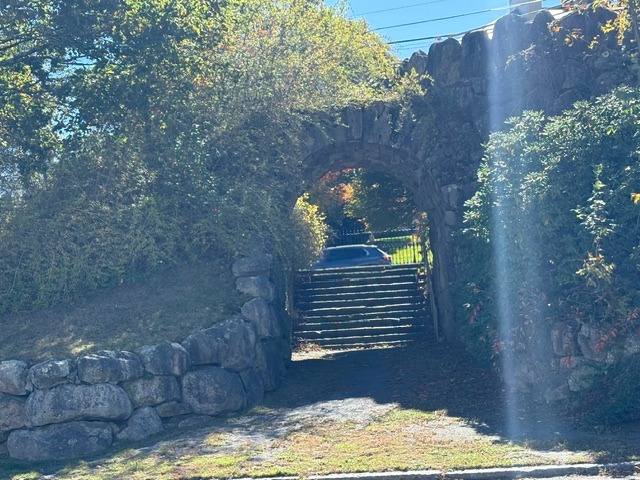
The Rockery
The Rockery in North Easton is a Civil War memorial whose meaning is expressed through stone and landscape. Designed by Frederick Law Olmsted in 1882, it honors local residents who died in the war. Its rugged walls, planted slopes, and stone archway create a memorial that visitors can walk through, bringing remembrance into the everyday […]
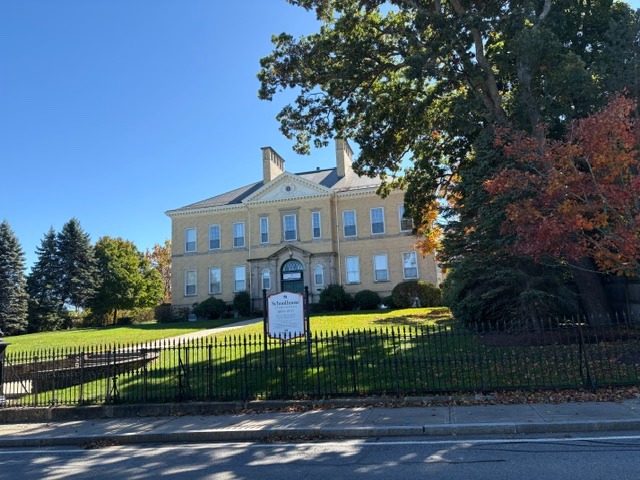
Former Oliver Ames High School
The former Oliver Ames High School represents a lasting investment in public education in Easton. Built in 1895–1896, the school was jointly financed by the town and former Massachusetts governor Oliver Ames. It was dedicated in December 1896, after Ames’s death, and carried his name as a recognition of his contribution to the community. Boston […]
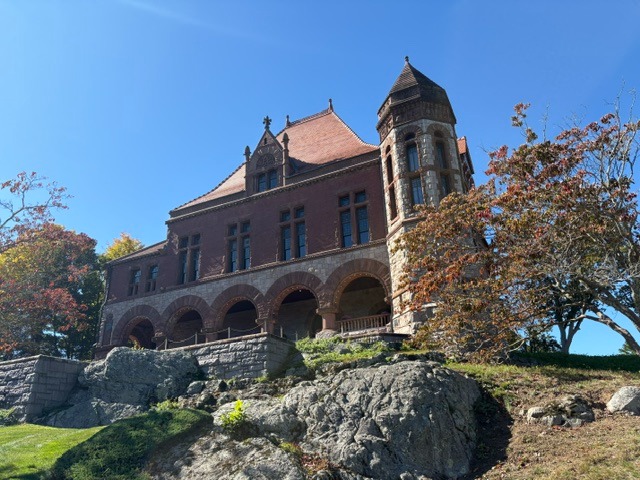
Oakes Ames Memorial Hall
Standing above the street on a rocky hillside, Oakes Ames Memorial Hall is one of North Easton’s most distinctive landmarks. Its broad arches, steep red-tiled roof, and corner tower give it a commanding presence, while the exposed rock beneath it connects the building to the surrounding landscape. Built between 1879 and 1881, the hall was […]

