The P-3 Orion at Brunswick Landing
We had stopped in Brunswick for breakfast when an airplane beside the road caught our attention. It stood on the grass with four propellers, broad wings, and a black nose that seemed to face anyone passing by. We had not planned to visit an air station, but there was no chance we were driving past without finding out why the plane was there.
The grounds were once part of Brunswick Naval Air Station. During the Cold War and the decades that followed, aircraft and crews based here flew maritime patrol missions. The P-3 Orion was built for long flights over water. Its crew could watch ship movements, gather information, and search for submarines far from shore. Flights like these made the P-3 a familiar part of life at the Brunswick base, even though much of its work happened beyond the sight of people on the ground. The naval air station closed in 2011, but the aircraft remained to represent the people and missions connected with it.
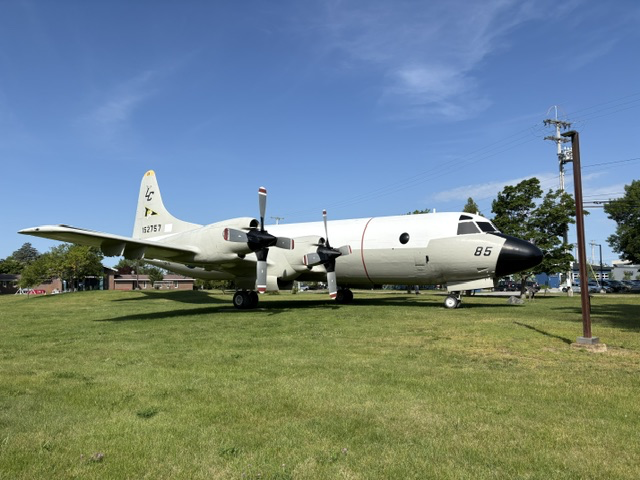
As we walked closer, we found that this was more than a preserved patrol plane. Its markings honor a specific aircraft and the eight men who flew aboard it. On September 22, 1978, a Patrol Squadron Eight P-3 named Town of Brunswick departed the air station on its way to an air show in Ontario, Canada. Designated LC-85, it crashed near Poland, Maine, shortly after takeoff. All eight crew members died.
The aircraft standing at Brunswick Landing is not the one that crashed. Years later, Navy veterans and supporters of the Brunswick Naval Aviation Museum restored another P-3 and painted it in LC-85’s markings. That choice gives the memorial a remarkable presence. Visitors can walk beneath the wings, look up at the engines, and begin to understand the size of the aircraft in which those men worked. A plaque near its nose records their names, bringing the story back from the scale of the airplane to the lives lost aboard the original one.
There is another memorial nearby for Gold Star families—families who have lost a loved one in military service. Installed in 2018, it was the first marker of its kind in Maine. It asks visitors to think beyond the moment of the crash to the people who waited for the crew at home and lived with their absence afterward.
We pulled over because we were curious about a plane we had not expected to see. We left knowing why this one had been kept here and why its markings mattered. Brunswick Landing carries forward part of the town’s naval history, but this spot holds something more particular: the memory of eight men and the families and fellow service members who wanted their story to remain visible.
Read More

Read More From Nancy
Fort William Henry
One of the highlights of our visit to Colonial Pemaquid in New Harbor, Maine, was exploring Fort William Henry. Looking across the harbor today, it is difficult to imagine that this peaceful stretch of coastline was once one of the most fiercely contested places in North America. Yet for much of the seventeenth century, this […]
The River That Built Bath
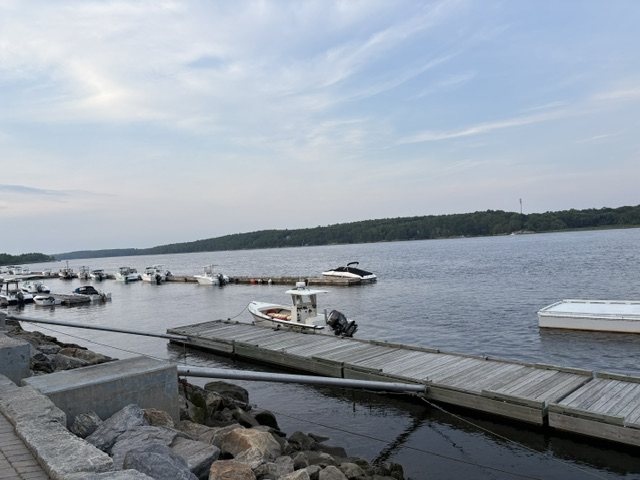
The Kennebec looked quiet when we stopped along Bath’s waterfront. Small boats rested at the docks, and the wooded shore stretched across the water. It was easy to linger over the view. It took a little more imagination to see how much had once happened on this same stretch of river. In the nineteenth century, […]
The Cogswell Family
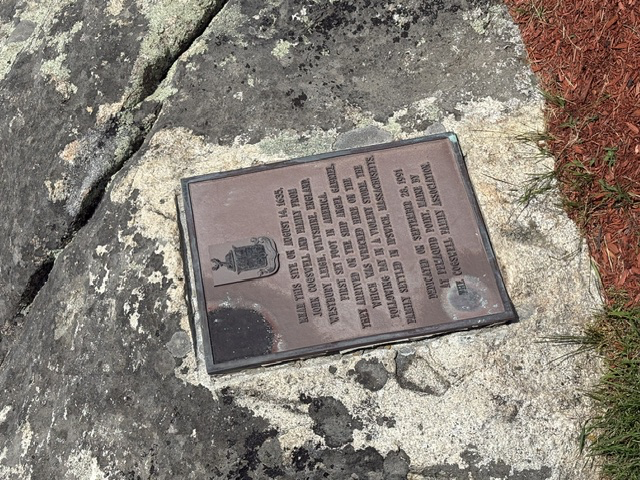
Set into the rocks at Pemaquid Point is a bronze plaque marking the place where one family’s American story began nearly four centuries ago. On August 14, 1635, John Cogswell and his family, from Westbury Leigh in Wiltshire, England, first set foot in America near this site. They had crossed the Atlantic aboard the Angel Gabriel, […]

